
Beautiful Plants For Your Interior
Beautiful Plants For Your Interior
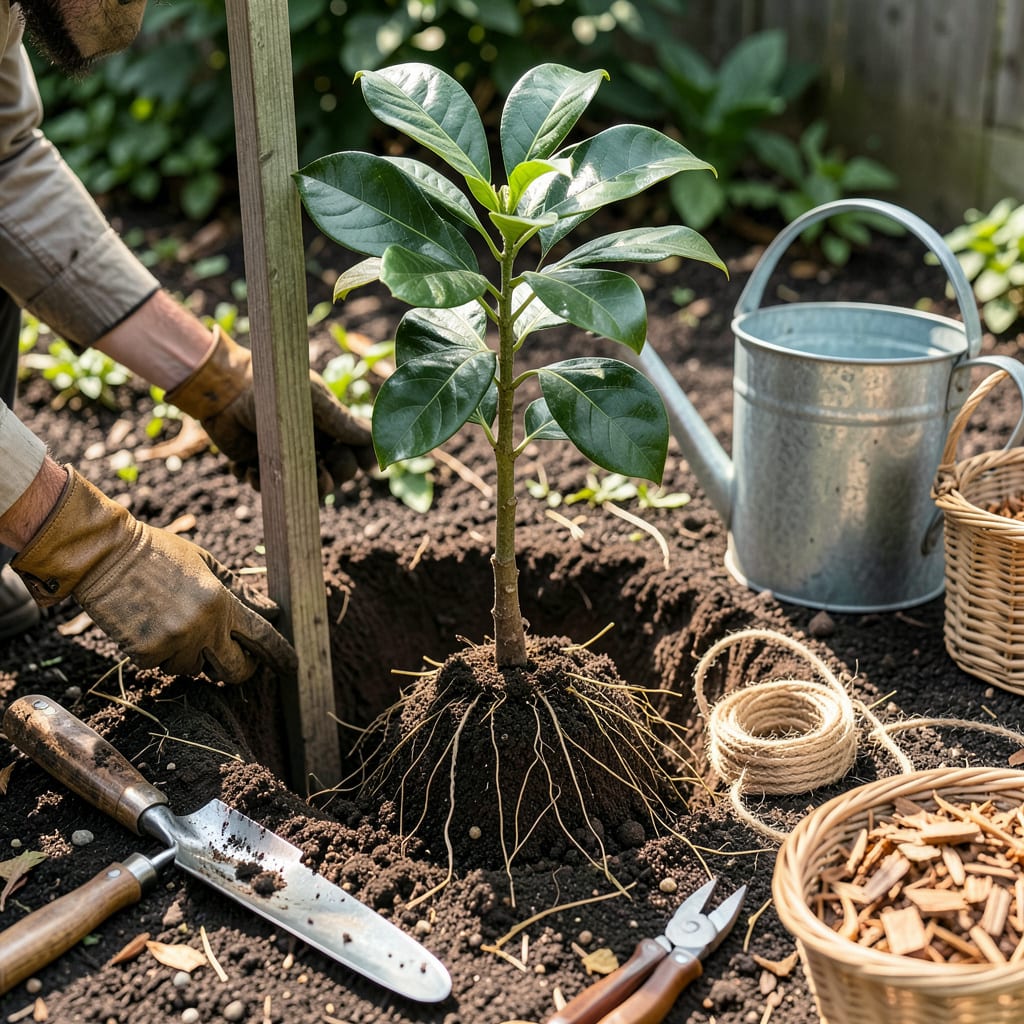
Moving an avocado tree feels like performing surgery on a living thing—because it kind of is. I’ve transplanted three over the years, and the difference between a tree that thrives and one that sulks for months comes down to timing and technique. Do it right in early spring (before new growth kicks in), and you’ll give your tree the best shot at bouncing back faster than you’d expect.
The secret isn’t just digging a hole and hoping for the best. It’s about preparing the root ball so it doesn’t go into shock, picking a spot with full sun and well-draining soil, and babying it with consistent water for the first 4-6 weeks. Get this part wrong, and you’ll watch leaves crisp up before your eyes. Get it right, and you’ll have a tree that rewards you with explosive new growth by summer.
📚 In This Guide
Moving an avocado tree doesn’t have to be stressful—follow my method for healthy roots and minimal shock.
Transplant in early spring before new growth begins, or in early fall when temperatures stay above 50°F at night. This timing gives roots a chance to establish before summer heat or winter cold. Select a spot with full sun (6+ hours daily) and protection from strong winds that could damage young trees.
Dig the new hole twice as wide as the root ball but no deeper. I always rough up the sides of the hole with my shovel—this prevents roots from circling and encourages outward growth. Test drainage by filling the hole with water; if it doesn’t drain within 30 minutes, choose another location or amend the soil.
Water your avocado tree deeply 2-3 days before moving—this ensures the root ball stays intact during transplant. On moving day, use a sharp spade to dig a trench around the tree, starting about 12 inches out from the trunk for young trees or 18-24 inches for mature ones. You’ll feel resistance when you hit the root ball’s edge.
Once the trench is complete, angle your spade underneath to lift the tree. Here’s the thing—avocado roots are surprisingly shallow and brittle. If the root ball starts to crumble, stop and water the area again. I always keep a tarp nearby to immediately wrap the roots if I need to transport the tree any distance.
Place the tree in the new hole at the exact same depth it was growing before—look for the soil line on the trunk. The graft union (that swollen bump near the base) should remain 2-3 inches above ground level. Backfill with native soil, gently firming it around the roots to eliminate air pockets. Don’t amend the backfill soil—this encourages roots to spread into the surrounding native soil.
Create a 3-4 inch high water basin around the tree, about 12 inches out from the trunk. Water immediately with 5 gallons of water, then add more soil if the water causes settling. I use three sturdy stakes and soft tree ties to stabilize the trunk—avocados have weak wood and need support against wind for the first year.
Water deeply every 2-3 days for the first week, then taper to once weekly unless your soil dries out faster. The goal is to keep the root zone consistently moist but never soggy. You’ll know you’re watering correctly when the soil feels damp 4 inches down but the surface dries slightly between waterings.
Apply 2-3 inches of organic mulch (wood chips or straw) around the tree, keeping it 6 inches away from the trunk to prevent rot. Watch for wilting leaves in the first month—this is normal transplant shock. However, if leaves stay wilted after evening or turn brown and crispy, the tree needs more water immediately. Avoid fertilizing for 6-8 weeks to let roots establish naturally.
Transplanting an avocado tree successfully comes down to timing and technique—here’s what I’ve learned from years of experience.
Timing Matters: The early spring or early fall window mentioned in Step 1 isn’t just a suggestion—it’s critical. I’ve tried transplanting in summer heat, and the stress on the tree was immediately visible through leaf drop. That 50°F nighttime temperature threshold is your safety net against cold shock. If you’re in a borderline climate, use a soil thermometer to verify temperatures at root level.
Root Ball Protection: When preparing the tree in Step 2, that 2-3 day pre-watering makes all the difference. I once skipped this step and lost half the root ball during transplant—the tree survived but struggled for months. For mature trees, don’t be tempted to dig closer than those 18-24 inches; avocado roots spread wider than you’d expect. Keep that tarp handy—even a 5-minute exposure to air can dry out delicate feeder roots.
Depth Precision: In Step 3, that 2-3 inch graft union clearance isn’t arbitrary. I’ve seen trees planted too deep develop rot at the graft site within weeks. Use a straight board laid across the hole to check your depth before backfilling. When creating your water basin, make it exactly 3-4 inches high—any shallower and water will run off; any deeper and you risk stem rot from prolonged moisture contact.
Post-Transplant Vigilance: The every 2-3 day watering schedule in Step 4 is non-negotiable for that first week. I use a moisture meter to check at that 4-inch depth—the surface can look dry while roots are still waterlogged. That 6-inch mulch clearance around the trunk prevents more stem rot cases than you’d imagine. If you notice leaves wilting by midday but recovering by evening, that’s normal transplant shock; if they stay wilted overnight, you’re underwatering.
The ideal time is early spring (March–April) or fall (September–October) when temperatures are mild (60–80°F). Avoid extreme heat or frost, as stress can shock the tree. Young trees (1–3 years old) adapt best, but mature trees can be moved in dormancy with extra care.
Yes! Seed-grown trees can be transplanted once they’re 12–18 inches tall with sturdy stems. Harden them off outdoors for a week first. Note: Pit-grown trees may take 10+ years to fruit (if ever), so consider grafting or buying a nursery tree for faster harvests.
Aim for a root ball 12–18 inches wide for young trees (under 5 feet tall) and 24+ inches for mature trees. Depth should match the tree’s current root zone (usually 12–15 inches). Use a sharp spade to minimize root damage—more roots = less transplant shock!
Wilting is normal for 1–2 weeks! Keep soil consistently moist (not soggy) and provide 30–50% shade for 2–3 weeks. Avoid fertilizing until new growth appears. If wilting persists, check for root rot (overwatering) or broken roots (trim damaged ones cleanly).
Choose a 15–25 gallon pot with drainage holes and well-draining soil (mix cactus soil + perlite). Dwarf varieties (like ‘Wurtz’) thrive best. Repot every 2–3 years, prune roots lightly, and keep indoors if temps drop below 30°F. Expect slower growth than in-ground trees.
