
Beautiful Plants For Your Interior
Beautiful Plants For Your Interior
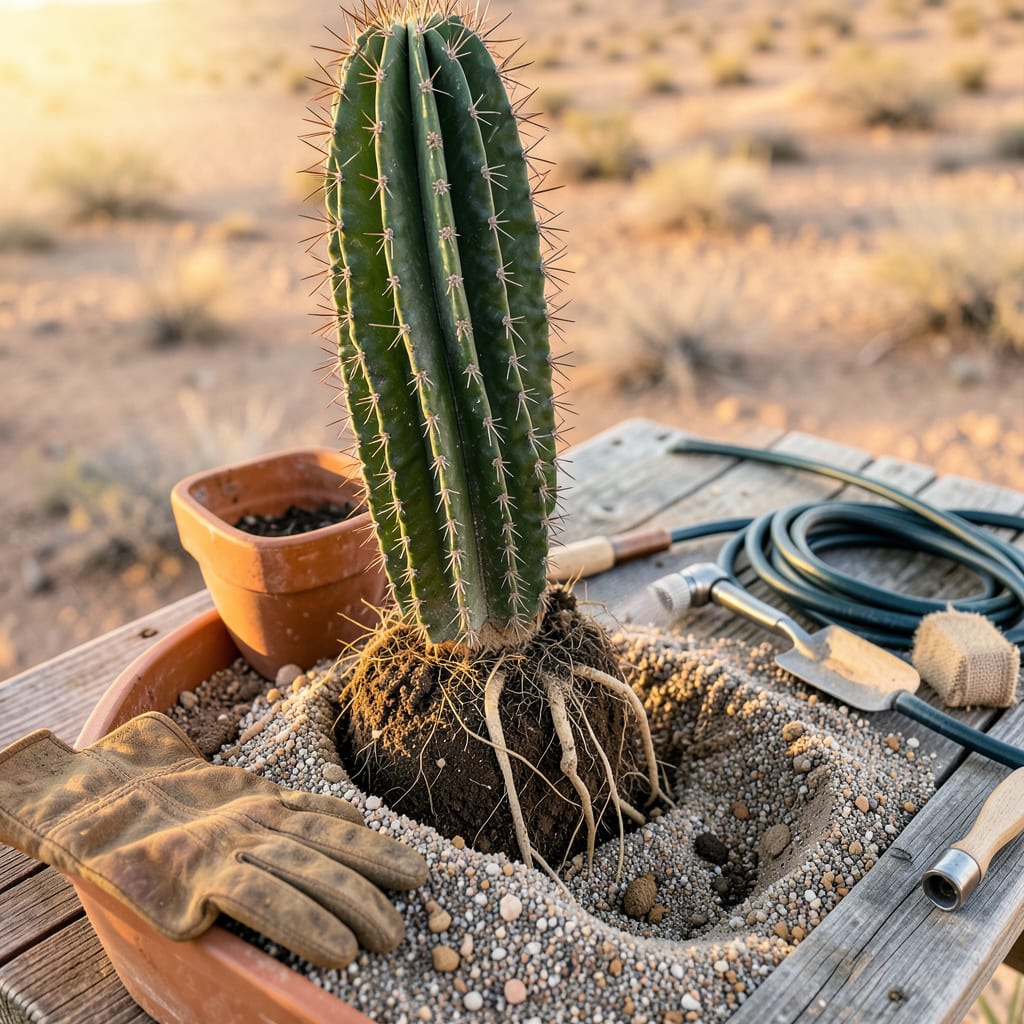
Moving a mature cactus is one of the few gardening tasks that demands equal parts courage and precision. After relocating dozens of towering specimens—some over 8 feet tall—I’ve learned that success hinges on two non-negotiables: protecting the roots and outsmarting the spines. The process isn’t complicated, but it requires methodical preparation to avoid setting the plant back by years.
What most guides don’t tell you is that timing and technique matter more than brute strength. A cactus transplanted in early spring (before active growth) with its root ball intact will establish faster than one moved during heat stress. The right approach eliminates root shock entirely—no wilting, no yellowing, just seamless adaptation to its new home. Here’s how to execute it without a single prick.
📚 In This Guide
This method eliminates transplant shock through careful root protection and strategic timing—critical for mature specimens.
Select a planting site or container that accommodates the cactus’s mature height and root spread. For in-ground transplanting, dig a hole twice as wide as the root ball but only 1-2 inches deeper—cacti planted too deep suffer from stem rot. The soil should be a fast-draining cactus mix with 50% mineral grit (pumice, perlite, or coarse sand).
If using a container, choose one with drainage holes that’s 2-3 inches larger in diameter than the current pot. Terracotta is ideal as it wicks away excess moisture. Position the container in its final location before transplanting—moving a tall cactus after repotting risks toppling and root damage.
Water the cactus 3-5 days before transplanting to slightly moisten the soil—this helps the root ball hold together during extraction. For potted specimens, lay the container on its side and tap the edges to loosen the root mass. Gently slide the cactus out while supporting the base of the stem with one hand and the root ball with the other.
For in-ground cacti, use a narrow spade to excavate 12-18 inches outward from the base, working in a circular motion to sever peripheral roots cleanly. Lift the plant by grasping the root ball through a folded towel—not the stem—to prevent spinal damage. Immediately wrap the exposed roots in damp burlap to retain moisture during transition.
Place the cactus in its new location at the exact same depth it was previously growing. The soil line should remain at the original position on the stem. For tall columnar cacti, position one-third of the stem’s height below the rim of the container (if potted) to prevent toppling. Backfill with your cactus mix, tamping gently to eliminate air pockets while avoiding compacting the soil.
For specimens over 3 feet tall, install two wooden stakes at opposite sides of the root ball and secure with soft plant ties. The ties should be loose enough to allow slight movement in wind but tight enough to prevent leaning. Water lightly after planting—just enough to settle the soil—then withhold irrigation for 7-10 days to allow roots to heal.
Keep the cactus in bright but indirect light for 2-3 weeks post-transplant. Direct sun immediately after repotting causes transpiration stress before roots re-establish. Maintain temperatures between 60-80°F—avoid drafts or heating vents that create rapid temperature fluctuations.
Resist the urge to water until the top 2-3 inches of soil are completely dry. When you do water, use half your normal volume for the first month. Monitor for signs of stress: yellowing at the base indicates overwatering, while wrinkling suggests under-watering. New spine growth at the apex confirms successful establishment—typically visible within 4-6 weeks for healthy specimens.
Mastering these critical techniques will ensure your mature cactus survives transplantation with minimal stress and maximum root recovery.
Root Ball Integrity: The pre-transplant watering window of 3-5 days is non-negotiable. This precise timing allows soil cohesion without creating the saturated conditions that lead to root rot during extraction. I’ve found that watering exactly 4 days prior provides optimal moisture balance for most cactus species. When excavating in-ground specimens, maintain that 12-18 inch radius from the base—this preserves the fine feeder roots responsible for 80% of water absorption.
Depth Precision: The 1-2 inch depth guideline in Step 1 isn’t arbitrary—it accounts for the natural soil settlement that occurs post-transplant. Planting deeper than this creates anaerobic conditions around the stem base, while shallower placement exposes roots to desiccation. Use a straightedge tool to verify the original soil line matches the new planting depth before backfilling. For container transplants, the one-third stem burial rule prevents top-heavy specimens from leveraging out of pots during wind events.
Stabilization Technique: The two-stake system described in Step 3 must create a triangular support plane. Position stakes at 45-degree angles relative to the cactus’s dominant lean direction, not parallel to each other. Use 1/2-inch wide plant ties (never wire or twine) to allow for seasonal stem expansion. Check tie tension weekly during the 4-6 week establishment period—roots swell as they heal, requiring adjustments to prevent girdling.
Environmental Control: The 60-80°F temperature range during recovery isn’t just comfortable—it’s critical for callus formation at root injury sites. Fluctuations outside this range delay cellular repair by up to 40%. If your climate exceeds 80°F, implement temporary shade cloth (30-40% density) during peak afternoon hours. The 2-3 week indirect light protocol in Step 4 should be extended by 1 week for every 10°F above 80°F to compensate for increased transpiration demands.
Tall cacti need transplanting every 3–5 years or when roots outgrow the pot. Look for roots circling the container or emerging from drainage holes. Younger, fast-growing species (like Saguaro) may need repotting every 2–3 years, while slow growers (like Blue Columnar) can wait longer.
Aim for early spring or late summer—when the cactus is in active growth but not stressed by extreme heat. Avoid winter (dormancy) or peak summer (high transpiration risk). If moving indoors, transplant 4–6 weeks before the first frost for acclimation.
Can I transplant a tall cactus without repotting it? (Alternative methods)
Yes! For root-bound cacti, try root pruning: Trim outer roots by 25% and replant in the same pot with fresh soil. For in-ground cacti, root circling (loosening roots without lifting) can buy time. Both methods reduce shock but aren’t permanent fixes.
Stabilize it immediately! Use bamboo stakes or a cactus support ring tied loosely with soft cloth. Avoid tight ties that can damage the skin. If wobbling persists, the roots may need more time to anchor—reduce watering for 2–3 weeks to encourage root growth.
Watch for yellowing, soft spots, or drooping (unusual in cacti!). Mild shock is normal—hold off on water for 7–10 days. Severe signs (black rot, mushy base) mean overwatering or root damage. Act fast: unpot, trim rot, and replant in dry, sterile soil.
