
Beautiful Plants For Your Interior
Beautiful Plants For Your Interior
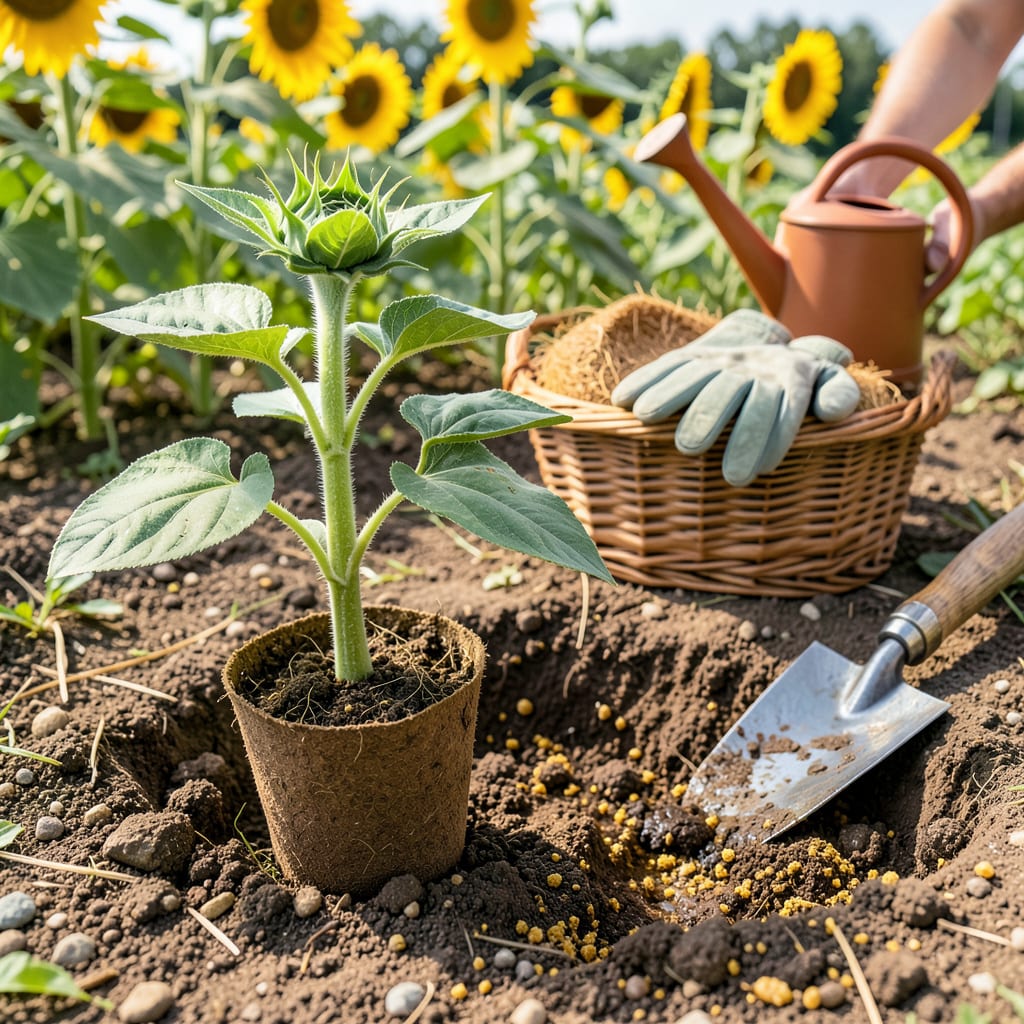
Moving sunflowers from pot to garden feels like giving them a new lease on life—if you do it right. I’ve learned the hard way that timing and technique make all the difference. Transplant when seedlings have 2-4 true leaves and the soil is warm but not scorching, usually late afternoon to avoid midday stress.
The secret isn’t fancy tools—just a trowel, watering can, and gentle hands. What surprises most beginners is how quickly they bounce back when you handle the roots like they’re made of silk and give them a deep drink immediately after moving. You’ll watch them stand taller within 24 hours, ready to chase the sun like they were born there.
📚 In This Guide
Timing and technique make all the difference—follow this method for sunflowers that thrive after the move.
Transplant sunflowers when they have 2-4 true leaves (about 2-3 weeks after germination) but before roots become pot-bound. Evening or a cloudy day minimizes transplant shock. Select a location with full sun (6+ hours daily) and well-draining soil—sunflowers despise soggy roots.
Dig a hole 12-18 inches deep and twice as wide as the root ball. Mix a handful of compost into the removed soil to boost nutrients. Water the hole thoroughly and let it drain completely before planting—this ensures moisture reaches deep roots immediately after transplanting.
Water the seedling container 1 hour before transplanting to keep the root ball intact. Gently squeeze the pot sides to loosen the soil, then invert it into your palm while supporting the stem between your fingers. If roots resist, tap the pot’s bottom—never pull the stem.
Inspect the roots: healthy ones appear white and firm. Dark, mushy roots signal overwatering; trim these with clean scissors. Handle only the root ball and soil—touching the stem can crush delicate vascular tissues that transport water.
Place the seedling in the hole so the soil line matches its original depth—burying the stem invites rot. Backfill with the amended soil, gently firming it around the base to eliminate air pockets. Create a 2-inch-high soil berm around the plant’s perimeter to direct water to the roots.
Water immediately with 1 gallon of water applied slowly at the base. The soil should settle slightly; add more if needed to maintain the berm. Avoid wetting the leaves—this prevents fungal spores from germinating on the foliage overnight.
Shield the transplant with a DIY cloche (clear plastic bottle with bottom removed) for 3-5 days to maintain humidity. Remove it daily for 1-2 hours to prevent overheating. Stake tall varieties immediately using a bamboo stake and soft ties—waiting risks wind damage to shallow roots.
Check soil moisture daily; water when the top 1 inch feels dry. Wilting in the afternoon is normal initially, but perky leaves by morning confirm successful establishment. Yellowing lower leaves may occur—this is the plant redirecting energy to new roots.
These practical insights will help you avoid common pitfalls and ensure your sunflowers not only survive the move but truly thrive afterward.
Timing Precision: The 2-3 week window after germination (when seedlings have 2-4 true leaves) is critical—this is when roots are developed enough to handle the move but not so mature they become pot-bound. I’ve found that transplanting in the evening or on cloudy days reduces stress by minimizing immediate sun exposure. If you must transplant on a sunny day, create temporary shade with a light cloth for the first 24 hours.
Root Handling Technique: When removing seedlings from containers, the 1-hour pre-watering mentioned in Step 2 isn’t just helpful—it’s essential. Dry soil crumbles, exposing delicate roots to air and damage. I use this trick: after inverting the pot, if the root ball doesn’t release cleanly, run a butter knife around the pot’s inner edge to loosen it. Never pull the stem, as this severs the tiny root hairs that absorb water.
Watering Wisdom: The 1-gallon water recommendation in Step 3 might seem excessive, but here’s why it works: sunflowers develop deep taproots quickly, and this initial deep watering encourages that growth pattern. Apply the water in stages—pour half, let it absorb, then add the rest. This prevents runoff and ensures moisture reaches the entire root zone. I also add a drop of liquid seaweed extract to this first watering to reduce transplant shock.
Protection Strategy: The 3-5 day cloche period in Step 4 creates a microclimate that maintains humidity around the plant. For best results, remove the cloche during the 1-2 hour daily ventilation period when temperatures are mildest—early morning or late afternoon. If using a plastic bottle, make small ventilation holes near the top to prevent condensation buildup, which can encourage fungal growth.
It’s risky! Sunflowers in bloom have deep roots and fragile stems. If you must move one, do it early morning to reduce stress, keep the root ball intact, and water deeply afterward. Expect possible wilting—some may not recover. Younger plants (under 3 feet tall) transplant far better.
Early morning or late afternoon is ideal—avoid midday heat! Cooler temps and lower sun intensity help roots settle without shock. If transplanting on a hot day, provide temporary shade (like a cardboard box) for 24–48 hours to ease the transition.
Choose dwarf varieties (like ‘Teddy Bear’ or ‘Moulin Rouge’) and pots at least 12–18 inches deep. Use well-draining soil and stake tall stems. Potted sunflowers need daily watering—they dry out faster than garden plants. Skip transplanting entirely for container-friendly types!
Don’t panic! Mild wilting is normal for 2–3 days post-transplant. Check soil moisture—water if dry, but avoid soggy roots. Trim damaged leaves to redirect energy. If stems stay limp after a week, the roots may have been severely disturbed. Next time, transplant before roots get pot-bound!
Not recommended—sunflowers hate root disturbance! Each move stresses the plant, stunting growth or killing it. If you must relocate again, do it within 1–2 weeks of the first transplant and keep the root ball completely intact. Multiple moves often lead to weak, non-flowering plants.
