
Beautiful Plants For Your Interior
Beautiful Plants For Your Interior
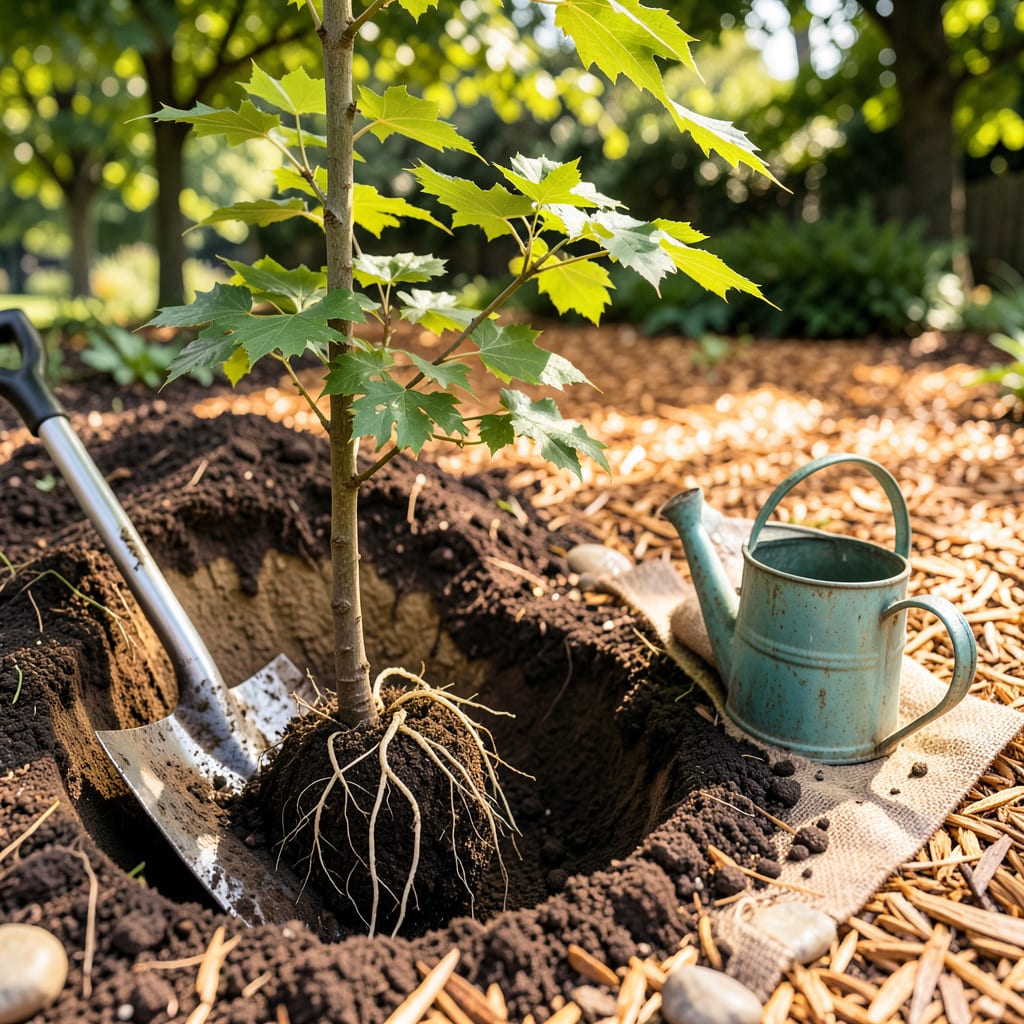
Moving a small tree feels like performing surgery on your landscape. I’ve learned the hard way that timing and technique make all the difference—do it right in early spring or fall, and your tree barely skips a beat. Do it wrong, and you’re left watching wilted leaves and stunted growth for a season.
The secret isn’t just digging a hole and dropping it in. You’ve got to coax those roots into their new home with the right depth, soil prep, and aftercare. My first attempt left me with a leaning, sad-looking sapling—now I follow a foolproof 5-step method that keeps trees thriving from day one. No guesswork, just healthy growth.
📚 In This Guide
Moving a young tree doesn’t have to be stressful—follow this method for healthy roots and minimal shock.
Before touching the tree, dig the new hole at least twice as wide as the root ball and the same depth. I always make the sides sloped rather than straight to encourage root expansion. Use a shovel to loosen the soil at the bottom so roots can penetrate easily.
Mix the excavated soil with one-third compost to improve drainage and nutrients. Set this blend aside—you’ll use it to backfill around the tree. If your soil is heavy clay, add a handful of coarse sand to prevent compaction. A wider hole is always better than a deeper one.
Water the tree thoroughly 24 hours before transplanting to reduce root damage. On moving day, use a sharp spade to cut a clean circle around the tree, starting about 12 inches from the trunk for every inch of trunk diameter. For a 2-inch trunk, that’s a 24-inch diameter root ball.
Slide the spade under the root ball at a 45-degree angle to sever taproots cleanly. Lift the tree by the root ball—not the trunk—to avoid tearing bark. If roots resist, cut them cleanly rather than ripping. Wrap the root ball in burlap if you need to transport it.
Place the tree in the new hole so the root flare (where roots meet trunk) sits 1-2 inches above ground level. This prevents settling that could suffocate roots. Turn the tree until its best side faces your viewing area—this is your only chance to orient it perfectly.
Backfill with your soil-compost mix, gently firming with your hands as you go to eliminate air pockets. Water thoroughly after filling halfway, then finish filling. Create a 3-inch-high watering berm around the edge of the hole to direct moisture to roots.
Install two or three sturdy stakes outside the root ball, using soft tree ties that allow slight movement. Stakes should be 18-24 inches into the ground and angled away from the tree. Remove them after one growing season to prevent girdling.
Apply 2-3 inches of organic mulch (wood chips or shredded bark) in a 3-foot diameter circle, keeping it 3 inches away from the trunk. Mulch conserves moisture and regulates soil temperature. Water deeply immediately after planting—this is critical for recovery.
Check soil moisture daily for the first week, then weekly. The goal is consistently moist but never soggy soil. New transplants need about 1 inch of water per week from rain or irrigation. Use a hose on trickle setting at the base rather than overhead spraying.
Watch for wilting leaves in late afternoon—this is normal transplant stress. If leaves remain wilted in morning, increase water slightly. Avoid fertilizing for 6-8 weeks to let roots establish naturally. You’ll see new growth within 4-6 weeks if the transplant succeeded.
Transplanting success comes down to preparation and attention to detail. Here’s what I’ve learned after moving dozens of trees.
Root Ball Protection: When digging the root ball in Step 2, I always wrap it in damp burlap immediately after extraction—even if I’m planting right away. This prevents roots from drying out during the short time between removal and replanting. For larger trees, consider using a tarp to keep the entire root system shaded and moist during transport.
Soil Preparation Secret: In Step 1, don’t just mix compost with your native soil—test the drainage first. Dig a small hole, fill it with water, and see how long it takes to drain. If water sits for more than an hour, you’ll need to amend with more sand or consider a raised planting area. I’ve found this simple test prevents root rot issues later.
Watering Technique: The watering berm mentioned in Step 3 is crucial, but here’s what most people miss: after planting, fill that berm completely with water, let it soak in, then fill it again. This ensures moisture reaches the deepest roots. I use a slow trickle from my hose for about 10 minutes to properly saturate the entire root zone.
Staking Strategy: When installing stakes in Step 4, use soft, wide tree ties rather than wire or narrow straps. The tree needs to be able to move slightly in the wind to develop strong trunk muscles. I position my stakes at a 45-degree angle away from the tree—this provides better support than vertical stakes and prevents root damage.
Early spring (before buds break) or fall (after leaves drop) are ideal—cool temps and moist soil reduce stress. Avoid extreme heat or freezing conditions. For evergreens, early spring works best. Check your local frost dates for perfect timing!
As a rule of thumb, dig a root ball 10–12 inches wide per inch of trunk diameter (e.g., 2-inch trunk = 20–24-inch diameter). Depth should match the root spread—usually 12–18 inches deep. Keep the root ball intact to minimize shock.
Yes! With proper technique (pruning roots pre-move, watering well, and avoiding root exposure), success rates exceed 80–90% for healthy trees. Stress signs (wilting, leaf drop) may appear but often recover in weeks. Mulch and consistent watering are key!
With soil is safer—it protects roots from drying and reduces shock. Bare-root transplanting works only for dormant trees (late winter) and requires immediate planting. For most home gardeners, keeping the root ball intact is the easiest, most reliable method.
