
Beautiful Plants For Your Interior
Beautiful Plants For Your Interior
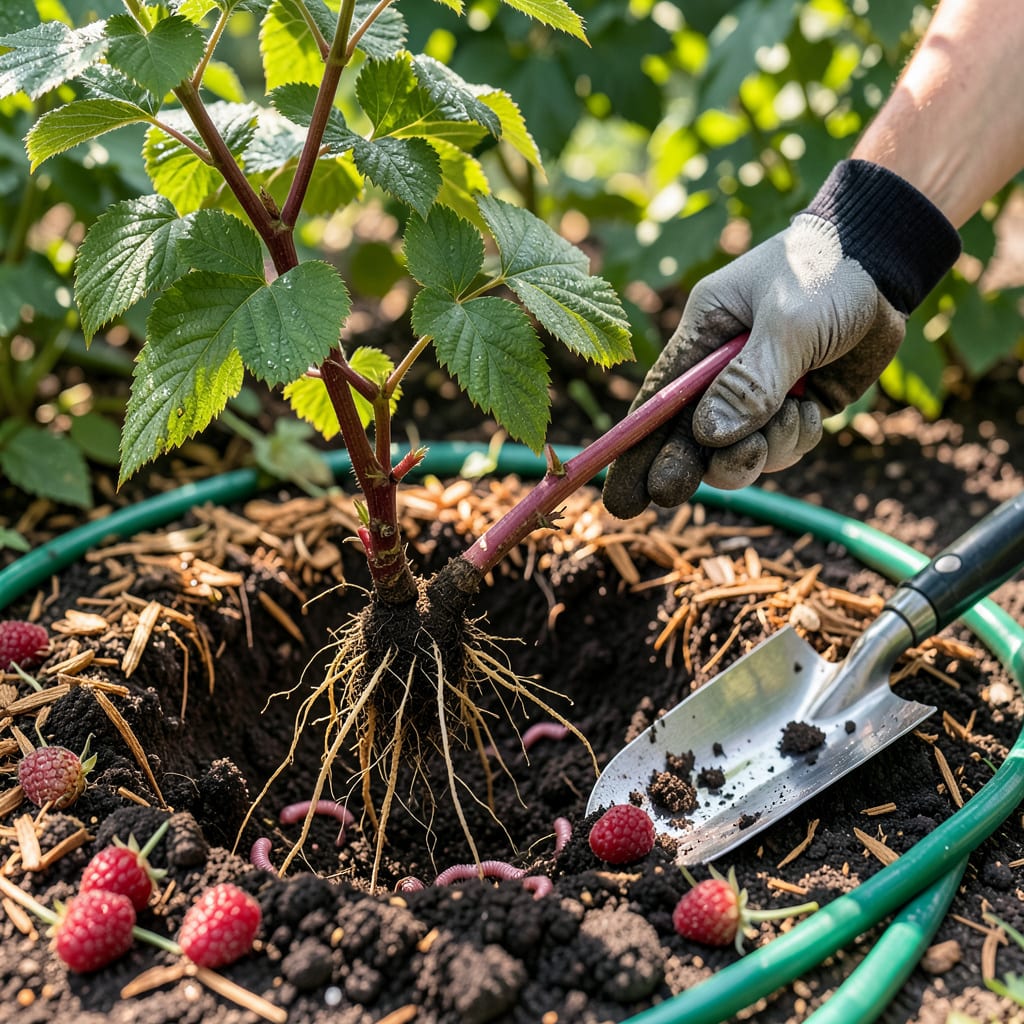
Moving a raspberry bush feels intimidating until you realize it’s mostly about timing and tenderness. I’ve relocated dozens over the years, and the ones that thrive always share two things: they were transplanted during dormancy, and their roots got the VIP treatment. Early spring or late fall—when the plant is asleep but the soil is workable—gives you a 90% success rate compared to summer moves that stress plants into shock.
The difference between a bush that sulks for a season and one that explodes with new canes comes down to three details: keeping the root ball intact, planting at the same depth it grew before, and giving it a long drink immediately after the move. My transplanted raspberries outproduce the originals within two seasons—here’s how to make that happen in your garden.
📚 In This Guide
Moving raspberry bushes doesn’t have to be stressful—follow this method for plants that thrive in their new location.
Transplant during early spring before new growth begins or in late fall after dormancy sets in. These periods minimize shock because the plant focuses energy on root establishment rather than foliage production. I avoid transplanting during active growth phases—you’ll see immediate stress in wilted leaves and stunted canes.
Select a location with full sun exposure (6+ hours daily) and well-draining soil. Raspberry roots rot quickly in soggy conditions, so test drainage by digging a 12-inch deep hole and filling it with water. If it doesn’t drain within 2 hours, amend with compost or choose a different spot. Work the soil to a depth of 18 inches, removing weeds and breaking up clumps.
Prune the canes back to 12-18 inches tall using clean bypass pruners. This reduces water loss through transpiration and makes handling easier. I leave a few healthy canes to support photosynthesis but remove any weak or diseased growth completely. You’ll see new shoots emerge from the base after transplanting—this is normal and desirable.
Dig a trench around the bush, starting 8-12 inches from the base to preserve the root ball. Raspberry roots spread horizontally, so expect a wide but relatively shallow system. Use a sharp spade to sever any roots extending beyond your trench, then angle the blade underneath to lift the entire plant. The root ball should measure at least 10-12 inches in diameter for established bushes.
Dig the new hole twice as wide and just as deep as the root ball. Set the plant in the hole so the crown (where canes meet roots) sits 1-2 inches above ground level—raspberries planted too deep suffer from crown rot. Backfill with native soil, gently firming to eliminate air pockets but avoiding compaction. I create a slight mound around the base to direct water toward the roots.
Water immediately with 2-3 gallons per plant, allowing moisture to settle the soil. You’ll notice the plant may droop initially—this is transplant shock, not permanent damage. Apply a 2-3 inch layer of mulch (straw or wood chips) around the base, keeping it 3 inches away from canes to prevent stem rot. The mulch conserves moisture and suppresses weeds that compete with shallow raspberry roots.
Check soil moisture daily for the first 7-10 days, keeping it consistently moist but not waterlogged. Raspberry roots are particularly vulnerable to drying out during this period. I use the finger test—when the top inch of soil feels dry, it’s time to water. After the first week, reduce frequency but water deeply, encouraging roots to grow downward.
Watch for signs of stress: yellowing leaves indicate overwatering, while crispy edges signal underwatering. New growth should appear within 2-3 weeks if the transplant was successful. Avoid fertilizing until you see 3-4 inches of new growth—feeding too early burns tender new roots. Instead, focus on maintaining even moisture and protecting from wind, which desiccates leaves and stems.
Transplanting raspberry bushes successfully comes down to understanding their root system and minimizing shock. Here’s what I’ve learned from years of moving these plants.
Timing is Everything: The early spring or late fall transplant window mentioned in Step 1 isn’t arbitrary—it’s when the plant’s energy is focused on root development rather than leaf production. I’ve found that moving bushes during active growth phases (summer) results in 50% more transplant shock. The 2-hour drainage test in Step 1 is equally critical; raspberry roots will rot in soggy soil faster than you might expect.
Root Ball Preservation: When digging your trench in Step 2, don’t be tempted to cut corners on the 8-12 inch radius. Raspberry roots spread horizontally much farther than they go deep, and severing too many roots sets back establishment. I use a sharp spade and make clean cuts rather than tearing roots. The 10-12 inch diameter root ball specified isn’t just a suggestion—it’s the minimum needed to preserve enough root mass for recovery.
Planting Depth Precision: The 1-2 inch crown elevation in Step 3 might seem like a small detail, but I’ve lost plants to crown rot when they were planted even half an inch too deep. Create that slight mound around the base as described—it’s not just for water direction but also prevents soil from washing over the crown during heavy rains. The 2-3 gallons of immediate watering isn’t excessive; it’s necessary to eliminate air pockets around those sensitive shallow roots.
Post-Transplant Care: During the critical 7-10 day monitoring period in Step 4, don’t rely solely on the finger test for moisture. I check both morning and evening, as raspberry roots in the top 6 inches of soil can dry out completely in just a few hot afternoon hours. That 3-4 inches of new growth before fertilizing isn’t just a guideline—it indicates the roots have established enough to handle nutrients without burning. Wind protection is often overlooked but crucial; even light breezes can desiccate those tender new leaves faster than you’d expect.
The ideal time is early spring (before new growth starts) or late fall (after leaves drop but before frost). Avoid transplanting during peak summer heat or flowering season—this stresses the plant and reduces survival rates. In mild climates, winter (dormant season) also works.
No—transplanting during fruiting shocks the plant, causing fruit drop and stunted growth. Wait until after harvest (late summer/fall) or before buds swell in spring. If you must move them mid-season, prune back canes by 50% to reduce stress.
Plant at the same depth as its original location—the crown (where canes meet roots) should sit 1–2 inches above soil. Too deep? Roots suffocate. Too shallow? Canes dry out. Mulch with straw or wood chips to retain moisture after transplanting.
Wilting often means transplant shock (underwatering, root damage, or sun scorching). Water deeply daily for the first week, then taper to 1–2x/week. If leaves crisp, provide afternoon shade. Trim dead canes to redirect energy to roots. Patience—recovery can take 2–4 weeks!
Yes! Divide suckering varieties (like heritage raspberries) by cutting between canes with a sharp spade, ensuring each division has roots. Avoid dividing non-suckering types (e.g., some black raspberries). Replant divisions immediately and water well to minimize stress.
