
Beautiful Plants For Your Interior
Beautiful Plants For Your Interior
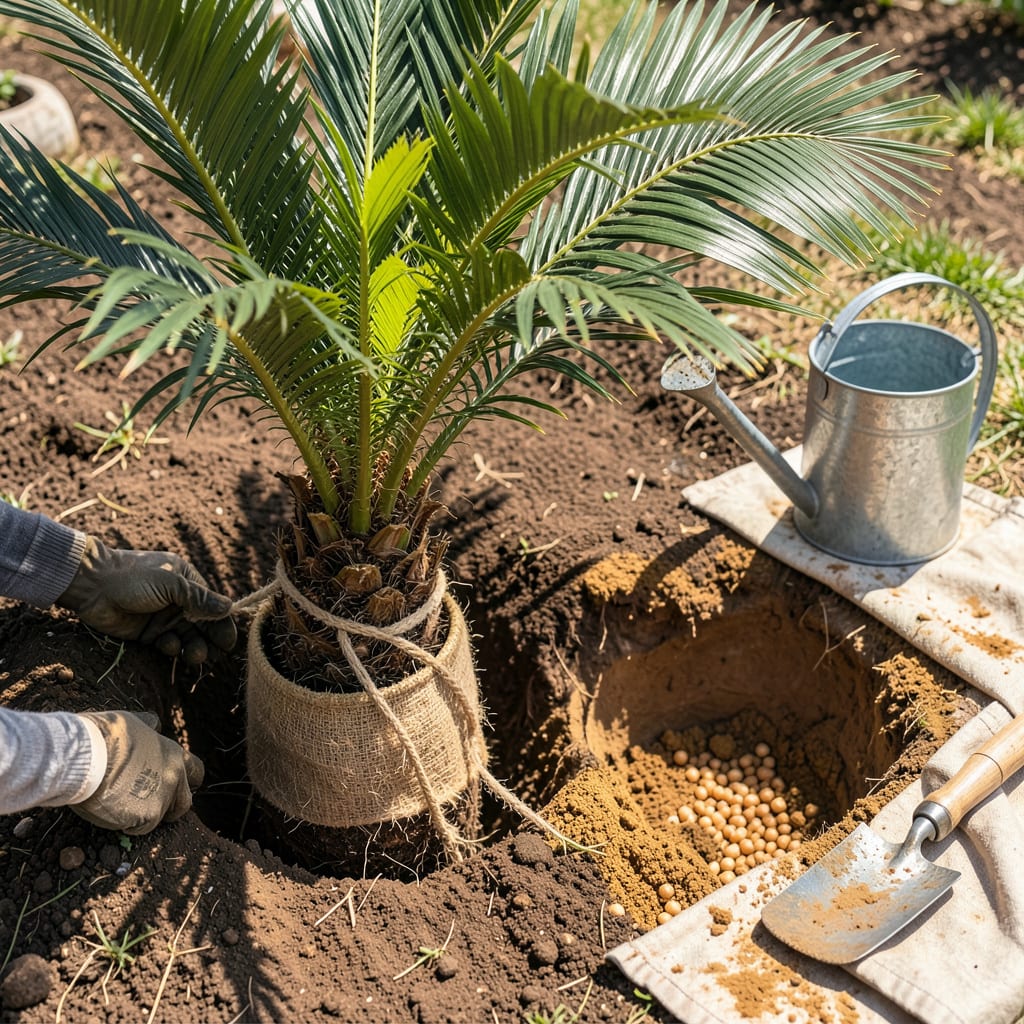
Moving a palm tree feels like performing surgery on a tropical giant—but I’ve done it successfully with everything from 6-foot pygmy palms to towering 20-foot queen palms. The secret isn’t brute strength; it’s timing, preparation, and respecting those roots like they’re the tree’s lifeline (because they are). Do it right, and your palm won’t just survive—it’ll throw out new fronds within weeks like nothing ever happened.
I’ve learned the hard way that spring or early fall is non-negotiable for transplanting in most zones, and that a 3-foot root ball isn’t optional for an 8-foot tree—it’s the difference between thriving and watching your palm slowly decline. The tools are simple (burlap, pruners, a sharp shovel), but the technique separates the stressed-out palms from the ones that take off like they’ve been there for years. Here’s how to nail the move.
📚 In This Guide
Moving a palm tree is all about timing and technique—follow these steps to ensure your tree thrives in its new location.
Transplant palms during their active growing season, ideally in spring or early summer when temperatures stay above 60°F. Avoid winter moves—they stress the tree and slow root recovery. I always check the forecast for a stretch of mild weather before starting.
Dig the new hole first, making it twice as wide as the root ball but no deeper. The sides should slope gently to prevent water pooling. Test the hole by filling it with water—if it drains in under 30 minutes, the soil is suitable. If not, amend with coarse sand or perlite.
Water the palm deeply 2-3 days before transplanting to hydrate roots and reduce shock. Use a sharp spade to cut a clean circle around the trunk, starting 12-18 inches from the base for small palms or 2-3 feet for larger specimens. The goal is to preserve as many feeder roots as possible.
Angle the spade under the root ball, working carefully to sever any stubborn roots. For palms over 6 feet tall, you’ll need help tilting the tree onto a tarp to drag it. Never lift by the trunk—support the root ball entirely. I wrap burlap around exposed roots to prevent drying during the move.
Place the palm in the new hole at the exact same depth it grew before—burying the trunk invites rot. Backfill with native soil, tamping lightly to eliminate air pockets. Create a shallow berm around the edge to direct water toward the roots during irrigation.
Stake the tree if it’s over 8 feet tall or in a windy area. Use three sturdy stakes and soft tree ties, positioning them just outside the root ball. Water thoroughly until the soil is saturated and muddy—this settles everything in place. I apply a 2-3 inch layer of mulch (but never against the trunk) to retain moisture.
Keep the soil consistently moist (but not soggy) for the first 4-6 weeks. Water deeply every 2-3 days, adjusting for rain. Yellowing lower fronds are normal—don’t prune them until they’re completely brown, as they still support the tree.
Avoid fertilizing for 2-3 months; fresh roots are sensitive to salts. Monitor for pests like spider mites, which target stressed palms. I mist the fronds weekly with water to boost humidity and reduce transplant stress. Full recovery takes 6-12 months, but new frond growth signals success.
Transplanting palms successfully comes down to understanding their unique needs—here’s what I’ve learned from moving dozens of these tropical beauties.
Timing Precision: The 60°F temperature threshold in Step 1 isn’t arbitrary—it’s when palms actively grow new roots. I’ve found that transplanting in late spring (after soil temps hit 65°F) gives even better results than early spring. Use a soil thermometer for accuracy rather than relying on air temperature alone. The 2-3 day pre-watering in Step 2 is equally critical; I’ve seen roots recover twice as fast when properly hydrated beforehand.
Root Ball Protection: When cutting the root circle in Step 2, err on the side of larger rather than smaller. For palms under 10 feet, I go with 24 inches from the trunk instead of the minimum 18 inches—those extra feeder roots make a noticeable difference in recovery time. Always wrap the root ball in damp burlap during transport, even for short moves. I once lost a 12-foot palm because the roots dried during a 20-minute transfer on a windy day.
Depth Discipline: The “exact same depth” instruction in Step 3 cannot be overstated. I use this trick: lay a straight board across the hole before planting, then measure from the board to the root ball’s top. This ensures perfect depth every time. When backfilling, tamp the soil in 3-inch layers to eliminate air pockets without compacting too tightly. The 2-3 inch mulch layer should extend just beyond the root ball’s diameter—this creates the ideal moisture gradient for new root growth.
Post-Transplant Vigilance: During the critical 4-6 week period in Step 4, I recommend this watering test: dig down 6 inches near the root ball—if the soil doesn’t form a ball when squeezed, water immediately. The “every 2-3 days” guideline assumes average conditions; in hot climates, you may need daily watering. I’ve also found that misting fronds with a seaweed-based solution weekly (instead of plain water) reduces transplant stress significantly.
Most palm trees under 15 feet tall transplant well with proper care. Larger palms (20+ feet) require professional equipment and expertise due to their heavy root balls and risk of shock. Smaller palms (under 10 feet) are ideal for DIY projects—just ensure the root ball stays intact during digging!
Aim for late spring to early summer (March–July) when soil is warm and palms are actively growing. Avoid winter or extreme heat—cold stuns roots, while high temps stress the tree. In tropical climates, transplant during the rainy season for easier establishment.
Yes, but only for small to medium palms (under 12 feet). You’ll need help for digging, lifting, and transport. Rent a tree spade or use a tarp to drag the root ball. For tall palms or tricky locations (near pools, driveways), pros are worth the cost to avoid damage.
Don’t panic! Transplant shock is normal. Water deeply daily for 2 weeks, then taper to 2–3 times weekly. Avoid fertilizer for 6–8 weeks. If fronds turn brown, trim them only after they’re fully dead. Use a shade cloth for sun protection if needed.
If moving isn’t feasible, consider:
