
Beautiful Plants For Your Interior
Beautiful Plants For Your Interior
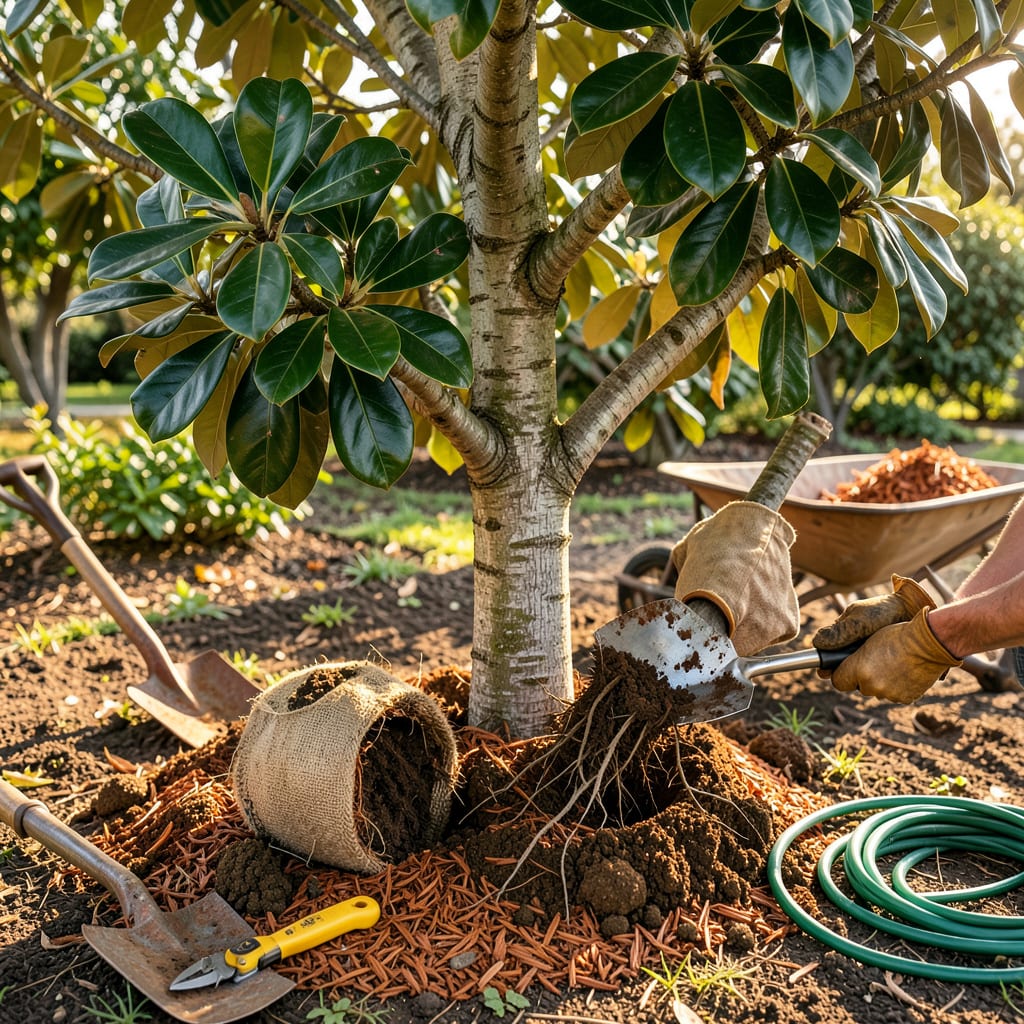
Moving a magnolia tree feels intimidating—I get it. That first time I attempted it, I worried about every root and leaf. But here’s the truth: with the right timing (early spring or late fall) and careful handling, these resilient trees establish beautifully in their new home. The key is minimizing root disturbance and giving them what they crave: well-drained soil and protection from transplant shock.
You’ll need basic tools—a sharp shovel, burlap for the root ball, and maybe a wheelbarrow for larger specimens. What surprised me most? How quickly magnolias bounce back when you get the depth right (same level as before!) and commit to consistent watering those first few weeks. No green thumb required—just patience and these proven steps.
📚 In This Guide
Moving an established magnolia requires patience and precision, but this method ensures minimal shock and strong recovery.
Select a location with full sun to partial shade and well-draining, slightly acidic soil (pH 5.0-6.5). Magnolias despise wet feet, so avoid low spots where water pools. Dig a hole twice as wide as the root ball but no deeper—planting too deep suffocates roots.
Amend the excavated soil with 50% organic matter (compost or aged pine bark) to improve drainage and nutrient retention. I create a slight berm around the hole’s perimeter to direct water toward the roots during establishment. Test drainage by filling the hole with water—it should drain within 2-3 hours.
Three months before transplanting, use a sharp spade to sever roots in a 12-inch radius around the tree. This encourages new feeder root growth within the future root ball. Water deeply 24 hours before moving—hydrated roots suffer less transplant shock.
The day of transplanting, dig a trench around the drip line, angling the spade inward to create a root ball 12-18 inches in diameter per inch of trunk caliper. For a 2-inch trunk, aim for a 24-36 inch diameter root ball. Wrap the root ball in burlap immediately to prevent drying.
Position the tree in the new hole at the same depth it grew previously—look for the soil line on the trunk. The flare where roots meet trunk should be 1-2 inches above ground level after settling. Backfill with the amended soil, tamping gently to eliminate air pockets every 6 inches.
Create a watering basin by mounding soil in a 3-foot diameter ring around the tree. This directs water to the critical root zone. Stake only if absolutely necessary—magnolias establish better when allowed to sway naturally in wind.
Water immediately with 10 gallons per inch of trunk diameter, then maintain consistent moisture for 3-4 months. The soil should feel damp to 3 inches deep but never soggy. Apply 3-4 inches of organic mulch (pine straw or wood chips) in a 3-foot diameter around the tree, keeping it 6 inches away from the trunk.
Monitor for stress signs: yellowing leaves indicate overwatering, while wilting suggests under-watering. Expect some leaf drop—this is normal as the tree redirects energy to root establishment. Avoid fertilizing until you see new growth in the following spring.
Transplanting a mature magnolia is a significant undertaking, but these insights will help you avoid common pitfalls and set your tree up for long-term success.
Root Pruning Precision: In Step 2, when severing roots in that critical 12-inch radius three months before moving, use a razor-sharp spade and make clean cuts. Ragged tears invite disease and slow recovery. I’ve found that making four evenly spaced vertical cuts around the tree (like compass points) creates the most balanced new root growth within the future root ball.
Watering Wisdom: The 24-hour pre-move hydration in Step 2 isn’t just about moisture—it’s about cellular preparation. Water deeply enough that moisture reaches the entire root zone you’ll be moving. I use a soaker hose set to a slow trickle for 2-3 hours the day before transplanting. This ensures even saturation without waterlogging, which is especially important for magnolias’ sensitive root systems.
Depth Discipline: Step 3’s instruction about keeping the root flare 1-2 inches above ground level after settling cannot be overstated. I use this trick: after positioning the tree, lay a straight board across the hole to check that the flare is slightly above this reference line. Magnolias planted too deep will show stress through gradual decline rather than immediate failure, making this one of the most common (and preventable) long-term issues.
Post-Transplant Monitoring: During the 3-4 month establishment period mentioned in Step 4, check soil moisture at the 3-inch depth daily for the first two weeks, then every other day. Magnolia roots are surprisingly shallow—most active roots occupy just the top 12 inches of soil. I use a simple wooden dowel to test moisture: if it comes out clean, it’s time to water; if soil clings, wait another day.
The ideal time is late fall to early winter (after leaf drop) or early spring (before new growth). Avoid extreme heat or freezing temps—aim for cool, moist conditions to reduce stress. Evergreen magnolias prefer early spring for less transplant shock.
You can transplant mature trees (up to 10–15 feet tall), but it’s riskier. Smaller trees (under 6 feet) adapt better. For large magnolias, hire a pro with a tree spade. Saplings (1–3 years old) establish fastest with proper root ball care.
Expect 1–2 years for full recovery. Water deeply 2–3 times weekly for the first 6 months, then taper off. New growth signals success! Stress signs (wilting, leaf drop) may appear but often resolve with consistent care.
Don’t:
Is it better to transplant a magnolia bare-root or with a root ball?
Always transplant with a root ball! Bare-root magnolias rarely survive. For trees under 4 feet, dig a 12–18-inch diameter ball. Larger trees need 10–12 inches of ball per inch of trunk diameter. Wrap the ball in burlap to protect roots during the move.
