
Beautiful Plants For Your Interior
Beautiful Plants For Your Interior
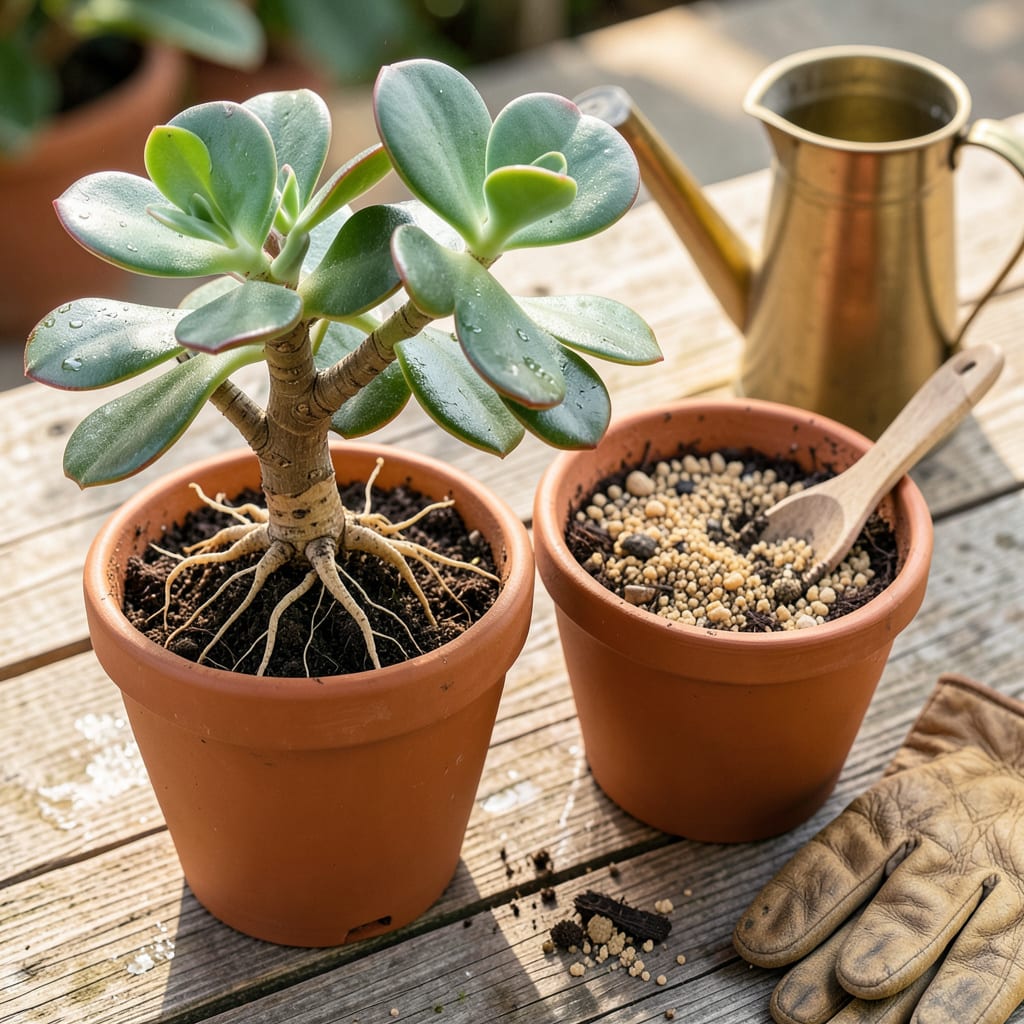
That moment when your jade plant outgrows its pot is exciting—it means you’ve kept it alive long enough to thrive. I’ve transplanted dozens of these resilient succulents, and the process is simpler than most people think. The key is timing: late winter or early spring, just as new growth starts, gives your plant the best chance to settle in before summer heat.
What surprises most beginners is how little you actually need: a slightly larger pot with drainage, well-draining soil mix, and about 15 minutes of careful attention. The real magic happens in how you handle the roots—gently teasing them apart if they’re circling, then giving them room to spread in their new home. Done right, you’ll see fresh growth within 2-3 weeks.
📚 In This Guide
This straightforward method ensures your jade plant thrives in its new home with minimal stress.
Choose a container that’s 1-2 inches wider than the current pot. Jade plants prefer snug conditions, so don’t go too large—excess soil holds moisture and risks root rot. I always use unglazed terra cotta because it wicks away excess moisture through the walls.
Fill the new pot one-third full with fresh, well-draining cactus/succulent mix. Don’t use regular potting soil—it stays too wet. I like to add a handful of perlite or coarse sand to improve drainage further. The soil should feel gritty, not dense.
Water your jade plant 2-3 days before transplanting. This keeps the roots pliable but not waterlogged. Gently squeeze the sides of the current pot to loosen the root ball, then tip the plant sideways while supporting the base of the stem.
If the plant resists, run a clean knife around the inner edge of the pot to free the roots. Never pull by the leaves—they’re brittle and will snap. You’ll feel when the root ball releases cleanly. Inspect the roots for any black, mushy sections and trim those away with sterilized scissors.
Place the root ball in the new container so the base of the stem sits at the same level as before. Burying the stem too deep causes rot. Fill around the roots with your prepared soil mix, tapping the pot gently to settle everything without compacting.
Leave about 1 inch of space between the soil surface and the pot rim. This prevents water from spilling over the edge during watering. Don’t water immediately—wait 5-7 days to let any disturbed roots heal. You’ll see the leaves perk up when it’s ready for moisture.
Move the transplanted jade to bright, indirect light for the first week. Direct sun on stressed roots can scorch leaves. I place mine near an east-facing window where it gets gentle morning sun. The leaves should feel firm to the touch—not soft or wrinkled.
Resume your normal watering routine after 7-10 days, but check the soil first. Stick your finger in 1-2 inches deep—if it feels dry, water thoroughly until it runs from the drainage holes. You’ll notice new growth within 2-3 weeks, which means your transplant was successful.
Transplanting jade plants doesn’t have to be stressful—these practical insights will help your plant transition smoothly.
Container Selection: In Step 1, choosing the right pot size is crucial. The 1-2 inch wider recommendation isn’t arbitrary—too much extra space leads to excess moisture retention. I’ve found that terra cotta pots with drainage holes work best because they allow the soil to dry more evenly between waterings, which jade plants prefer. Avoid decorative pots without drainage at all costs.
Root Handling: When removing the plant in Step 2, resist the urge to rush. Those 2-3 days of pre-watering make the roots flexible enough to handle without breaking. I learned the hard way that pulling by the stem can damage the plant’s structure. Always support the root ball from below when lifting—think of it like carrying a fragile package.
Watering Discipline: The 5-7 day waiting period mentioned in Step 3 is non-negotiable for root recovery. I know it’s tempting to water immediately (I did this my first time), but the roots need time to heal from the transplant shock. Watch for the leaves to regain their firmness—that’s your plant telling you it’s ready for moisture. When you do water, make sure it flows freely from the drainage holes to prevent salt buildup.
Light Transition: That first week of bright, indirect light in Step 4 is when many people make mistakes. Direct sunlight too soon can cause leaf scorch, but too little light weakens the plant. An east-facing window is ideal, but if you don’t have one, use a sheer curtain to filter intense light. The leaves should maintain their plump appearance—if they start looking thin or wrinkled, adjust the light immediately.
Jade plants thrive when repotted every 2–3 years or when roots crowd the container. Younger plants may need annual upgrades, while mature ones grow slower. Look for roots circling the drainage holes or soil drying out too fast—these are signs it’s time! Spring or early summer is ideal for minimal stress.
Avoid winter repotting—jade plants enter dormancy in cooler months and recover poorly. If absolutely necessary (e.g., root rot), move it to a warm spot, use fresh soil, and water sparingly. Wait until spring for best results, when active growth resumes.
Yes! Jade plants hate soggy roots. Use a well-draining mix: 2 parts cactus/succulent soil + 1 part perlite or coarse sand. Avoid dense potting soil—it retains too much moisture. DIY alternative? Mix regular potting soil with 50% perlite/pumice for airflow.
Wilting is often transplant shock. Check for overwatering (wait until soil is dry before watering again) or under-watering (light moisture helps roots settle). Keep it in bright, indirect light for a week, avoid fertilizing, and ensure the pot has drainage holes.
If your jade plant is overgrown, snip healthy stems (3–4 inches long), let them callus for 2–3 days, then plant in soil. This reduces transplant stress on the mother plant while giving you free baby jades! Win-win for busy gardeners.
