
Beautiful Plants For Your Interior
Beautiful Plants For Your Interior
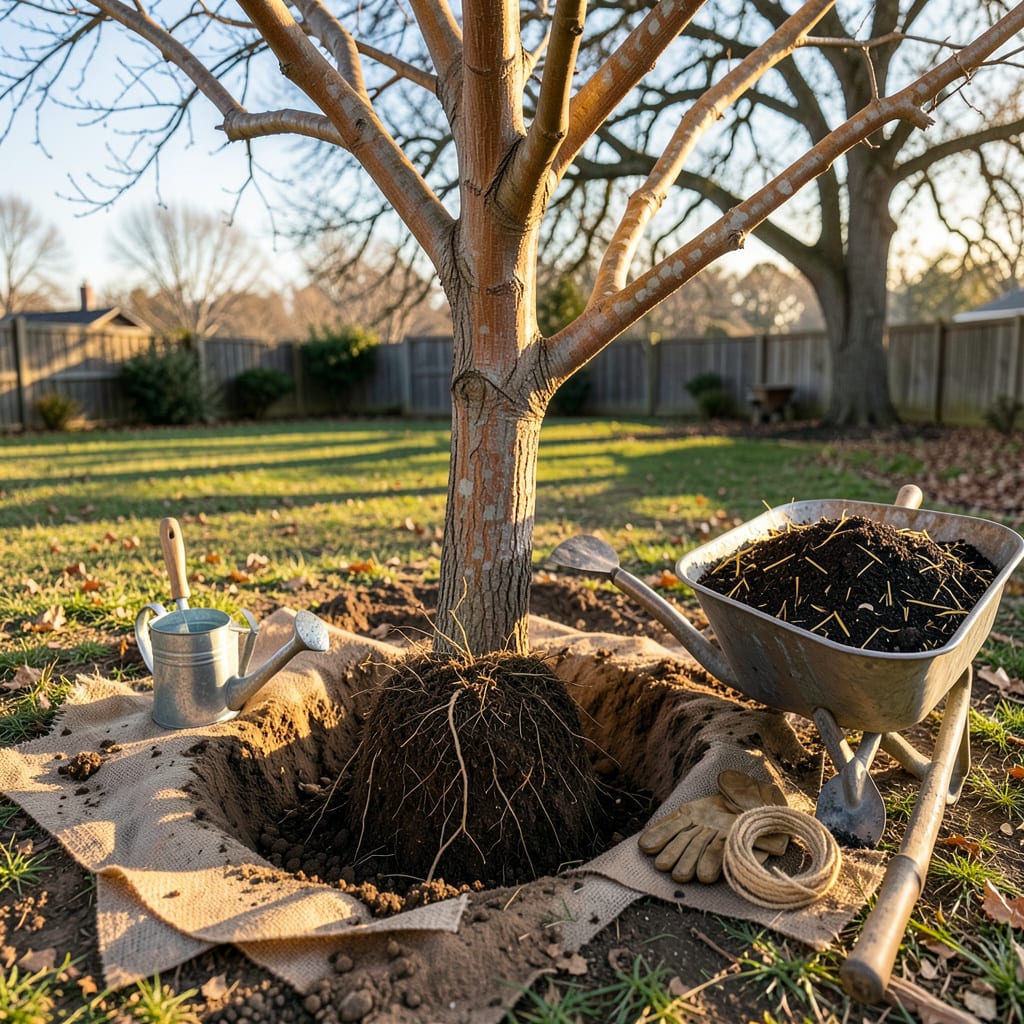
Moving a crepe myrtle feels like performing surgery on your landscape—but I’ve done it half a dozen times, and the secret is timing. Late winter or early spring, when the plant is still dormant, gives roots a full season to settle in before summer heat hits. The difference between a struggling transplant and one that explodes with vibrant blooms next year? Preparation.
You don’t need fancy tools, just a sharp shovel, some root stimulator, and the guts to cut through a few roots (yes, really). I’ve learned the hard way that a wide, shallow hole in the new spot—twice as wide as the root ball—prevents the dreaded “bathtub effect” where water pools and drowns the roots. Do this right, and your crepe myrtle won’t just survive—it’ll thrive like it’s been there for years.
📚 In This Guide
Moving an established crepe myrtle may seem daunting, but this method ensures your tree thrives in its new location with minimal stress.
Late winter or early spring—when the tree is still dormant but the ground isn’t frozen—is ideal for transplanting. I always start by preparing the new planting hole first, so the roots spend minimal time exposed. Dig a hole twice as wide as the root ball but only as deep as the current root system.
Test the hole’s depth by placing a shovel handle across it—you want the top of the root ball to sit 1-2 inches above the surrounding soil. This prevents settling that could bury the trunk too deeply. Mix a shovelful of compost into the soil you removed to give the roots a nutrient boost.
Start digging 12-18 inches away from the trunk to preserve feeder roots. Use a sharp spade to cut a clean circle around the tree, then angle the blade underneath to lift the root ball intact. For trees over 3 inches in diameter, you’ll need help—root balls can weigh hundreds of pounds.
Once the tree is free, wrap the root ball in burlap or a tarp to keep it moist during the move. I always check for broken roots—trim any damaged ones with clean pruners. The quicker you move it to the new hole, the less transplant shock you’ll see.
Lower the tree into the hole, making sure it sits at the same depth as before. Backfill with the amended soil, tamping gently with your hands to eliminate air pockets. Create a 3-inch-high water ring around the perimeter to direct moisture to the roots.
Water deeply immediately—until the soil is saturated and water pools slightly. I stake trees taller than 6 feet with two sturdy posts and soft tree straps to prevent wind rock. Mulch with 2-3 inches of wood chips, keeping it 3 inches away from the trunk to prevent rot.
Water 2-3 times weekly for the first month, then taper to once weekly unless rainfall exceeds 1 inch. Don’t fertilize until you see new growth—usually 4-6 weeks after transplanting. I watch for wilting leaves in the afternoon (normal) versus morning (needs water).
Prune only to remove dead or crossing branches the first year—no major shaping. You’ll know the tree has established when new growth appears vigorous and leaves stay green through summer. Expect full blooms the following season if you’ve followed these steps carefully.
Transplanting a tree successfully comes down to a few critical details that make all the difference between thriving and struggling. Here’s what I’ve learned from years of moving crepe myrtles.
Timing is Everything: The late winter to early spring window mentioned in Step 1 isn’t just a suggestion—it’s crucial. I once tried transplanting in summer and lost half my trees to heat stress. The dormant season ensures the tree focuses energy on root establishment rather than leaf production. Even if your tree looks healthy, moving it during active growth almost guarantees transplant shock.
Root Ball Protection: When digging as described in Step 2, keep the root ball intact by working methodically around the entire circumference before lifting. I use a sharp spade and make clean cuts through roots rather than tearing them. For larger trees over 3 inches in diameter, recruit help—root balls can weigh 200-300 pounds. Wrapping the root ball in wet burlap during transport prevents drying that can kill feeder roots before you even replant.
Watering Wisdom: The 2-3 times weekly watering schedule in Step 4 isn’t arbitrary—it mimics the moisture balance the tree needs to establish new roots. I use a moisture meter to check soil depth; the top inch can look dry while deeper soil remains properly moist. Morning wilting means the tree needs water immediately, while afternoon wilting is usually normal stress response. Create that 3-inch water ring religiously—it directs every drop to the roots where it’s needed most.
Patience Pays Off: The 4-6 week waiting period before fertilizing isn’t just cautious—it’s critical. New roots are tender and can burn easily from fertilizers. I mark my calendar and watch for that first flush of new growth as my signal. Even then, I use half-strength fertilizer the first time. Rushing this step can set your tree back an entire season.
The ideal time is late winter to early spring (February–March) while the plant is still dormant. Avoid transplanting in extreme heat or during blooming season, as stress can stunt growth. Fall (October–November) works in mild climates, but avoid freezing temps.
Mature trees (over 10 feet tall) can be transplanted but require extra care. Root-prune 6–12 months ahead to encourage new feeder roots. Use a tree spade or professional help for large specimens—survival rates drop if roots are severely damaged.
Water deeply 2–3 times per week for the first month (more in hot/dry climates). Taper to once weekly in months 2–3. Check soil moisture 2–3 inches deep—consistent dampness (not soggy!) is key. Mulch helps retain moisture.
Trim back 1/3 of the canopy to balance root loss, and use a root stimulator (like Hormex) at planting. Avoid fertilizing until new growth appears (4–6 weeks). Shade cloth can help in sunny locations.
Only as a last resort. If must-do, choose a cool, overcast day, prune aggressively (50% canopy), and water daily for 2 weeks. Expect leaf drop—prioritize root recovery over foliage. Fall is safer for stressed plants.
