
Beautiful Plants For Your Interior
Beautiful Plants For Your Interior
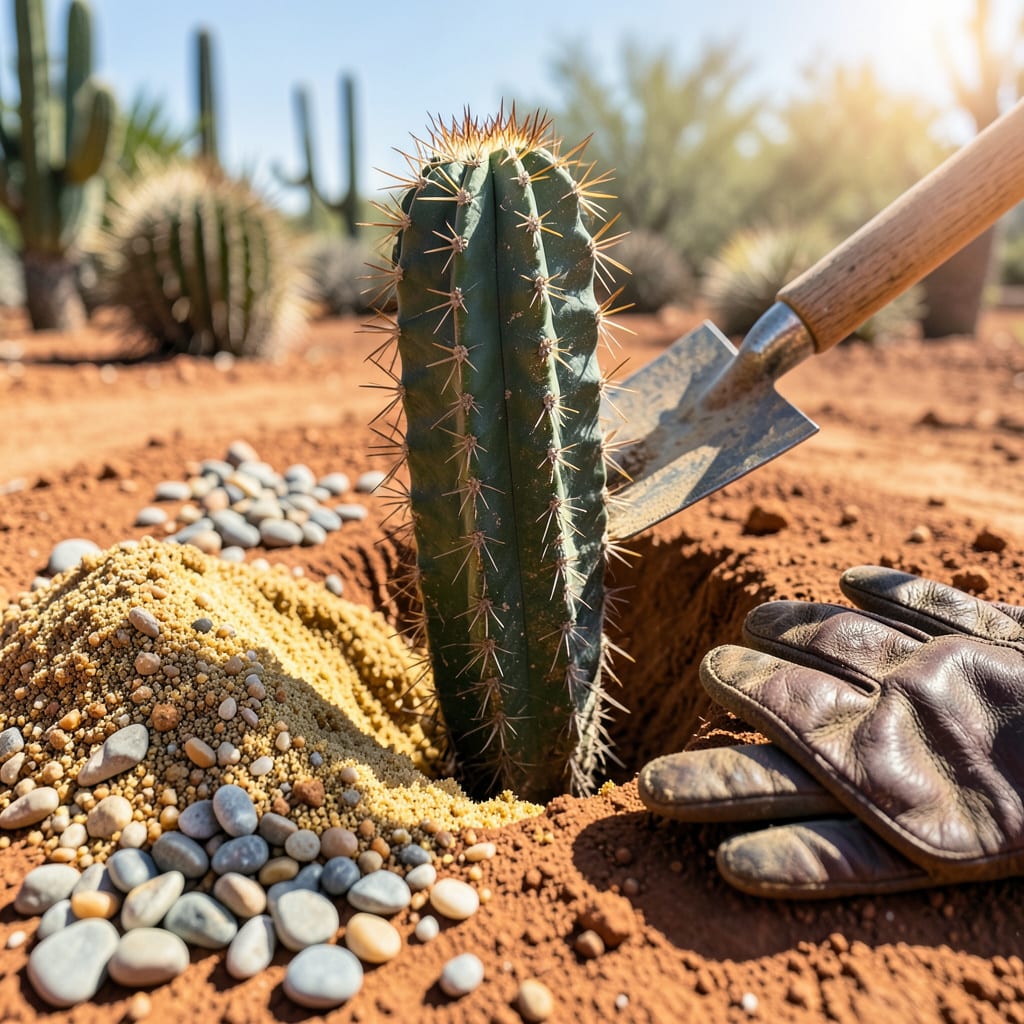
Moving a cactus from pot to ground feels intimidating—those spines aren’t just for show. I’ve transplanted dozens over the years, and the key is working with the plant’s natural defenses, not against them. The right timing (early morning in mild weather) and proper handling (thick gloves plus a folded newspaper) make all the difference between a thriving transplant and a prickly disaster.
You’ll end up with a cactus that establishes faster than store-bought plants, with roots that spread naturally in native soil. My transplanted specimens always outperform container-grown ones within 6 months, developing that rugged, sun-hardened look that makes cacti so striking. The process takes less than 30 minutes if you prepare properly—here’s exactly how to do it safely and effectively.
📚 In This Guide
Moving a cactus doesn’t have to be intimidating—here’s how to do it safely while keeping roots intact.
Choose a location with full sun (at least 6-8 hours daily) and well-draining soil. I test drainage by digging a 12-inch deep hole, filling it with water, and checking if it empties within 30 minutes. If water pools, amend the area with 50% coarse sand or gravel mixed into the native soil.
Dig the hole twice as wide as the cactus’s root ball but only as deep. This gives roots room to spread without sitting in a depression that collects moisture. Let the hole sit for 24 hours before transplanting—this ensures the soil settles naturally and prevents the cactus from sinking after planting.
Wear thick gloves and use folded newspaper or tongs to handle the plant. For larger specimens, I wrap the cactus in an old towel to protect my hands while lifting. Gently loosen the soil around the base with a trowel, working outward in a 6-inch radius from the stem to avoid severing roots.
Once the root ball is exposed, slide a flat shovel underneath and lift straight up. Don’t pull from the top—this breaks the fragile connection between roots and stem. If resistance occurs, work the shovel deeper rather than forcing the plant. Healthy roots should appear firm and white, not mushy or black.
Place the cactus in the center of the prepared hole at the same depth it grew previously. The soil line on the stem should remain visible—burying it invites rot. I use a small level to ensure the plant sits perfectly upright; even slight tilting can cause uneven growth over time.
Backfill with the amended soil mixture, gently firming it around the base. Don’t water immediately—wait 5-7 days to allow any damaged roots to callous. This prevents bacterial entry through fresh wounds. For stability in windy areas, surround the base with small rocks to anchor it temporarily.
After the initial waiting period, water deeply until moisture reaches 6 inches below the surface. Then let the soil dry completely before watering again—cacti thrive on neglect. I check moisture by inserting a wooden skewer; if it comes out clean, it’s time to water.
Monitor for sunburn (bleached or yellow patches) during the first 2-3 weeks. If this occurs, provide temporary shade cloth until the plant acclimates. New growth indicates successful establishment. Avoid fertilizing for 6 weeks—transplanted cacti need to focus energy on root recovery, not foliage production.
Transplanting cacti successfully comes down to patience and attention to detail—here’s what I’ve learned from years of trial and error.
Soil Preparation Insight: The 24-hour settling period mentioned in Step 1 isn’t just for show. I once skipped this and watched my cactus slowly sink over weeks as the soil compacted. This waiting time lets the soil particles settle naturally, creating a stable foundation. If you’re in a hurry, you can lightly tamp down the soil with your foot after digging, but overnight settling is ideal for preventing future shifting.
Root Handling Technique: When you’re working that 6-inch radius around the base in Step 2, think of it like performing surgery. I use a paintbrush to gently remove soil from roots rather than shaking the plant. This lets me inspect for any damaged roots that need trimming before replanting. Healthy roots should snap when bent—if they bend like rubber bands, they’re already compromised.
Post-Transplant Care Nuance: The 5-7 day waiting period before watering in Step 4 is critical, but here’s what nobody tells you: humidity matters. In dry climates, you can water at the 5-day mark. In humid areas, wait the full 7 days. I check by feeling the soil 2 inches down—it should be bone dry. When you do water, use a watering wand on a gentle shower setting to avoid displacing soil around the fragile new roots.
Sunburn Prevention Strategy: During those first 2-3 weeks when sunburn risk is highest, I’ve found that afternoon shade makes all the difference. A simple piece of burlap draped over stakes on the west side of the plant provides enough protection without blocking all light. Watch for that telltale yellowing—it often starts on the side facing the hottest afternoon sun, not necessarily the top of the plant.
Spring or early summer is ideal—when cacti are actively growing. Avoid winter or extreme heat, as stress can harm roots. If you must transplant in fall, do it early and avoid watering until spring to prevent rot.
Wait 1–2 weeks before watering to let roots heal and avoid rot. If your climate is very dry, mist the soil lightly after 5–7 days. Overwatering is the #1 killer of transplanted cacti!
Act fast! Remove the cactus, trim black/mushy roots with sterilized shears, and let it dry in shade for 3–5 days. Replant in fresh, gritty soil. If rot spreads to the stem, propagate healthy cuttings instead.
Technically yes, but why risk it? Even non-spiny cacti have tiny glochids that irritate skin. Use thick gloves, tongs, or wrap the cactus in newspaper for grip. For large species, ask a helper!
Is it better to transplant into a pot or the ground? vs.
Ground-planting suits mature cacti in warm climates (USDA Zones 9+), but pots offer flexibility for cold snaps or poor soil. Start small cacti in containers; transplant to ground after 1–2 years if your climate permits.
