
Beautiful Plants For Your Interior
Beautiful Plants For Your Interior
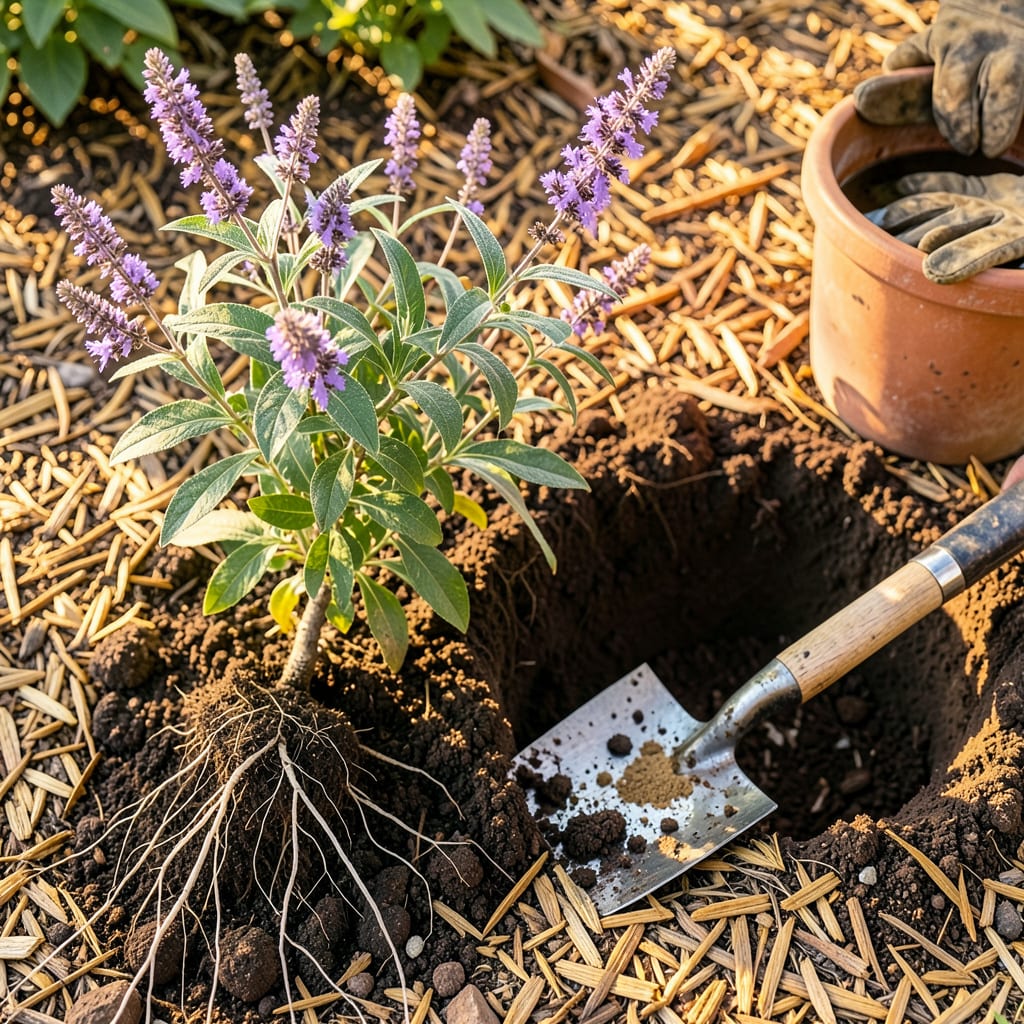
Moving a butterfly bush feels intimidating until you realize it’s more about timing than technique. I’ve relocated several over the years, and the ones that thrived all followed the same simple rules: right season, careful roots, and immediate aftercare. The payoff is a plant that establishes faster and blooms more abundantly than store-bought shrubs.
You’ll want to tackle this in early spring or fall when the plant’s dormant but the soil’s workable. A cloudy day reduces transplant shock, and keeping the root ball intact makes all the difference. Within 4-6 weeks, you’ll see new growth—proof your bush is settling into its new home just fine.
📚 In This Guide
Moving an established butterfly bush doesn’t have to be stressful—follow this method for minimal shock and maximum blooms next season.
Choose a location with full sun exposure (at least 6-8 hours daily) and well-draining soil. Butterfly bushes thrive in slightly alkaline to neutral soil (pH 6.5-7.5). Dig a hole twice as wide as the root ball but only as deep—this encourages lateral root growth without suffocating the plant.
Amend the native soil with 2-3 inches of compost mixed thoroughly into the backfill. Avoid over-amending; butterfly bushes adapt better to native soil conditions than overly rich environments. Water the hole deeply and let it drain completely before transplanting—this creates a moisture reservoir for the roots.
Reduce transplant shock by pruning the bush one-third of its height using clean, sharp bypass pruners. This balances the root-to-canopy ratio and minimizes water loss. Remove any dead, damaged, or crossing branches entirely, cutting back to healthy wood just above an outward-facing bud.
Water the plant deeply 24-48 hours before moving to ensure the root ball is fully hydrated. This makes the soil more cohesive during digging and reduces root damage. If the plant is large, tie branches loosely with soft twine to prevent breakage during transport.
Using a sharp spade, dig a trench around the plant’s drip line (where water drips from outer leaves) to sever peripheral roots. Then angle the spade under the root ball, working in a circular motion to lift the plant. For mature specimens, aim for a root ball 12-18 inches in diameter—larger is better for established plants.
Lift the plant by the root ball, not the trunk, and immediately place it in the prepared hole. The top of the root ball should sit 1-2 inches above the surrounding soil level to allow for settling. Backfill with native soil, firming gently to eliminate air pockets but avoiding compaction that could restrict root expansion.
Create a watering basin by mounding soil in a 3-inch high ring around the plant’s perimeter, about 12 inches from the trunk. Fill this basin with water immediately after planting, then repeat when the water drains. This deep watering encourages roots to grow outward rather than upward.
Apply 2-3 inches of organic mulch (shredded bark or wood chips) extending 18 inches beyond the plant, but keep mulch 3 inches away from the trunk to prevent rot. Mulch conserves moisture and regulates soil temperature—critical for the first 4-6 weeks as the plant establishes.
Check soil moisture daily for the first week, then taper to every 2-3 days unless rainfall exceeds 1 inch per week. Water deeply when the top 2 inches of soil feel dry—shallow watering encourages weak root systems. Avoid fertilizing until you see new growth (typically 3-4 weeks post-transplant).
Watch for wilting in the first 7-10 days—this is normal as roots re-establish. If wilting persists beyond two weeks or leaves turn crispy, the plant needs more water. Stake only if necessary to prevent wind rock, using soft ties that won’t girdle the trunk as it expands.
Transplanting success comes down to timing and technique—here’s what I’ve learned from moving dozens of these resilient beauties.
The Watering Window: The 24-48 hours of deep watering before moving isn’t just about hydration—it’s about soil cohesion. I’ve found that watering at the 24-hour mark (rather than 48) works best for most climates, as overly saturated soil can make the root ball heavy and prone to breaking apart. Use a slow drip from a hose rather than a quick spray to ensure moisture penetrates deeply where roots need it most.
Root Ball Reality Check: When digging that 12-18 inch diameter root ball in Step 3, don’t panic if you lose some peripheral roots—it’s better to have a slightly smaller, intact root ball than a large one that crumbles. I use a sharp hori-hori knife to cleanly sever roots at the drip line before lifting. For very mature plants, soak the surrounding soil with water first to reduce resistance when digging.
The Settling Secret: That 1-2 inches above ground level placement in Step 3 isn’t arbitrary—it accounts for natural settling. I’ve seen gardeners plant flush with soil level, only to have their bush sink below grade after a few waterings, creating a moisture trap. After backfilling, gently tug upward on the plant; if it moves, you haven’t firmed the soil enough. If it won’t budge, you’ve compacted too much—find that sweet spot where it’s secure but not strangled.
Mulch Mathematics: The 2-3 inches of mulch specified in Step 4 should be fluffed, not packed. I use a garden fork to lightly aerate the mulch after applying—this prevents that crusty layer that repels water. Extend it the full 18 inches beyond the plant to create a moisture gradient that encourages roots to spread. Avoid cedar mulch; its allelopathic compounds can inhibit growth in some plants.
The ideal time is early spring (just before new growth starts) or fall (4-6 weeks before the first frost). Avoid transplanting in extreme heat or while blooming—stress can stunt growth. Mild weather helps roots establish faster!
Aim for a root ball 12–18 inches wide and 10–12 inches deep. Larger bushes (3+ feet tall) need more—prioritize keeping roots intact! If roots are dense, trim damaged ones cleanly with pruners.
Only as a last resort. If you must, choose a cool, overcast day, water deeply 24 hours prior, and prune back ⅓ of the foliage to reduce stress. Provide temporary shade and daily water for 2 weeks.
It’s normal! Transplant shock may delay blooms one season. Ensure it gets full sun (6+ hours), consistent moisture (not soggy), and a balanced fertilizer (10-10-10) after 4–6 weeks. Patience pays off!
Try these pollinator magnets:
