
Beautiful Plants For Your Interior
Beautiful Plants For Your Interior
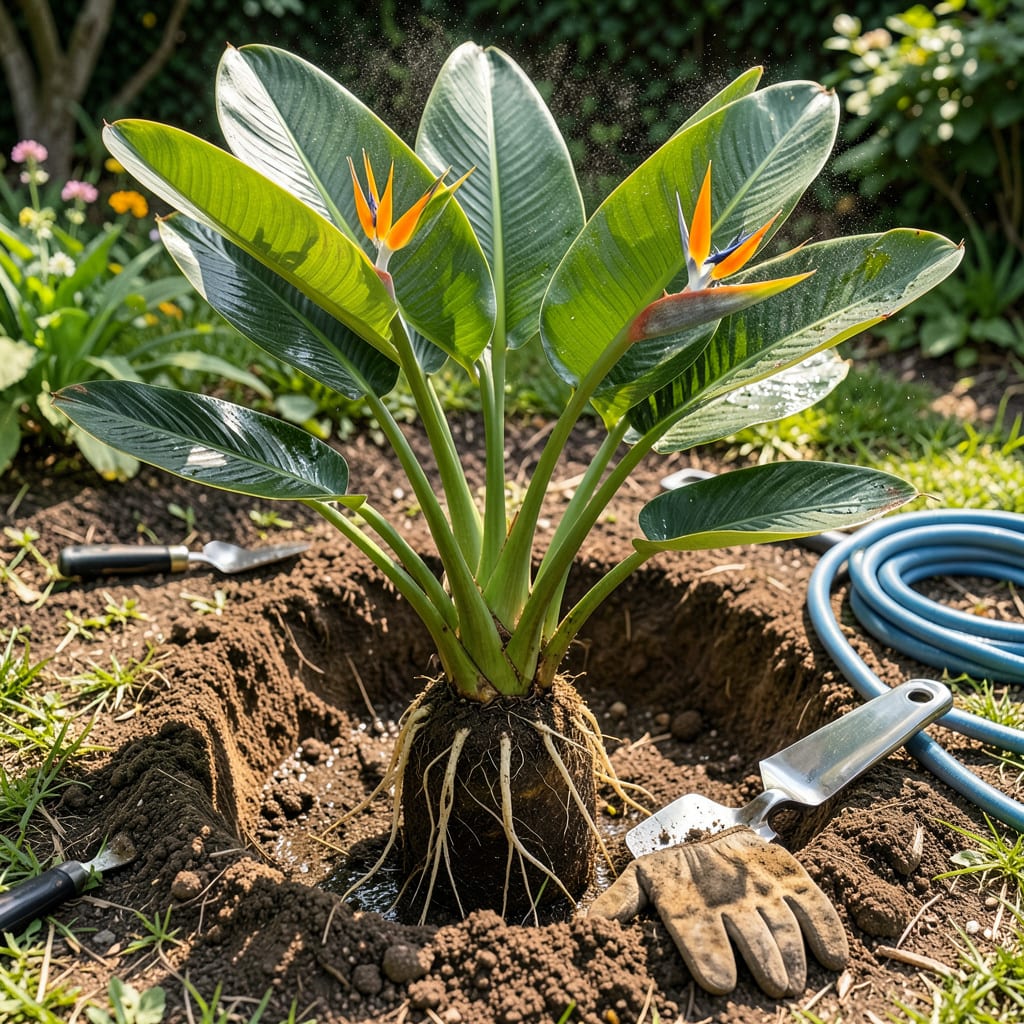
Moving a bird of paradise feels like relocating a small tree—and in many ways, it is. I’ve transplanted three of these dramatic beauties over the years, and the difference between a thriving plant and one that sulks for months comes down to timing and root care. Spring or early fall is your window, when the soil is warm but the plant isn’t stressed by extreme heat or dormancy.
What most guides won’t tell you? The root ball is everything. Too small, and you’ll shock the plant; too rough with the roots, and you’ll set back growth for a season. The right spot gets 6+ hours of sun and room to spread—these plants don’t stay small. Do it once, do it carefully, and you’ll have a showstopper that rewards you with bold blooms for years.
📚 In This Guide
Moving these tropical beauties doesn’t have to be stressful—here’s how I do it without shocking the roots.
Early spring is ideal, right as new growth begins but before hot weather arrives. I pick a spot with full sun to partial shade—these plants love warmth but appreciate afternoon shade in scorching climates. Dig your new hole twice as wide as the root ball but no deeper than the current container.
Test the drainage by filling the hole with water. If it doesn’t drain within 30 minutes, you’ll need to amend the soil with compost or choose a different spot. Bird of paradise hates soggy roots, so this check prevents future problems.
Water the plant deeply 24 hours before transplanting—this keeps the root ball intact. Lay the container on its side and gently squeeze the pot to loosen the roots. If it’s stuck, run a knife around the inner edge to break the suction.
Slide the plant out while supporting the base of the stems. You’ll feel the weight of the root ball—don’t pull by the leaves, as they tear easily. If roots are circling the pot, gently tease them apart with your fingers to encourage outward growth.
Place the plant in the new hole so the top of the root ball sits 1-2 inches above ground level. This accounts for settling. Backfill with native soil, pressing lightly to remove air pockets. I create a small berm around the edge to help direct water toward the roots during the first few waterings.
Water immediately with 2-3 gallons to settle the soil. You’ll see bubbles rise—this means air pockets are escaping. Don’t stomp the soil down, as that compacts it too much for new root growth.
Keep the soil consistently moist (but not soggy) for the first 2-3 weeks. I check daily by sticking my finger 2 inches deep—if it feels dry, it’s time to water. Mulch with 3 inches of organic material to retain moisture and regulate soil temperature.
Hold off on fertilizer until you see new growth—usually 4-6 weeks. The plant needs time to establish roots before processing nutrients. If leaves yellow slightly, don’t panic—this is normal transplant stress and should resolve as the plant adjusts.
Transplanting these dramatic tropical plants becomes much easier when you know what to watch for. Here’s what I’ve learned from years of moving bird of paradise without stressing the roots.
Timing is Everything: The 24-hour pre-watering in Step 2 makes all the difference. I’ve found that thoroughly saturated soil helps the root ball hold together perfectly when removing from the container. Don’t skip this step or the roots may crumble apart. If you’re dealing with particularly dry soil, you might need to water twice – once the night before and again 12 hours later.
Drainage Test Insight: That 30-minute drainage check in Step 1 reveals more than just soil quality. If water sits longer than 30 minutes, you’ll know exactly where to focus your soil amendments. I like to mix in coarse sand or perlite to improve drainage rather than just compost, which can sometimes make clay soils even denser.
Planting Depth Secret: The 1-2 inches above ground level mentioned in Step 3 isn’t arbitrary. This elevation accounts for natural settling that occurs after watering. I’ve seen plants sink as much as an inch after that initial 2-3 gallon watering, which is why we start slightly high. Create that berm around the edge – it’s your insurance against water running off before soaking in.
Post-Transplant Monitoring: During those first 2-3 weeks of careful watering, pay special attention to the oldest leaves. They’ll show stress first through yellowing or browning at the tips. This is normal, but if you notice more than 20% of leaves affected, increase your watering frequency slightly while checking that water isn’t pooling around the base.
Early spring or fall is ideal—when temperatures are mild (60–75°F) and the plant is semi-dormant. Avoid extreme heat or cold, as stress can shock roots. If moving potted plants indoors/outdoors, acclimate them gradually over 1–2 weeks.
Only if absolutely necessary! Summer heat stresses plants, increasing transplant shock risk. If you must, work in early morning, keep roots moist, and provide temporary shade for 1–2 weeks post-move. Water deeply 2–3x/week.
Dig a hole twice as wide as the root ball but no deeper—extra depth can cause rot. Loosen soil at the sides to encourage root spread. For large plants, a 2–3 ft diameter hole ensures stability. Pro tip: Mix native soil with compost for easier transition!
Wilting is normal for 1–2 weeks (transplant shock). Check for:
Only if necessary! Remove dead/damaged leaves or flowers to redirect energy to roots. Avoid heavy pruning—keep at least ⅔ of healthy foliage. For overgrown plants, trim after transplanting (wait 2–3 months) to avoid extra stress.
