
Beautiful Plants For Your Interior
Beautiful Plants For Your Interior
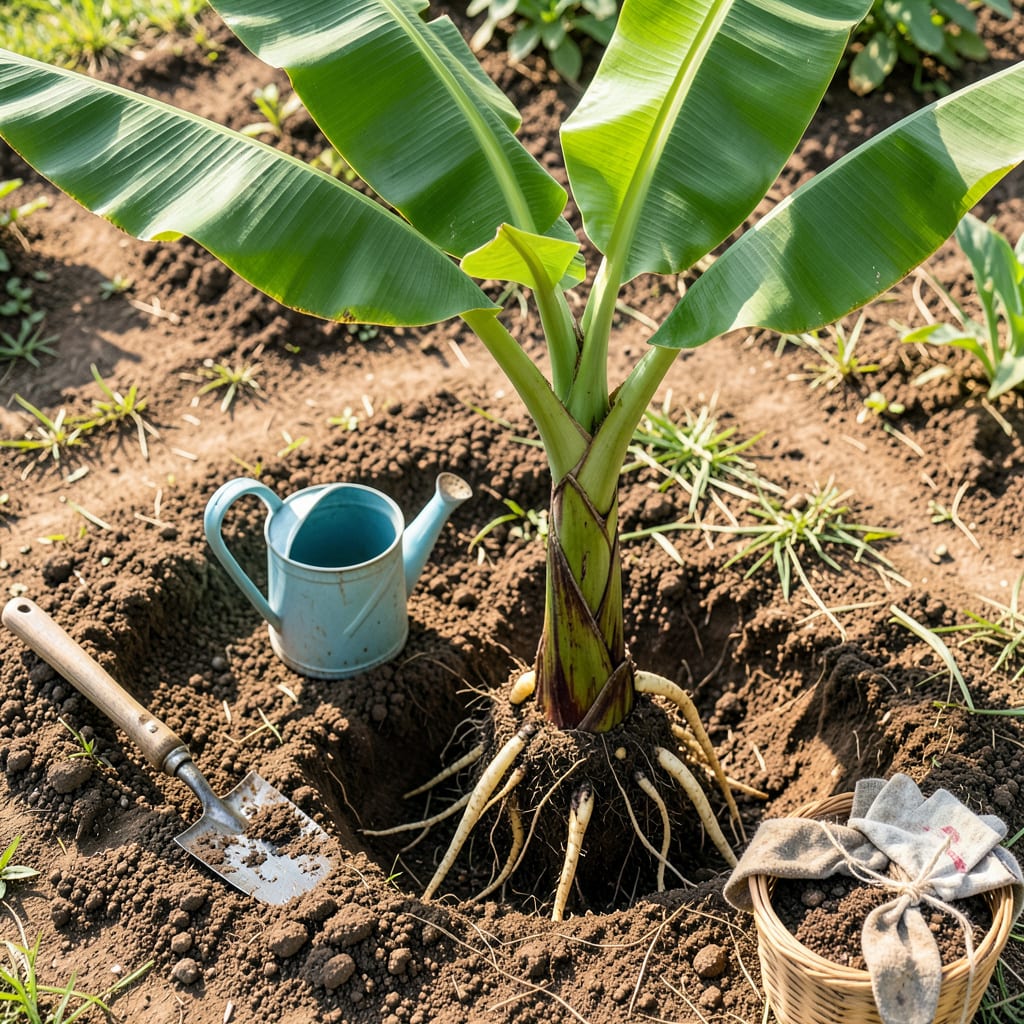
Moving a banana tree feels like relocating a small jungle—until you know the trick. I’ve transplanted mine three times now, and the key is timing: do it in early summer when the soil is warm but before the plant’s energy shifts to fruiting. A well-timed move means less shock, faster recovery, and a tree that rewards you with lush growth instead of sulking for months.
What most people miss? The corm—the thick, bulb-like base—is the heart of the operation. Damage it, and you’ve set your tree back a season. But handle it right, with a generous root ball and a pre-dug hole twice as wide, and you’ll see new leaves unfurling within 2-3 weeks. No green thumb required, just smart prep and a little patience.
📚 In This Guide
Moving a banana tree is simpler than you think—follow this method for minimal shock and maximum success.
Transplant in late spring or early summer when soil temperatures stay above 65°F. Banana trees recover fastest during active growth. I always check the forecast for 5-7 days of mild weather after transplanting to avoid stressing the plant.
Dig the new hole twice as wide as the root ball and just as deep—this gives roots room to spread without sinking the tree. Mix compost or aged manure into the removed soil at a 1:3 ratio. You want rich but well-draining soil; banana roots rot in soggy conditions.
Water the tree deeply 24 hours before moving—moist soil holds together better around roots. Use a sharp spade to cut a 12-18 inch diameter circle around the base, going deep enough to preserve the entire root system. You’ll feel resistance when you hit the main roots; that’s normal.
Lift the tree by the root ball, not the trunk. I slide a tarp underneath to drag heavy specimens without damaging roots. If any roots break, trim them cleanly with pruners—ragged tears invite disease. Keep the root ball intact as much as possible; exposed roots dry out within minutes.
Set the tree in the new hole at the same depth it grew before—burying the trunk causes rot. Backfill with your amended soil, tamping gently to eliminate air pockets. Create a 3-inch-high water ring around the edge of the hole to direct moisture to roots.
Water immediately with 5 gallons per tree, letting it soak in slowly. The soil should feel like a damp sponge—not soggy, not dry. I add a 2-inch layer of mulch (straw or wood chips) to retain moisture, but keep it 3 inches away from the trunk to prevent stem rot.
Keep the soil consistently moist (but not waterlogged) for the first 2 weeks. You’ll see new leaf growth within 3-4 weeks if the transplant succeeded. Protect the tree from wind and direct sun for 5-7 days—I use a temporary shade cloth if needed.
Avoid fertilizing for 4-6 weeks; fresh roots are sensitive to chemical burns. Watch for yellowing leaves—this is normal transplant shock, not a sign of failure. If the tree wilts severely, provide afternoon shade and mist leaves lightly until it recovers.
Here’s what I’ve learned from years of moving banana trees—small details that make a huge difference in survival rates.
Timing is Everything: The late spring or early summer window mentioned in Step 1 isn’t arbitrary. I once transplanted in early spring during a cold snap, and the tree struggled for months. Wait until soil temperatures consistently stay above 65°F—use a soil thermometer if you’re unsure. That 5-7 days of mild weather after transplanting is equally critical; I’ve lost trees to unexpected heat waves that followed transplanting.
Root Ball Protection: When you water 24 hours before moving as directed in Step 2, add a teaspoon of liquid seaweed extract to the water. This strengthens cell walls and reduces transplant shock. During removal, if your root ball starts crumbling despite the pre-watering, wrap it immediately in damp burlap—this saved a mature tree of mine that was falling apart during relocation.
The Critical First Week: The 5-7 days of protection mentioned in Step 4 are non-negotiable. I learned this after losing a tree that looked fine initially but wilted permanently on day 8 from sun exposure. Use that shade cloth or create temporary shade with a bedsheet on stakes—anything to filter intense sunlight. Mist the leaves twice daily during this period; it mimics the humidity these tropical plants crave.
Watering Wisdom: That 5 gallons per tree immediate watering in Step 3 should be done slowly over 10-15 minutes, not all at once. I use a bucket with a small hole in the bottom to create a slow drip. For the following 2 weeks of consistent moisture, check soil daily by sticking your finger 2 inches deep—if it feels dry at that depth, water with another 2-3 gallons. The 3-inch water ring you create is your best friend here; it prevents runoff and ensures water goes where it’s needed.
Spring or early summer is ideal—warm soil and consistent moisture help roots establish. Avoid winter or extreme heat, as stress can stunt growth. In tropical zones, transplant during the rainy season for natural hydration. Pro tip: Check local frost dates if you’re in a marginal climate!
Aim for a pup (sucker) that’s 3–4 feet tall with its own roots and 3–5 leaves. Smaller pups may struggle, while oversized ones risk transplant shock. If the mother plant is healthy, smaller pups (1–2 feet) can work with extra care and shade post-move.
Grow in a large container (15+ gallons) with well-draining potting mix (add perlite or coconut coir). Dwarf varieties like ‘Super Dwarf Cavendish’ thrive in pots. Move containers indoors if temps drop below 50°F (10°C). Bonus: Containers let you control soil pH (aim for 5.5–6.5).
Yellowing is often transplant shock—normal for 1–2 weeks. Overwatering or poor drainage can also cause it. Trim damaged leaves, keep soil moist (not soggy), and provide dappled shade. If yellowing spreads, check for pests (spider mites) or nutrient deficits (add compost or banana fertilizer).
Wait 2–4 weeks—fresh roots are sensitive! Start with a light dose of balanced fertilizer (10-10-10) or compost tea. Avoid high-nitrogen feeds early on; focus on phosphorus for root growth. After 3 months, switch to a potassium-rich fertilizer (like 8-10-8) to boost fruiting.
