
Beautiful Plants For Your Interior
Beautiful Plants For Your Interior
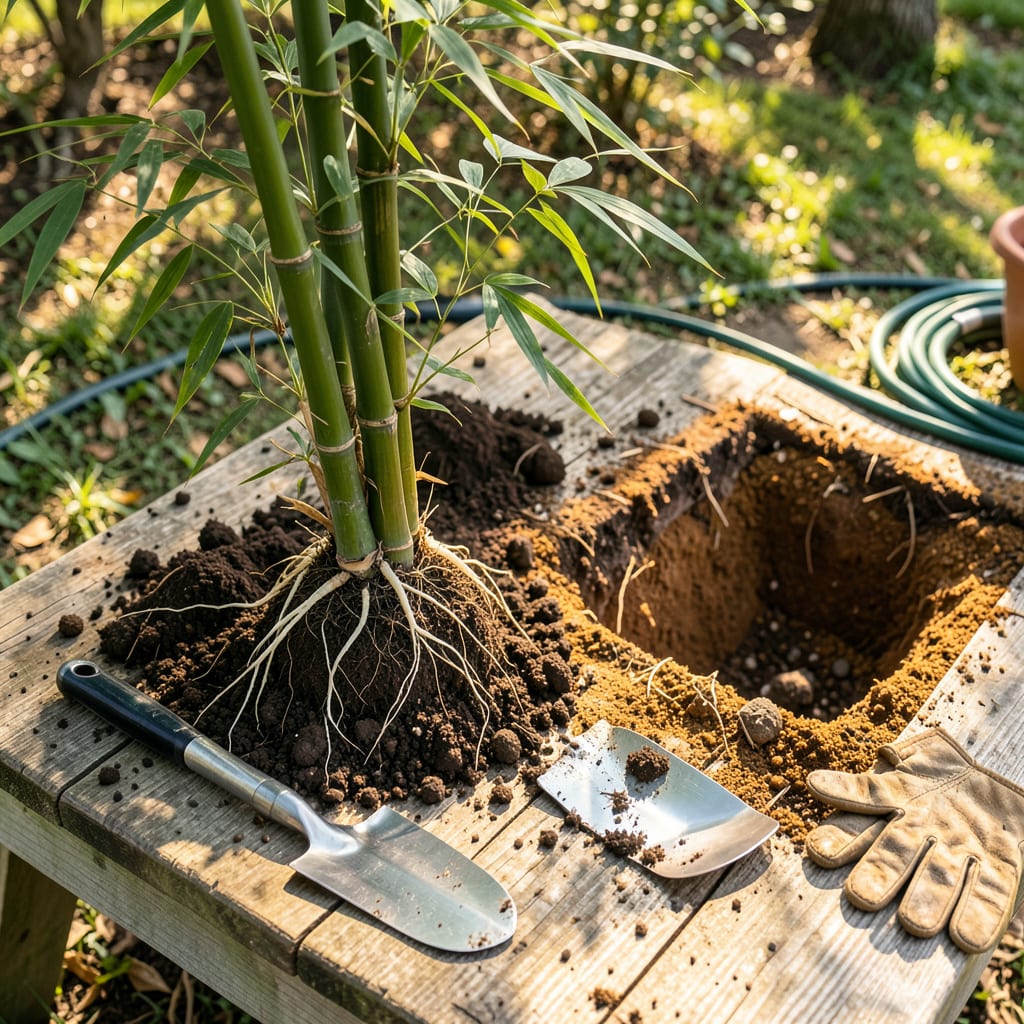
Moving bamboo feels intimidating until you realize it’s one of the most forgiving plants to transplant. I’ve relocated clumps in spring, summer, and fall—each season has its advantages, but early spring before new shoots emerge gives roots the best head start to establish.
The secret isn’t fancy tools but timing and technique. You’ll need just a sharp spade, some compost, and about 30 minutes to dig and divide the clump properly. What most guides don’t tell you? Bamboo recovers faster when you prune the top growth by half—it looks drastic but directs energy to root establishment where it matters most.
📚 In This Guide
Moving bamboo doesn’t have to be intimidating—follow these field-tested steps for a smooth transition and vigorous regrowth.
Early spring is ideal for transplanting bamboo, just as new shoots begin emerging but before they fully extend. This timing gives roots a full growing season to establish before winter. I always check the weather forecast first—you want 5-7 days of mild temperatures (above 50°F) with no heavy rain predicted.
Prepare the new location by digging a hole twice as wide as the root ball but only as deep as the current planting depth. Bamboo roots spread horizontally, so width matters more than depth. Work compost into the bottom 6 inches of the hole to encourage root expansion into the new soil.
Water the bamboo thoroughly 24 hours before transplanting—this helps the soil hold together around the roots. Use a sharp spade to cut a clean circle around the plant, starting about 12 inches out from the main clump for small varieties or 18-24 inches for larger running types.
Angle your spade downward to sever roots cleanly, then lift the entire clump gently. For large bamboo, you may need to wrap the root ball in burlap first to keep it from breaking apart. I always keep the root ball moist with damp burlap during the move—even 10 minutes of exposure can dry out fine roots.
Place the bamboo in the new hole at the exact same depth it grew before—look for the soil line on the culms (stems) as your guide. Planting too deep suffocates the rhizomes, while planting too shallow exposes them to drying. For clumping varieties, position the plant so the most vigorous culms face the direction you want growth to spread.
Backfill with native soil, tamping gently as you go to eliminate air pockets. Create a 3-inch-high water ring around the perimeter to help direct moisture to the roots. Water immediately with 5 gallons per plant, letting it soak in slowly rather than running off. You’ll see the soil settle—add more if needed to maintain proper depth.
Apply 2-3 inches of organic mulch (shredded bark works well) around the base, keeping it 3 inches away from the culms to prevent rot. This conserves moisture and regulates soil temperature. For the first 2 weeks, water every 2-3 days unless rain provides at least 1 inch of moisture.
Watch for wilting or yellowing leaves—they’re normal transient stress responses. However, if you see blackened culms or mushy roots within a week, the plant may be in shock from improper depth or overwatering. I’ve found that a light application of balanced fertilizer after 3 weeks gives transplanted bamboo the boost it needs to start producing new shoots.
After years of transplanting bamboo—both successfully and with a few hard lessons—I’ve learned these key details make all the difference between thriving plants and disappointing setbacks.
Timing is Everything: The 24-hour pre-watering in Step 2 isn’t just helpful—it’s critical. I’ve tried skipping this step, and the root ball consistently crumbles during extraction. That deep watering allows soil to cohere around roots, making the entire clump easier to lift intact. Don’t rush this preparation; the moisture needs full 24 hours to penetrate deeply enough to hold everything together during the move.
Root Ball Protection: When moving bamboo between locations, even those 10 minutes of exposure mentioned in Step 2 can be devastating. I wrap root balls in damp burlap secured with twine, then mist them periodically during transport. For larger specimens, I’ve even used plastic tarps to shield roots from wind. The fine feeder roots that absorb most water and nutrients dry out shockingly fast—this extra protection prevents transplant shock that might not appear until weeks later.
Depth Precision: In Step 3, that instruction about matching the original planting depth isn’t just suggestion—it’s the difference between survival and decline. I use a straightedge like a board laid across the hole to verify depth before planting. Too deep, and the rhizomes suffocate; too shallow, and they dry out. Look for the distinct soil line on culms where they emerged from the ground previously—that’s your perfect depth indicator.
Watering Strategy: The 5 gallons per plant immediately after transplanting in Step 3 should be applied slowly—this is where most people go wrong. I water in stages: 2 gallons initially, let it absorb completely, then add the remaining 3 gallons. This prevents runoff and ensures moisture reaches the deepest roots. The water ring helps, but slow application is what really lets the soil settle properly around roots without creating air pockets.
Early spring or late fall (before frost) is ideal . These seasons give roots time to establish before extreme heat or cold. Avoid transplanting during summer droughts or winter freezes—stress can stunt growth or kill young plants.
It’s risky! Summer heat stresses bamboo, even with extra water. If you must transplant then, do it on a cloudy day, trim leaves to reduce moisture loss, and shade the plant for 1–2 weeks. Monitor soil moisture daily.
For running bamboo, dig a wide perimeter (roots spread aggressively!) and use root barriers. Clumping bamboo has tighter roots—dig a compact root ball (12–18” wide). Pro tip: Soak roots in water 1 hour pre-transplant for both types!
Shock is normal for 1–2 weeks, but persistent yellowing means trouble. Check for:
Choose a large container (20+ gallons) with drainage holes. Use well-draining soil and fertilize monthly in growing season.
