
Beautiful Plants For Your Interior
Beautiful Plants For Your Interior
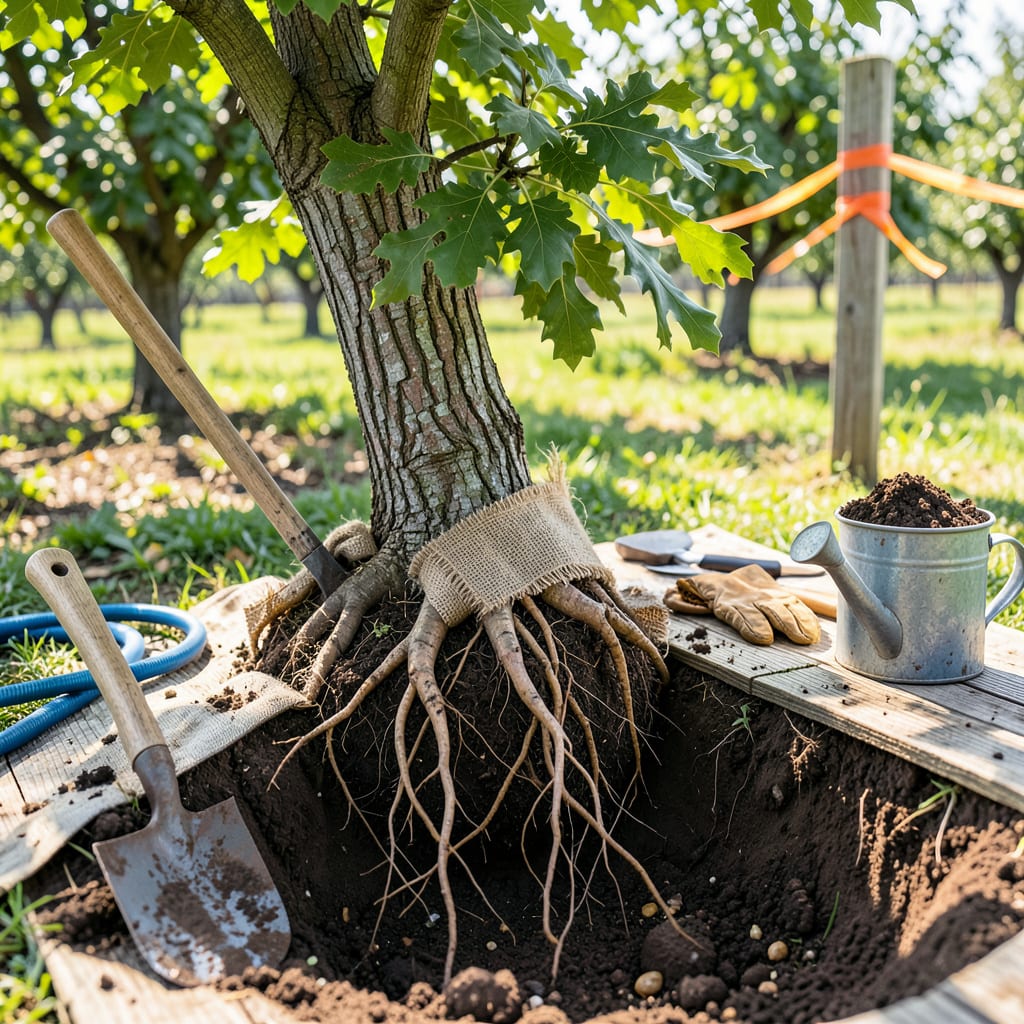
Moving a 12-foot oak isn’t like transplanting a shrub—it’s a major operation that tests both skill and patience. I’ve helped relocate mature trees like this, and the difference between success and a $2,000 dead stick comes down to three things: timing, root ball size, and post-move care. Do it right in early spring or late fall, and you give those roots a fighting chance to establish before stress hits.
This isn’t a one-person weekend project. You’re looking at heavy equipment, precise root pruning months in advance, and a transportation plan that keeps the root ball intact. The trees that thrive after moving are the ones where every step—from the initial trench cut to the first deep watering—was executed with surgical precision. Even then, expect a 20-30% failure rate without professional help.
📚 In This Guide
Moving an established oak requires careful planning, but this method ensures your tree thrives in its new location.
Dig the new hole twice as wide as the root ball and just as deep. I always test the depth by placing a shovel handle across the hole—it should sit level with the surrounding soil. This prevents the tree from sinking after planting, which can suffocate roots.
Loosen the soil at the bottom and sides of the hole to encourage root expansion. If your soil is heavy clay, mix in 20-30% compost to improve drainage. You’ll know the texture is right when the soil crumbles easily in your hand but holds its shape when squeezed.
Three to six months before transplanting, use a sharp spade to cut a 12-inch deep circle around the tree’s drip line. This encourages new feeder roots to form within the root ball. Water the tree deeply 24 hours before moving—the soil should feel moist 6 inches down.
On moving day, water again until the ground feels saturated but not muddy. A well-hydrated root ball holds together better during transport. I check moisture by digging a small test hole near the tree—if the soil sticks to my fingers but doesn’t drip, it’s perfect.
Wrap the root ball with burlap or a tarp before lifting to prevent soil from crumbling. For a 12-foot oak, expect a root ball 3-4 feet wide. Use a tree spade or have helpers lift from all sides simultaneously to keep the ball intact.
Never lift by the trunk—this can tear roots and bark. Instead, support the weight from underneath the root ball. You’ll feel the difference: a properly lifted tree moves as one unit, while a poorly handled one wobbles or shifts in the burlap.
Move the tree to its new hole without delay. Position it so the trunk flare (where roots meet trunk) sits 1-2 inches above ground level. Backfill with native soil, tamping gently every 6 inches to eliminate air pockets.
Create a 3-inch high water ring around the hole’s perimeter to direct moisture to the roots. Water immediately with 10-15 gallons, letting it soak in slowly. You’ll see the soil darken as moisture penetrates—this confirms proper absorption.
Stake the tree only if necessary using two opposing stakes with wide, padded straps. Water deeply twice weekly for the first month, then taper to weekly. Mulch with 3-4 inches of wood chips, keeping it 6 inches away from the trunk.
Monitor for stress signs: yellowing leaves indicate overwatering, while wilting suggests underwatering. New growth within 6-8 weeks confirms successful establishment. I’ve found oaks recover fastest when given consistent moisture without soggy conditions.
Transplanting a mature oak is a big job, but these practical insights will help ensure your tree not only survives but thrives in its new home.
The Preparation Difference: In Step 2, when you’re root pruning three to six months ahead, I’ve found that making a second, slightly smaller circle inside the first one (about 6 inches closer to the trunk) about a month before moving day creates an even denser network of feeder roots. This extra step makes the root ball hold together better during transport, especially for larger oaks. The 12-inch depth specified is perfect—it captures the critical root zone without being excessive.
Moisture Management: That 24-hour deep watering mentioned in Step 2 is absolutely crucial, but here’s what nobody tells you—check the moisture at multiple points around the tree. I use a simple soil probe or even a long screwdriver to test how easily it pushes into the ground at different spots. If it goes in smoothly at 6 inches depth all around, you’ve got the right moisture level. This uniform hydration prevents one side of the root ball from drying out during the move.
Transport Technique: When you’re handling that 3-4 foot wide root ball in Step 3, I recommend placing sturdy wooden planks underneath before lifting. This distributes the weight more evenly and gives you better leverage. Have your helpers position themselves at north, south, east, and west points around the tree—this balanced approach prevents the root ball from shifting in the burlap. You’ll feel the difference immediately in how much more stable the tree is during transport.
Post-Transplant Monitoring: Those first 6-8 weeks after transplanting are make-or-break time. I’ve found that setting up a simple drip irrigation system on a timer ensures consistent moisture without overwatering. Place the emitter about 12 inches from the trunk and run it for 30 minutes twice weekly to supplement your deep watering. Watch for leaf color changes—if new growth appears lighter green than the older leaves, that’s actually a good sign of healthy new growth, not stress.
Transplanting a tree this size is a two-person minimum job—ideally with heavy equipment (like a tree spade or skid steer). Roots can weigh 500+ lbs, and improper handling risks shock or death. For safety and success, hire an arborist if you lack experience or tools. DIY? Recruit 3-4 strong helpers and rent a root ball wrapper!
Early spring (before buds swell) or fall (4-6 weeks before frost) are ideal—cool temps and moist soil reduce stress. Avoid summer’s heat or winter’s freeze. For live oaks (evergreen), late winter works too. Pro tip: Water deeply 2-3 days pre-move to hydrate roots!
Rule of thumb: 10–12 inches of root ball diameter per inch of trunk thickness. For a 12-foot oak (≈4–6″ trunk), aim for a 4–5 foot wide root ball and 2–3 feet deep. Smaller balls risk severing critical roots. Use burlap or a tree transplant bag to hold it intact during the move.
Signs of shock: wilting, brown edges, or leaf drop. Act fast:
Transplanting a 12-foot oak costs $500–$2,000+ (equipment rental, labor, or arborist fees). A 5-gallon sapling? $20–$100. But mature trees offer instant shade and decades of growth saved. Weigh value vs. budget—if the tree has sentimental or ecological importance, transplanting may win!
