
Beautiful Plants For Your Interior
Beautiful Plants For Your Interior
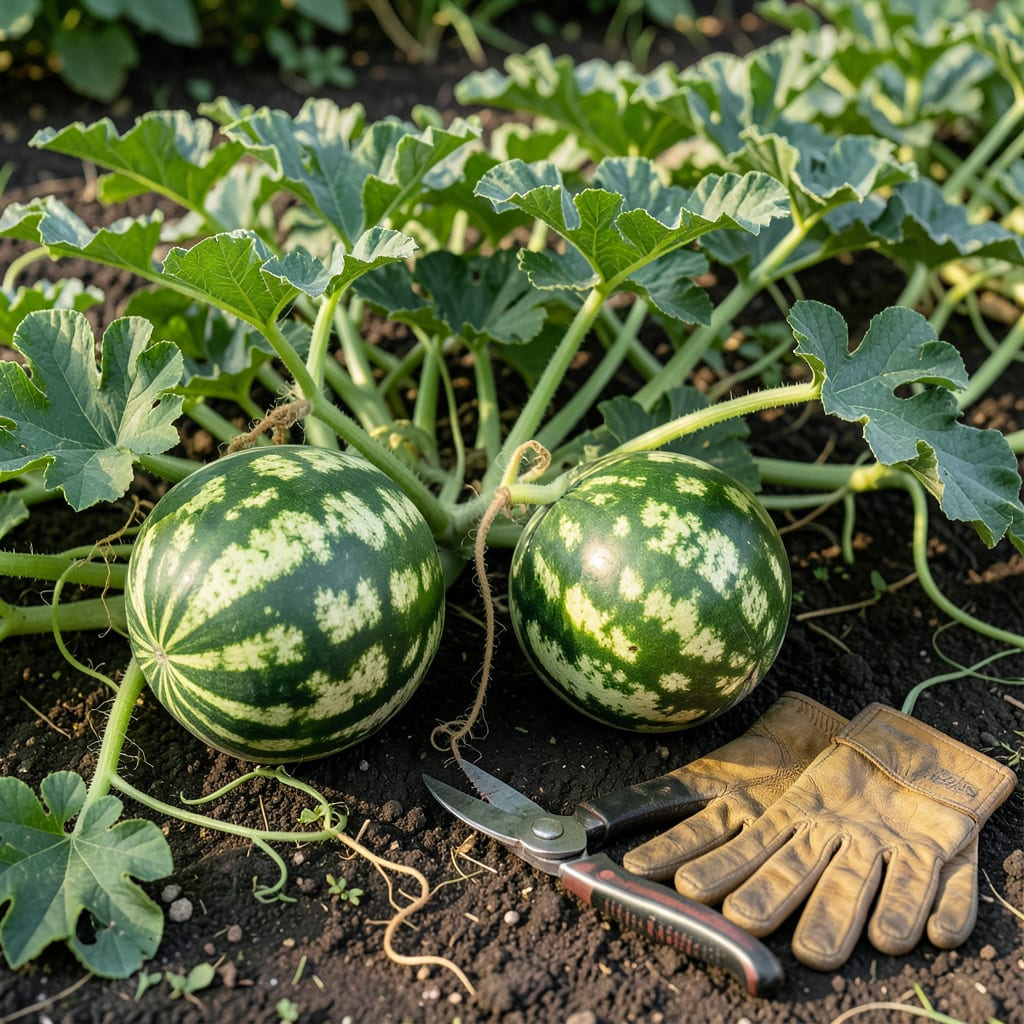
Nothing beats the sweet crunch of a perfectly ripe 🍉 Watermelon fresh from your garden. But how can you be sure it’s ready without cutting it open?
I’ll show you the proven field tricks to test ripeness using just your senses. These simple methods will take the guesswork out of harvesting your homegrown Watermelon.


I’ve found that the tendril test is the most reliable sign. Look at the curly tendril opposite the stem. When it turns brown and dry, your watermelon is likely ready. This works for most varieties.
Another classic method is the ground spot check. The area where the melon rests on the soil should turn from pale green to cream or yellow when ripe. A white spot means it needs more time.
The thumping technique takes practice. Tap the melon with your knuckles. A dull, hollow sound indicates ripeness. A high-pitched or metallic sound means it’s not ready yet.
For the rind hardness test, press your thumbnail into the rind. On a ripe watermelon, the outer skin won’t puncture easily. If it does, give it more time on the vine.
I always check the stem condition too. As the fruit matures, the stem near the melon will dry out and shrink. If it’s still green and plump, the watermelon isn’t ripe.
Combine these tests for best results. I find that two or three positive signs together confirm ripeness. For example, a cream ground spot plus a dull thump is a great indicator.
Remember that size isn’t everything. A smaller watermelon can be perfectly ripe while a large one might still be green inside. Focus on these sensory tests instead.
Early in the season, I check my watermelons every 2-3 days once they near maturity. The final ripening can happen quickly, especially in hot weather.
For seedless varieties, I rely more on the ground spot and thumping since tendrils can be less reliable. They often need the full 85-100 days to reach peak sweetness.
With practice, you’ll develop confidence in these tests. I’ve found that morning harvesting gives the best flavor, as the fruits are most hydrated after cooler night temperatures.
Even experienced gardeners can misjudge watermelon ripeness. I’ve seen many premature harvests due to impatience or misreading the ground spot. A green or white underside means the fruit needs more time.
Another common error is ignoring the thumping sound. A metallic or high-pitched tone indicates immaturity, while a dull thump signals it’s ready. Don’t rely on size alone—smaller fruits can be perfectly ripe.
Premature Picking: Green ground spot or metallic thump means wait longer.
Over-Ripening: Stem fully detached or soft rind may indicate overripeness.
Environmental Tricks: Hot weather can speed ripening—check daily in heatwaves.
The stem condition can also mislead. If it’s still green and firm, the watermelon isn’t ready. But if it’s completely detached, the fruit might be overripe and mushy inside.
For seedless watermelons, avoid relying solely on tendrils. These varieties often need the full 85-100 days and benefit from the ground spot and thumping tests more than others.
Weather plays a role too. In hot climates, watermelons ripen faster, so check daily as they near maturity. Cooler temperatures may slow ripening, requiring extra patience.
Finally, don’t harvest in the heat of the day. I’ve found that morning picking yields the juiciest, most flavorful watermelons, as they’re fully hydrated after cooler nights. 🌱
Different watermelon varieties have unique ripeness cues. I’ve learned that seedless types often need the full 85-100 days and rely more on the ground spot color than tendrils.
Heirloom varieties like ‘Moon and Stars’ may show classic signs earlier, around 70-85 days. Their dark green rinds with yellow spots make the ground spot check especially easy.
| Variety | Days to Maturity | Key Ripeness Sign |
|---|---|---|
| Seedless | 85-100 | Cream ground spot + dull thump |
| Heirloom | 70-85 | Tendril drying + yellow underside |
| Mini | 70-75 | Stem shrinkage + rind hardness |
Mini watermelons mature fastest, often in 70-75 days. Their compact size makes the rind hardness test most practical. I check these frequently as they approach maturity.
For all types, I recommend morning harvesting for peak flavor. The cooler temperatures help preserve the fruit’s natural sweetness and juiciness. ☀️
Remember that environmental factors like heat and water can affect ripening times. In hot climates, I’ve seen watermelons mature 5-7 days earlier than their listed range.
Consistency in your ripeness tests is key. I use the same methods for each variety to develop a reliable harvesting rhythm. 🌱
A ripe one produces a dull, hollow thump when tapped with your knuckles. An unripe melon sounds high-pitched or metallic. This takes practice, but it’s a reliable test.
A white or green ground spot and a metallic thump mean it’s not ready. If the stem is still green and firm, give it more time on the vine.
No, size alone doesn’t guarantee ripeness. A smaller one can be perfectly ripe while a large one might still be green inside. Focus on sensory tests instead.
Morning is ideal, as fruits are most hydrated after cooler nights. Avoid harvesting in the heat of the day for the juiciest flavor.
