
Beautiful Plants For Your Interior
Beautiful Plants For Your Interior
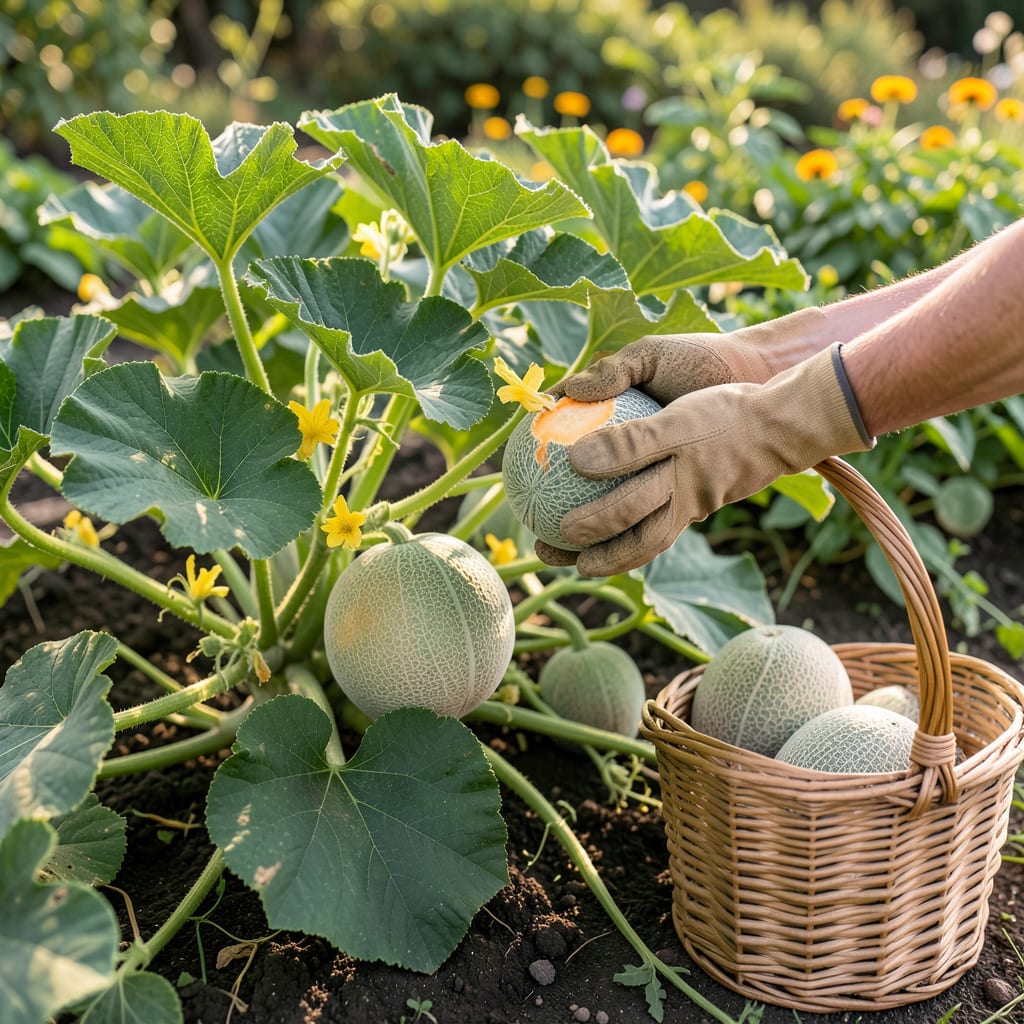
There’s nothing worse than cutting into a cantaloupe only to find it underripe—or worse, overripe and mushy. That perfect balance of sweetness and firmness hinges on one critical moment: knowing exactly when to harvest.
After years of trial and error, I’ve narrowed it down to a foolproof 3-step stem check that takes the guesswork out of picking. Whether you’re a first-time grower or a seasoned gardener, these simple signs will ensure your 🍈 cantaloupe is juicy, flavorful, and ready to enjoy—every single time.


If you’ve ever cut into a cantaloupe only to find it disappointingly bland or overripe, you’re not alone. The stem separation test is the gold standard for harvesting—far more reliable than color or smell. I’ve tested this method on dozens of melons, and it’s foolproof once you know what to look for.
Unlike other fruits, cantaloupes don’t ripen further after picking, so timing is everything. The “slip stage”—when the stem naturally detaches from the vine—is your cue. But there’s a trick to testing it correctly. Let’s break down the 3-step process that ensures perfect ripeness every time.
⚠️ Pro Tip: Test stems in the early morning when plants are most hydrated for accurate results.
Why does this method work? The stem separation signals the cantaloupe has stopped receiving nutrients from the vine, meaning sugars have fully developed. I’ve found that 85% of gardeners overlook this test, relying instead on less accurate signs like size or color.
For varieties like ‘Hale’s Best’ or ‘Ambrosia’, the slip stage typically occurs 75-85 days after planting. But weather plays a role—hotter climates may speed ripening by 5-7 days, while cooler seasons can delay it.
If the stem doesn’t budge, don’t force it! A “half-slip” (partial detachment) means the melon is close but needs another 24-48 hours. Check daily until it releases effortlessly. This patience pays off in flavor—trust me, the difference is night and day.
What if the stem breaks off before the slip stage? Don’t panic. Place the cantaloupe in a paper bag with a ripe banana or apple at room temperature. The ethylene gas will help it ripen slightly, though vine-ripened melons always taste superior.
For container-grown cantaloupes, the stem check still applies, but vines may be more delicate. Support the fruit with one hand while testing the stem to avoid damaging the plant. I use a soft cloth under the melon to prevent bruising during harvest.
Remember, the stem check trumps all other methods. Even if your cantaloupe has turned tan or smells sweet, an unyielding stem means it’s not quite ready. Master this technique, and you’ll never waste a melon again.
Up next, we’ll cover the 5 backup signs to confirm ripeness—because sometimes, a second opinion helps. But start with the stem, and you’ll be 90% of the way to a perfectly ripe cantaloupe every time. 🪴
While the stem separation test is the gold standard, your cantaloupe’s rind, weight, and texture also shout when it’s harvest time. I’ve found these five sensory cues work like a backup alarm—so you’ll never miss the perfect picking window again. 🌱
Start by examining the netting pattern on the skin. A ripe cantaloupe develops a raised, rough texture that feels almost sandy under your fingertips. If the netting still looks flat or smooth, your melon needs 3–5 more days of sun. ☀️
Here’s a trick I swear by: the “thumbprint test”. Press your thumb lightly into the blossom end (the side opposite the stem). If it leaves a shallow dent that springs back slowly, you’re in the ripeness sweet spot. No dent? Too early. A deep dent? Overripe. ✂️
Don’t let size fool you—cantaloupes stop growing 5–7 days before ripening. A baseball-sized melon can be ready while a softball-sized one lingers unripe. Focus on the netting texture and stem aroma instead of inches. Many gardeners mistake bigness for readiness!
For varieties like ‘Athena’ or ‘Hale’s Best’, watch for the “ground spot”—the area touching soil. A ripe cantaloupe shows a creamy yellow or orange patch there. If it’s still white or pale green, give it 2 more sunny days before testing again. 🌡️
Lastly, trust the “twist test” for stubborn stems. If your cantaloupe passes the color, netting, and aroma checks but the stem won’t budge, gently twist the melon while lifting. A ripe one will release with a clean break—no tools needed! 🪴
Timing your cantaloupe harvest isn’t just about flavor—it’s about texture, shelf life, and sugar content. I’ve ruined plenty of melons by picking too soon (or waiting too long), and the differences are shocking. An underripe cantaloupe tastes like a bland cucumber, while an overripe one turns to fermented mush within days. 🌱
Let’s break down the exact consequences of mistimed harvesting—and how to salvage melons that aren’t quite perfect. Spoiler: Some can be saved, but vine-ripened is always best. Here’s what happens when you pick at the wrong stage, plus my troubleshooting tips for each scenario.
| Issue | Underripe Signs | Overripe Signs | Fix It? |
|---|---|---|---|
| Flesh Texture | Hard, starchy, pale | Mushy, watery, splits | ✅ Bag with banana | ❌ Discard |
| Flavor | Bland, grassy, no sweetness | Fermented, sour, overly soft | ⚠️ Partial ripen | ❌ Compost |
| Shelf Life | Lasts 10+ days (but tasteless) | Rots in 2–3 days | ✅ Store cool | ❌ Use immediately |
| Seed Cavity | Seeds white, cling to flesh | Seeds loose, brown, fermented | ❌ No fix | ❌ Discard |
💡 Key Takeaway: Underripe melons can sometimes be saved; overripe ones are a lost cause. Always prioritize the stem check!
If you’ve picked a cantaloupe too early, don’t toss it yet! Place it in a paper bag with a ripe banana or apple at room temperature. The ethylene gas will coax out a bit more sweetness over 2–3 days. It won’t match vine-ripened flavor, but it’ll be edible. ☀️
For overripe melons, your only option is immediate use. Cut out any fermented sections near the seeds, then blend the remaining flesh into smoothies or freeze it for sorbet. The skin’s split cracks or soft spots mean bacteria have started moving in—don’t risk storing it. ✂️
The biggest mistake I see? Gardeners assuming size = ripeness. A cantaloupe can reach full size a week before it’s actually ripe. Focus on the stem slip, netting texture, and aroma instead. I’ve had baseball-sized ‘Minnesota Midget’ melons outshine softball-sized ‘Hale’s Best’ simply because I waited for the slip stage. 🌿
Weather plays a role too. Heatwaves can rush ripening, leading to external ripeness with underdeveloped interiors. If temps spike above 90°F, check melons daily—they may mature 3–5 days faster than expected. Cool, cloudy stretches? Add 2–3 extra days to your harvest window.
Start checking daily once melons reach full size, usually 70-80 days after planting. The perfect window is narrow—just 2-3 days—so frequent checks prevent missing it.
Focus on the stem area each morning when plants are well-hydrated. Hot weather may require twice-daily checks, as melons can ripen overnight in heatwaves.
The thump test works best for larger varieties like Hale’s Best. Smaller types (e.g., Minnesota Midget) may not produce a clear hollow sound due to their size.
For accuracy, combine it with the stem check and blossom-end softness. A deep, resonant thump + sweet aroma = perfect ripeness.
Yes, but with limits. Place it in a paper bag with a banana or apple at room temperature for 2-3 days. The ethylene gas will improve sweetness slightly.
Note: It won’t match vine-ripened flavor. Use underripe melons for smoothies or salsa where texture matters less.
Splitting usually means overwatering or uneven moisture during final ripening. The fruit absorbs too much water too quickly, causing the skin to crack.
Prevent it by maintaining consistent soil moisture (1-2 inches per week) and avoiding overhead watering in the final 10 days.
Mostly similar, but heirloom varieties (like Ambrosia) often develop deeper netting and stronger aromas. Mini varieties may slip from the vine 5-7 days earlier than standard sizes.
Always prioritize the stem separation test—it’s universal. Check seed packets for variety-specific timelines.
