
Beautiful Plants For Your Interior
Beautiful Plants For Your Interior
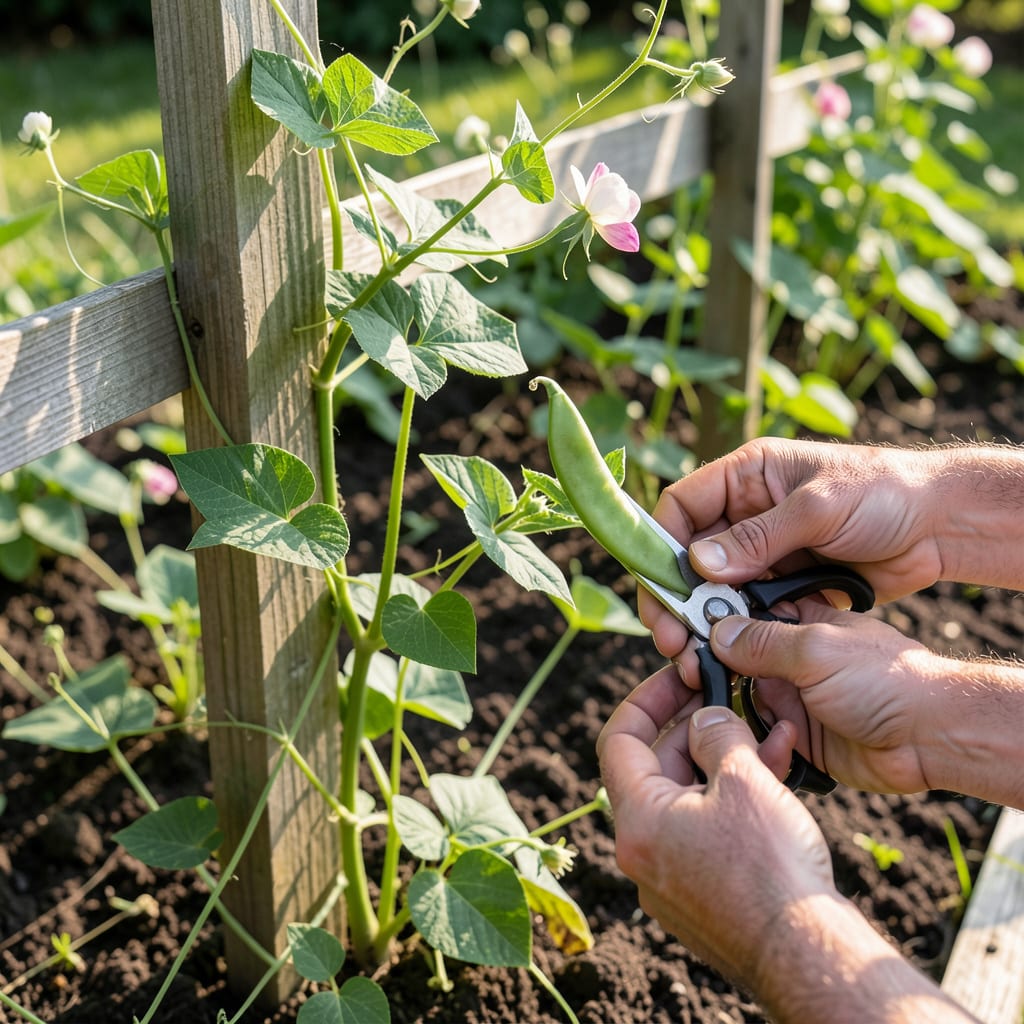
Nothing beats the satisfaction of harvesting fresh 🌱 Pea pods at their peak. But how do you know they’re ready? Picking at the right moment ensures the best flavor and texture.
I’ll show you the simple visual and tactile cues to look for. With these tips, you’ll never question if your peas are ripe again.


I always check my pea plants daily as harvest time approaches. The first sign is pod color—immature peas often have dull green pods, while ready ones turn bright vibrant green. This color shift is your first visual cue.
Next, I look at the pod shape. Ready peas have plump rounded pods that look full from top to bottom. If they’re still flat or thin, the peas inside need more time to develop their sweet flavor.
| Pea Type | Visual Sign | Size |
|---|---|---|
| Snap Peas | Plump with visible pea outlines | 2-3 inches |
| Snow Peas | Flat with tiny pea bumps | 2-4 inches |
| Shelling Peas | Very rounded and full | 3-4 inches |
The pea visibility test works well for all varieties. Hold a pod up to the light—if you can see clear pea shapes through the skin, they’re nearly ready. This works best with snap and shelling peas.
For snow peas, I watch for the pod edges to become slightly translucent. This indicates the peas inside are developing but still tender and flat, perfect for stir-fries.
I also check the pod length against the variety’s expected size. Most snap peas are ready at 2-3 inches, while snow peas can grow slightly longer. Always refer to your seed packet for specifics.
The glossy appearance is another key indicator. Ready peas often have a slightly shiny surface, while immature ones look matte. This sheen develops as the sugars concentrate in the pods.
I pay attention to the pod’s position on the plant too. Ready peas typically hang downward slightly from the vine, while younger pods stand more upright. This subtle change helps me spot them quickly.
For shelling peas, I look for pods that feel heavy for their size. The weight indicates the peas inside have plumped up. This is especially true for English peas, which we grow for their sweet seeds.
Finally, I check the stem connection. When peas are ready, the stem attaching the pod to the vine often turns from green to slightly brown. This color change at the base is a reliable sign.
Remember that morning harvesting gives the best flavor, as the sugar content is highest after a cool night. I always bring a basket or bag to collect my haul efficiently.
While visual cues help, I always rely on texture tests for absolute certainty. The squeeze test is my go-to: gently press a pod between your fingers. A ripe pod should feel firm yet plump 🌱
For snap peas, try the snap test. Bend the pod—if it snaps cleanly with a crisp sound, it’s ready. Shelling peas should feel slightly soft when squeezed, indicating the peas inside are fully developed.
If the pod feels too hard or too soft, it’s either underripe or overripe. The seed check is foolproof: open a pod to confirm the peas inside are sweet and tender ✂️
For snow peas, the pods should be flat but full, with tiny bumps showing the peas inside. If the pod feels thick and bulky, you’ve waited too long, and the peas may be starchy.
I check my peas every 2-3 days during peak season. They can go from perfect to overripe in just a day or two, especially in warm weather. Timing is everything! ☀️
Remember, morning harvests yield the sweetest peas. The sugars are most concentrated after a cool night, so I always pick before the heat of the day sets in 🌿
I’ve learned the hard way that harvesting too early is just as bad as waiting too long. Picking immature peas means missing out on that sweet crunch we all love. Those flat thin pods just won’t have the flavor.
Overripe peas become starchy and tough, especially in warm weather. I once left a batch for just 3 extra days and they turned from perfect to inedible. The sugar converts to starch quickly.
⚠️ Warning: Never pull pods off the vine—this damages the plant stems. Always use clean scissors or pinch gently with your fingernails to avoid harming the plant.
Another common mistake is missing hidden pods. Pea plants are dense with foliage, so I always part the leaves carefully. Those lower pods near the soil often get overlooked until they’re past their prime.
I always harvest in the cool morning hours for maximum sweetness. The heat of the day can make pods limp and less flavorful. A sharp pair of pruners helps me work quickly before the temperature rises.
Finally, don’t forget that regular picking encourages more production. I check my plants every other day during peak season. This keeps the vines productive and prevents any pods from becoming overripe on the plant. ☀️
Ready pods turn bright vibrant green, while immature ones appear dull. This color shift signals the sugars are developing inside.
Inspect plants every 2-3 days during peak season. Peas can go from perfect to overripe in just 1-2 days, especially in warmth.
Morning is best for maximum sweetness as sugars concentrate overnight. Afternoon heat makes pods limp and less flavorful.
Overripe peas become starchy and tough. The sugars convert quickly in warm weather, often within 3 days.
