
Beautiful Plants For Your Interior
Beautiful Plants For Your Interior
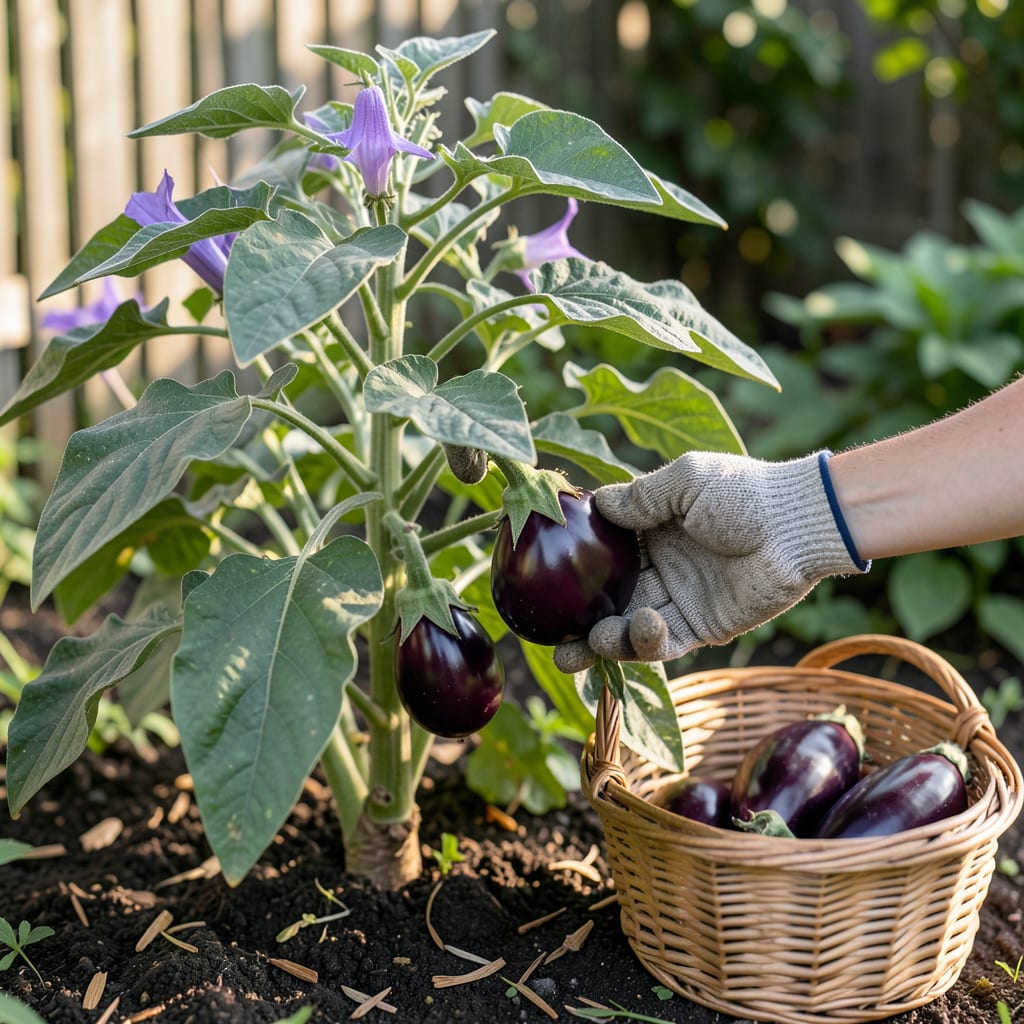
That moment when you’re staring at your 🍆 eggplant, wondering: Is it ready, or should I wait another day? Picking too soon means bitter, seedy disappointment—wait too long, and you’ll get a spongy, overripe mess.
After years of trial and error in my own garden, I’ve narrowed it down to two foolproof tests—one you can see and one you can feel. Let me show you exactly how to spot that perfect 24-hour window when your eggplant is at its peak flavor and texture.


When your eggplant’s skin looks ready, the real test is in your hands—literally. I always use the thumb-pressure method to confirm ripeness. Gently press your thumbnail into the fruit’s side. If it leaves a slight indentation that springs back, you’re golden. Too firm? It needs more time. 🌱
Bitter seeds and spongy flesh develop when eggplants stay on the plant too long. If your thumbnail leaves a permanent dent or the skin looks dull, you’ve waited too long. Harvest immediately to avoid seed hardness!
Here’s my pro trick: Weigh the fruit in your palm. A ripe eggplant feels surprisingly heavy for its size because the flesh is dense with moisture. Compare two similar-sized fruits—the heavier one is usually riper. This works especially well with long Asian varieties like Ichiban. 💧
For white or striped varieties, color changes are subtle, so touch becomes even more important. I check these daily once they reach full size. The skin should feel taut but not tight, like a well-inflated balloon. If it feels loose or wrinkled, the fruit is past its prime. ☀️
If you’re unsure, cut open a test fruit. The seeds of a perfectly ripe eggplant are small and soft. Large, dark seeds mean it’s overripe, while tiny white seeds indicate it needed more time. This quick check saves me from harvesting entire batches too early. 🌿
Not all eggplants ripen on the same schedule—your variety choice determines everything from color cues to days-to-maturity. I’ve grown Black Beauty (the classic purple globe) alongside Ichiban (long and slender) and Rosa Bianca (striped Italian heirloom), and each has its own harvest sweet spot. 🌱
Most eggplants reach maturity in 60–85 days, but climate throws curveballs. A cool, cloudy summer might delay ripening by 7–10 days, while heat waves can speed it up. That’s why I track the first flower date—count forward from there, not just planting day. ☀️
| Variety | Days to Harvest | Size at Maturity | Ripeness Clues |
|---|---|---|---|
| Black Beauty | 70–80 days | 6–8″ diameter | Deep purple, glossy skin, firm stem |
| Ichiban | 55–65 days | 10–12″ long, 2″ wide | Thin skin, heavy for size, bright purple |
| Rosa Bianca | 75–85 days | 5–6″ diameter | Creamy white with lavender stripes, soft give |
| Fairy Tale | 50–60 days | 3–4″ long, 1″ wide | Mini size, vibrant purple, tender skin |
For early varieties like Fairy Tale, I start checking at 45 days—they can turn bitter fast. Late-season types (Rosa Bianca) need patience; I’ve waited 90 days in cool climates. Pro tip: Mark your calendar when flowers appear, then subtract 5–7 days from the “days to harvest” estimate. That’s your first check-in date. 🪴
If you’re growing white or green eggplants, color isn’t reliable. Instead, focus on size (compare to seed packet specs) and the thumb test. I once left a Casper eggplant (ivory white) on the plant too long because it “looked fine”—big mistake. The seeds were rock-hard! Now I harvest these at first blush of yellow or when they reach full size. 💧
Remember: Heat stress accelerates ripening, while cool nights slow it down. In my Zone 6 garden, August harvests come 2 weeks earlier than September’s. When in doubt, pick one test fruit and slice it open. If the seeds are tiny and pale, the rest are ready. If they’re dark and plump, you’ve got a 24-hour window to harvest the batch. ✂️
Harvesting too soon results in bitter flavor and tough, seedy flesh. The fruit won’t have developed its full sweetness or creamy texture.
Unripe eggplants also contain more solanine, a compound that can cause stomach upset. Wait until the skin turns glossy and the fruit reaches full size for the variety.
Once fruits reach 80% of their expected size, check them daily. Eggplants can go from perfect to overripe in just 24–48 hours during warm weather.
For fast-growing varieties like Ichiban, start checking at 50 days. Slower varieties (Rosa Bianca) may need 75+ days before daily inspections.
No, eggplants are frost-sensitive. Even light frost (32°F/0°C) damages the fruit and plant. Harvest all eggplants before frost warnings in your area.
If unexpected frost threatens, pick all mature fruits immediately—even if slightly underripe. They’ll continue ripening indoors at room temperature.
A lightweight eggplant usually means it’s underripe or lacking moisture. The flesh hasn’t filled out completely yet. Compare it to another fruit of similar size—the riper one will feel noticeably heavier.
Check your watering schedule if multiple fruits feel light. Eggplants need 1–2 inches of water weekly for proper development.
The thumb test and glossy skin check work for all varieties, but color cues vary. White eggplants (like Casper) develop a creamy yellow tint when ripe, while striped varieties lose their green undertones.
Always refer to your seed packet for variety-specific size guidelines. When in doubt, the thumb test is the most reliable method across all types.
