
Beautiful Plants For Your Interior
Beautiful Plants For Your Interior
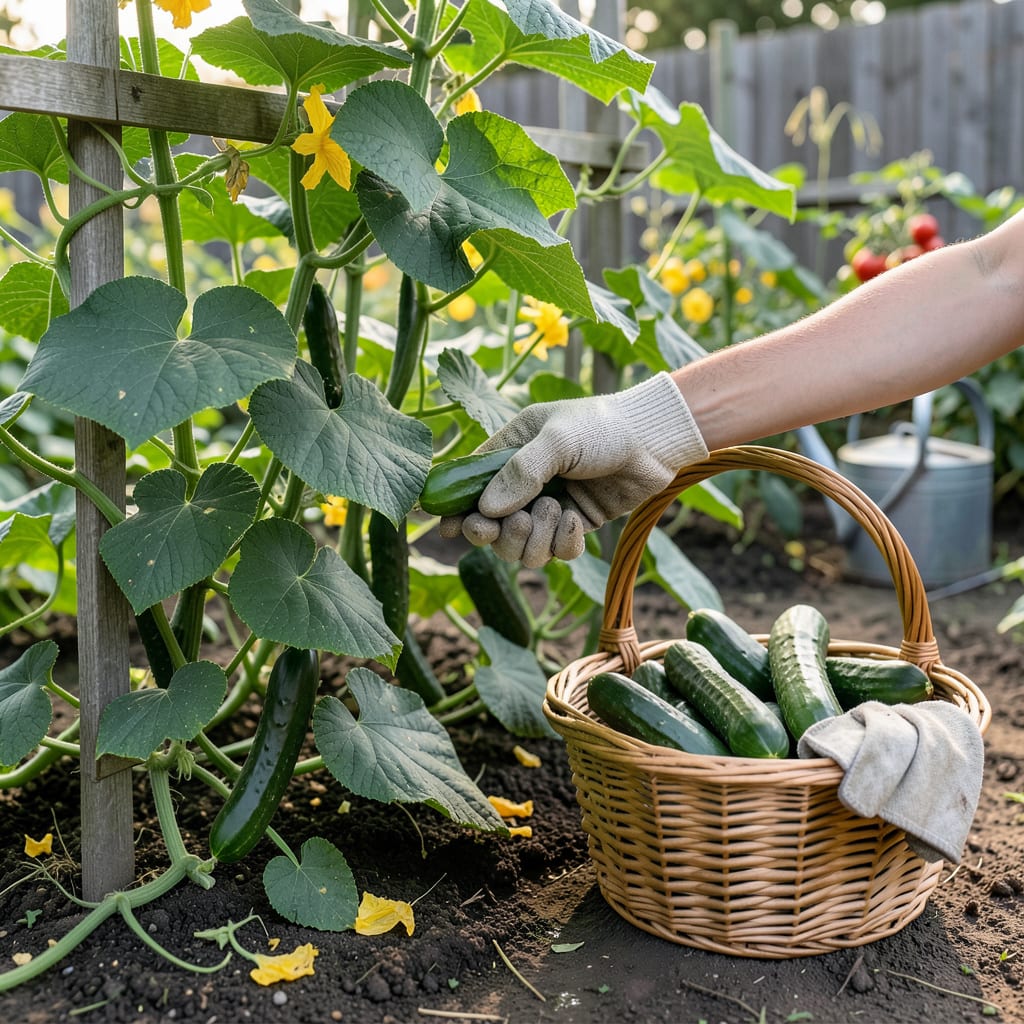
There’s nothing worse than cutting into a homegrown 🥒 cucumber only to find it bitter or mushy. Yet most gardeners guess when to harvest—and get it wrong. The difference between a perfect pick and a disappointing one comes down to three simple tests anyone can master.
I’ve spent seasons refining these methods, and they’ve saved me from countless overripe or underdeveloped cucumbers. Whether you’re growing slicers or picklers, you’ll learn exactly what to look for—and when. No more second-guessing your harvest.


After years of trial and error, I’ve narrowed it down to three reliable tests that work for every cucumber variety. The secret? Combining visual cues with physical checks to avoid guesswork. Let’s start with what your eyes should spot first.🌱
First, forget the old advice about “wait until it’s big.” Size alone is misleading—color and texture tell the real story. A perfectly ripe cucumber will have a vibrant, even hue and feel firm but slightly yielding when squeezed. Overlook these, and you risk a disappointing harvest.
| Test | What to Look For | Red Flags |
|---|---|---|
| Color | Bright green (or yellow for lemon cucumbers), even tone | Dull or pale, yellow patches, uneven coloring |
| Size | 6-8 inches for slicers, 3-5 inches for picklers (check variety) | Under 4 inches (immature) or over 10 inches (overripe) |
| Firmness | Firm with slight give, crisp snap when bent | Spongy or mushy, bends without snapping |
| Stem | Easily detaches with gentle twist, dry stem end | Resists twisting, green stem (still growing) |
💡 Pro Tip: For burpless varieties like ‘Sweet Success,’ the skin turns darker green when ripe. Pickling cucumbers (e.g., ‘National Pickling’) should have firm, bumpy skin—softness means they’re past prime.
The color test is your first clue. A ripe cucumber should be uniformly bright green (or golden for lemon cucumbers). If it’s dull or pale, it’s not ready. Yellow patches? That’s your plant screaming, “Harvest me NOW!“—it’s starting to overripen.
Next, the size test—but don’t rely on length alone. Slicing cucumbers (like ‘Marketmore’) should be 6-8 inches long, while pickling types (like ‘Boston Pickling’) are best at 3-5 inches. Always check your seed packet for variety-specific sizes.🌿
Now for the firmness test: Gently squeeze the cucumber. It should feel solid but yield slightly, like a ripe avocado. If it’s rock-hard, it needs more time. If it’s soft or spongy, it’s overripe—use it for pickling or compost.
The stem test is the final confirmator. A ripe cucumber will detach easily with a gentle twist. If the stem resists or snaps green, leave it for 1-2 more days. I’ve found this test especially useful for trellised cucumbers, where fruit can hide behind leaves.
Here’s a trick I swear by: the thumbnail test. Press your thumbnail into the cucumber’s skin. If it leaves a slight indentation that bounces back, it’s ripe. No indentation? Too early. Deep dent? Overripe. This works for all varieties, from English cucumbers to Armenian types.
Remember, harvest frequency matters. Cucumbers grow fast—some varieties are ready in just 50-60 days! I check my plants every other day in peak season. The more you pick, the more the plant produces. Leave overripe fruit on the vine, and production grinds to a halt.☀️
Finally, time of day affects ripeness checks. I always harvest in the early morning when cucumbers are most crisp. Avoid picking in midday heat—they’ll feel softer than they are. Use these tests together, and you’ll never second-guess your harvest again.🪴
Timing your cucumber harvest is everything. Pick too soon, and you’ll end up with small, underdeveloped fruit that lacks sweetness. Wait too long, and your cucumbers turn bitter, seedy, or mushy. Both mistakes can also stress the plant, reducing future yields.
I’ve seen gardeners lose up to 30% of their harvest simply by misjudging ripeness. The good news? Cucumbers bounce back quickly if you correct your approach. Let’s break down the consequences—and how to fix them.🌱
💡 Pro Tip: Overripe cucumbers? Pickle them—the extra seeds and softness work well in brines! For underripe ones, leave them on the vine 2-3 more days and check daily.
If you’ve picked cucumbers too early, don’t panic. Most varieties will continue ripening off the vine for 1-2 days at room temperature. Place them in a paper bag with a banana to speed up the process—the ethylene gas helps!
For overripe cucumbers, your best bet is to harvest immediately to redirect the plant’s energy. Look for yellow patches or a dull, waxy skin—these are dead giveaways. Even if they’re too far gone for fresh eating, they’re perfect for fermented pickles or compost.
Here’s the kicker: Cucumber plants are prolific but finicky. If you leave overripe fruit on the vine, the plant assumes its job is done and stops producing. I’ve saved struggling plants by simply removing all overripe cucumbers—new flowers appeared within days!☀️
Finally, remember that variety matters. Pickling cucumbers (like ‘Boston Pickling’) turn bitter fast, while English cucumbers (like ‘Sweet Success’) stay mild longer. Always check your seed packet for variety-specific signs—it’s your best defense against mistimed harvests.🪴
Not all cucumbers are created equal when it comes to harvest time. What works for a slicing cucumber might completely miss the mark for a pickling variety. I’ve learned this the hard way after ruining batches by treating them all the same.
The key is understanding each variety’s unique ripeness cues. Some change color dramatically, while others rely on size or texture shifts. Below is my go-to reference for the five most popular types—bookmark this for harvest day!🌱
| Variety | Size at Harvest | Color Cue | Texture Tip |
|---|---|---|---|
| Slicing (e.g., ‘Marketmore’) | 6-8 inches long | Dark green, glossy | Firm, snaps cleanly |
| Pickling (e.g., ‘Boston Pickling’) | 2-4 inches long | Medium green, bumpy | Crisp, spines soften |
| English (e.g., ‘Sweet Success’) | 12-14 inches long | Deep green, thin skin | Smooth, no bitterness |
| Lemon (e.g., ‘Lemon Cucumber’) | 2-3 inches diameter | Pale yellow when ripe | Tender, sweet flavor |
| Armenian (e.g., ‘Painted Serpent’) | 12-18 inches long | Light green, ribbed | Crisp, mild taste |
💡 Pro Tip: Pickling cucumbers must be harvested daily in peak season—they grow fast and turn bitter overnight! For English varieties, check for blunt ends (a sign of maturity).
Lemon cucumbers are the trickiest—they start pale green and turn bright yellow when ripe. I once waited too long, thinking they needed more time, only to find them overripe and seedy. Now I pick them at the first hint of yellow.
For Armenian cucumbers, don’t be fooled by their length. They’re best harvested when still firm and the ribs are pronounced. If the skin starts feeling smooth or soft, you’ve waited too long. These grow fast—check vines every other day in warm weather.☀️
Remember: Seed packets are your best friend. They’ll list the days to maturity (usually 50-70 days from planting) and ideal harvest size. When in doubt, pick one test cucumber and slice it open. If the seeds are small and the flesh is firm, the rest are ready!
Finally, harvest frequency matters. The more you pick, the more cucumbers your plant will produce. I aim for every 2-3 days in peak season. Use clean pruning shears or twist gently to avoid damaging the vine. Happy harvesting!🪴
Check your plants every 2-3 days during peak season. Cucumbers grow rapidly, especially in warm weather. Pickling varieties may need daily checks since they mature faster than slicing types. Missing just a few days can lead to overripe fruit.
Yes, but timing matters. For pickling cucumbers, small (2-4 inches) is ideal. For slicing varieties, wait until they reach 6-8 inches. Picking too early results in less flavor and may reduce future yields. When in doubt, check the seed packet for size guidelines.
Harvest in the early morning when temperatures are cool. This preserves crispness and flavor. Avoid midday heat, which can stress plants. Use clean pruning shears or twist gently to remove fruit without damaging the vine.
Bitterness often comes from inconsistent watering or heat stress. Ensure plants get 1-1.5 inches of water weekly and provide afternoon shade in extreme heat. Some varieties (like ‘Lemon’) are naturally sweeter. If bitterness persists, peel the skin before eating.
Watch for yellow patches, a dull skin, or a soft texture. Overripe cucumbers also develop large seeds and a bitter taste. Remove them promptly to encourage new growth. These are still great for pickling or composting!
