
Beautiful Plants For Your Interior
Beautiful Plants For Your Interior
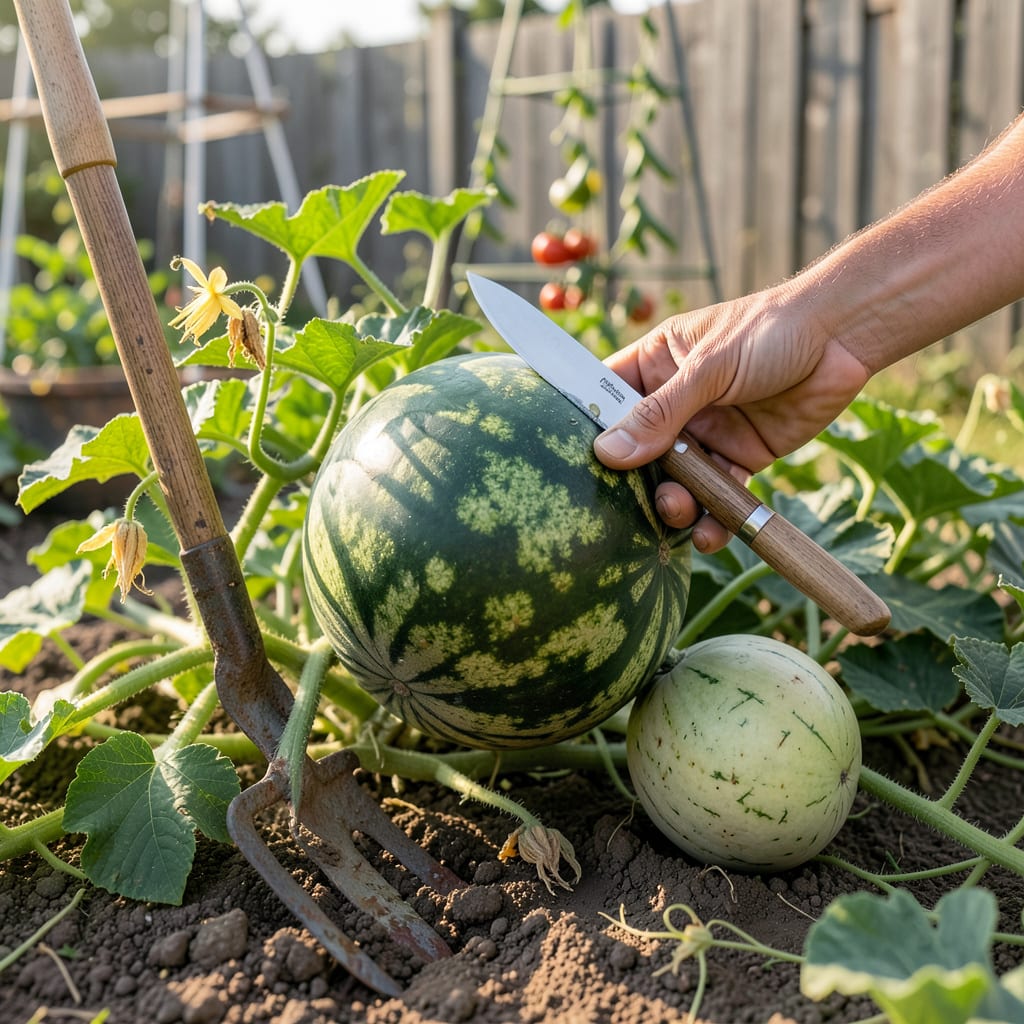
Nothing beats the disappointment of cutting into a watermelon only to find it underripe—or worse, overripe and mushy. That perfect balance of sweet, juicy flesh isn’t luck—it’s all about timing and knowing what to look for.
After years of testing (and a few melon fails), I’ve narrowed it down to five foolproof signs that take the guesswork out of harvesting. Whether you’re a first-time grower or just tired of hit-or-miss results, these cues will help you pick your 🍉 at its peak—every single time.


After months of tending your vines, the moment of truth arrives: Is it ready? Unlike store-bought melons with stickers, garden-grown watermelons rely on subtle clues. I’ve learned the hard way that color alone isn’t enough—you need a combo of signs.
The first thing I check is the tendril nearest the stem. When it turns brown and crispy, the melon is close. But don’t stop there—this is just the first hint. Next, flip the melon to inspect the ground spot, where it rests on the soil.
| Sign | What to Look For | Why It Matters |
|---|---|---|
| Tendril Drying | Brown, crispy tendril near stem | Indicates vine stopped feeding the fruit |
| Ground Spot Color | Creamy yellow to deep orange | Shows sugar accumulation and ripeness |
| Rind Texture | Dull, matte finish (not glossy) | Glossy = still growing; dull = ripe |
| Stem Separation | Fruit detaches with gentle twist | Natural abscission layer forms when ripe |
| Thump Test | Deep, hollow “plunk” sound | Dense flesh vibrates differently when ripe |
The ground spot is my favorite indicator. A white or pale green spot means it’s not ready, while a deep yellow or orange signals peak ripeness. For dark-skinned varieties like Black Diamond, look for a rich brown spot instead.
Next, examine the rind’s texture. An unripe melon has a glossy, slick surface, while a ripe one turns dull and slightly rough. Run your fingers over it—if it feels like fine sandpaper, you’re getting close. This change happens as the fruit’s chlorophyll breaks down.
The stem test is often misunderstood. You don’t need to yank the melon—just give it a gentle twist. If it resists, leave it. If it pops off easily, it’s ready. This happens because the vine releases the fruit when sugars peak, forming a natural separation layer.
Now for the famous thump test. Tap the melon with your knuckles and listen for a deep, hollow “plunk”. A high-pitched “ting” means it’s underripe; a dull “thud” suggests overripeness. I practice on store-bought melons to train my ear—it’s a skill that improves with experience!
Here’s a pro trick: Check the vine’s health. If the leaves nearest the melon are yellowing or wilting, the plant may be redirecting energy away from the fruit. This often coincides with ripeness, especially in late-season harvests. Combine this with the other signs for confirmation.
Timing matters too. Most watermelons need 80-95 days from planting to harvest, but seedless varieties often ripen 5-7 days earlier. I mark my calendar at day 75 and start checking daily. Hot weather can speed things up, while cool spells may delay ripening by a week.
Finally, trust your instincts. If most signs point to ripe but one doesn’t, wait a day or two. Watermelons won’t continue ripening off the vine, so it’s better to err on the side of patience. And always harvest in the early morning for the best texture—they’ll be crispest when cooled overnight. 🌱
Not all watermelons ripen the same way—what works for a classic seeded Crimson Sweet might mislead you with a seedless Sugar Baby. The trick is knowing your variety’s unique cues. Seedless types, for example, often ripen 5-7 days earlier than seeded ones.
I’ve found that heirloom varieties like Moon and Stars develop deeper ground spots, while icebox types (smaller, 5-10 lb melons) tend to have a brighter, more uniform rind when ready. Climate plays a role too—hotter zones may speed up maturity by 3-5 days.
| Variety | Days to Maturity | Ground Spot Color | Sound When Ripe |
|---|---|---|---|
| Seeded (Crimson Sweet) | 85-90 days | Deep yellow | Deep hollow thud |
| Seedless (Sugar Baby) | 75-80 days | Creamy white | Higher-pitched hollow |
| Heirloom (Moon & Stars) | 90-95 days | Orange-brown | Low, resonant thud |
| Icebox (Golden Midget) | 70-75 days | Pale yellow | Light, crisp hollow |
For seedless watermelons, don’t rely on the tendril test—it’s less reliable. Instead, focus on the ground spot turning white and the rind losing its gloss. These varieties also tend to have a slightly firmer feel when ripe compared to seeded types.
Heirlooms like Carolina Cross can be trickier. Their massive size (often 30+ lbs) means the ground spot may not darken uniformly. I check multiple spots on the rind for a dull, matte finish and listen for a deep, echoing thud when thumped.
If you’re growing mini watermelons (under 5 lbs), watch them closely—they can go from underripe to overripe in just 2-3 days. Their ground spots are smaller, so look for a bright yellow patch about the size of a silver dollar.
Pro tip: Keep a harvest log by variety. Note the exact day you planted and mark when each melon ripened. Over time, you’ll spot patterns—like how your Charleston Grays always ripen 3 days earlier than the seed packet claims.
Remember, morning harvesting gives you the crispiest texture. Use a sharp knife or pruners to cut the stem cleanly, leaving 1-2 inches attached to prevent rot. Now you’re ready to enjoy that perfect, garden-fresh crunch! 🪴
Timing is everything with watermelons. Pick too soon, and you’ll get pale, crunchy flesh that lacks sweetness. Wait too long, and the fruit turns mealy or fermented—a disappointing end to months of growth. I’ve learned the hard way that even one day can make a difference.
An underripe watermelon often has white or light pink flesh instead of deep red, and the seeds (if present) will be white or soft. The texture is firm but lacks juiciness, and the flavor is bland or even grassy. Seedless varieties are especially tricky—they won’t ripen further once picked.
⚠️ Warning: Overripe Risks
An overripe watermelon develops soft spots, a fermented smell, and flesh that separates from the rind. The seeds (in seeded varieties) may sprout inside the fruit—a sign it’s past prime. Once this happens, the melon is inedible and should be composted.
If you accidentally pick early, don’t toss it! Underripe melons can still be used in smoothies or sorbets (blend with honey or lime to mask the blandness). For slightly overripe fruit, scoop out the good flesh and discard any mushy sections—it’s great for juicing or chilled soups.
Climate plays a role too. In hot, dry summers, watermelons may mature 3-5 days faster than expected. Cool, rainy weather can delay ripening by a week or more. Always cross-check the days-to-maturity on your seed packet with real-time weather conditions.
My golden rule? When in doubt, leave it one more day. A watermelon won’t improve after picking, but it can still sweeten on the vine. Use the tendril test and ground spot color as your final checks—nature’s built-in ripeness indicators are more reliable than guesswork! 🌱
Most varieties need 80-95 days from planting to harvest. Seedless types often ripen 5-7 days earlier, while heirlooms may take the full range. Always check your seed packet for specifics.
Hot weather can speed up ripening by 3-5 days, while cool spells might delay it. Start checking daily at day 75 to catch the perfect window.
A dull thud usually means the melon is overripe. You want a deep, hollow “plunk”—like a bass drum. A high-pitched “ting” indicates it’s still underripe.
Practice on store-bought melons to train your ear. The sound changes as the flesh becomes denser with sugar.
The tendril should be fully brown and crispy for peak ripeness. If it’s still green or flexible, wait 2-3 more days and check other signs like ground spot color.
Seedless varieties are exceptions—their tendrils may stay green even when ripe. Always cross-check multiple indicators.
Harvest in the early morning when temperatures are cool. The fruit will be crispest after cooling overnight. Avoid midday heat, which can make melons soften faster.
Use sharp pruners to leave 1-2 inches of stem attached. This prevents rot during storage.
