
Beautiful Plants For Your Interior
Beautiful Plants For Your Interior
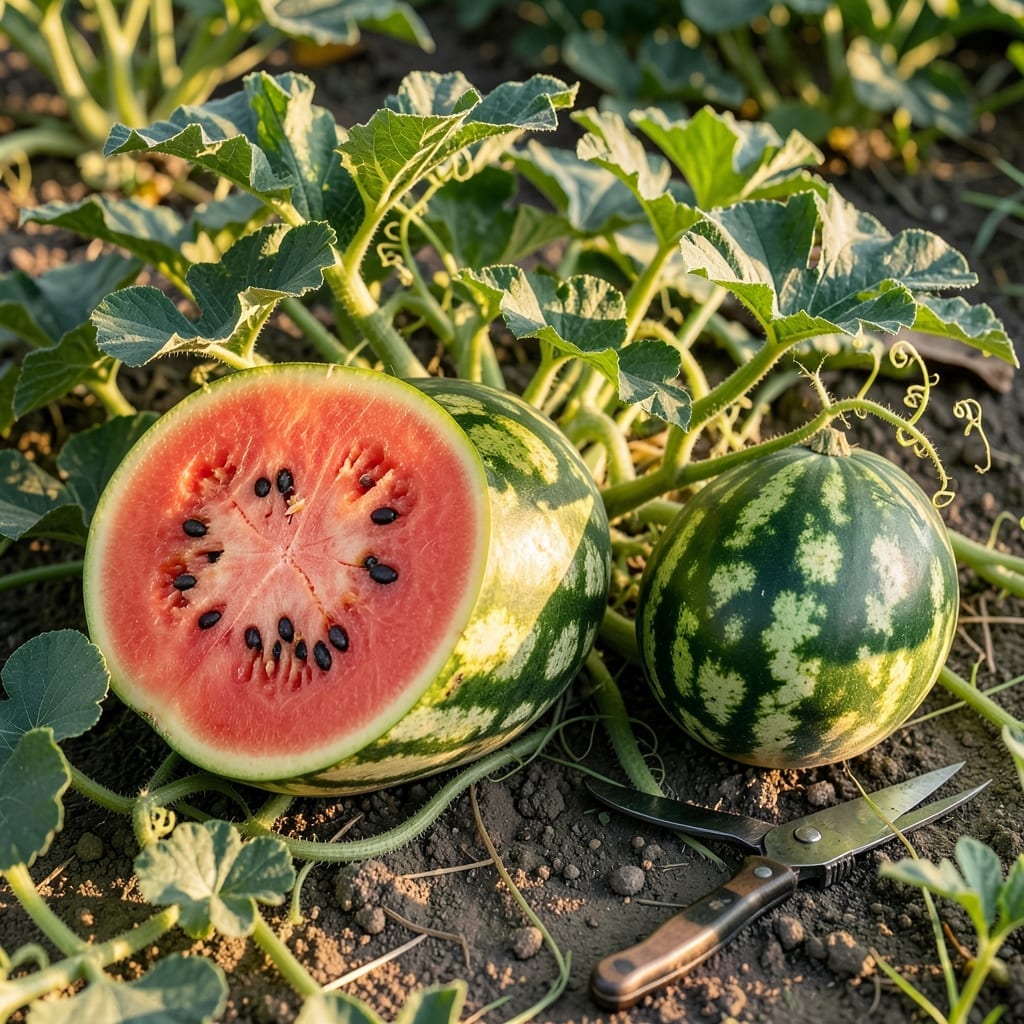
Nothing beats the disappointment of cutting into a 🍉 Watermelon only to find it underripe or lacking sweetness. We’ve all been there, staring at that pale, hard flesh wondering where we went wrong.
But here’s the good news: you don’t need to be a farming expert to pick the perfect one. There are simple, reliable signs that reveal a watermelon’s ripeness and sweetness.
I’ll show you exactly what to look, listen, and feel for so you can confidently select the best watermelons every time.

Picking the perfect watermelon doesn’t have to be a guessing game. As a gardener, I rely on proven techniques that go beyond just looking at the color or size of the fruit. These methods help me determine ripeness with confidence.
From the deep hollow sound of a ripe watermelon to the dull finish of its rind, there are clear indicators that your fruit is ready to be harvested. Let me share the most reliable ways to test for sweetness and ripeness.
The thump test is one of my favorites. When you tap a ripe watermelon, it produces a low-pitched hollow sound. This is because the flesh inside has softened and the air space increases, changing the acoustics.
An unripe watermelon will produce a high-pitched metallic sound. If you’re new to this, practice with a few fruits to train your ear. It’s a skill that gets easier with experience.
The field spot is another dead giveaway. This is the area where the watermelon rested on the soil. A ripe fruit will have a creamy yellow or even orange spot. If it’s white or pale green, the melon isn’t ready yet.
Don’t overlook the stem end. If the stem is still green, the watermelon isn’t ripe. A brown dry stem is a good indicator that it’s ready to harvest. Additionally, the tendril closest to the stem should be brown and brittle.
Weight is often underestimated. A ripe watermelon feels surprisingly heavy for its size because it’s full of juice. Compare two similar-sized melons—the heavier one is usually the riper choice.
Finally, examine the rind texture. A shiny rind can indicate immaturity, while a dull finish suggests the fruit has reached peak ripeness. This is one of the easiest visual cues to spot in the garden.
By combining these methods, you’ll rarely pick a bad watermelon again. I’ve used these techniques for years, and they’ve saved me from many disappointments. Try them out in your garden or at the market.
☀️Even experienced gardeners can make mistakes when picking watermelons. I’ve learned the hard way that some common practices lead to underripe or flavorless fruit. Avoiding these pitfalls is just as important as knowing the right techniques.
Many people judge a watermelon solely by its size or color, but these factors alone don’t guarantee sweetness. A large, dark green melon can still be unripe, while a smaller one might be perfectly sweet.
Don’t judge by size: Bigger isn’t always better for sweetness.
Avoid shiny rinds: A glossy surface often means it’s not ripe yet.
Ignore the season: Off-season melons are less likely to be sweet.
Overlook the field spot: A white spot means it’s not ready to harvest.
Another common error is ignoring the seasonality of watermelons. These fruits are at their peak during summer months, typically from July to September. Picking one too early or late in the season often results in disappointment.
The thump test can be misleading if you’re not experienced. A high-pitched sound doesn’t always mean the melon is unripe—it could also indicate overripeness. Practice makes perfect, so don’t rely on this method alone.
Some gardeners also make the mistake of harvesting too early in the day. Watermelons are best picked in the late morning after the dew has dried but before the heat of the day sets in. This ensures the sugars are at their peak.
Finally, don’t assume that all varieties have the same ripeness indicators. Some heirloom types may not develop a yellow field spot, for example. Know your specific variety’s signs to avoid misjudging its readiness.
☀️