
Beautiful Plants For Your Interior
Beautiful Plants For Your Interior
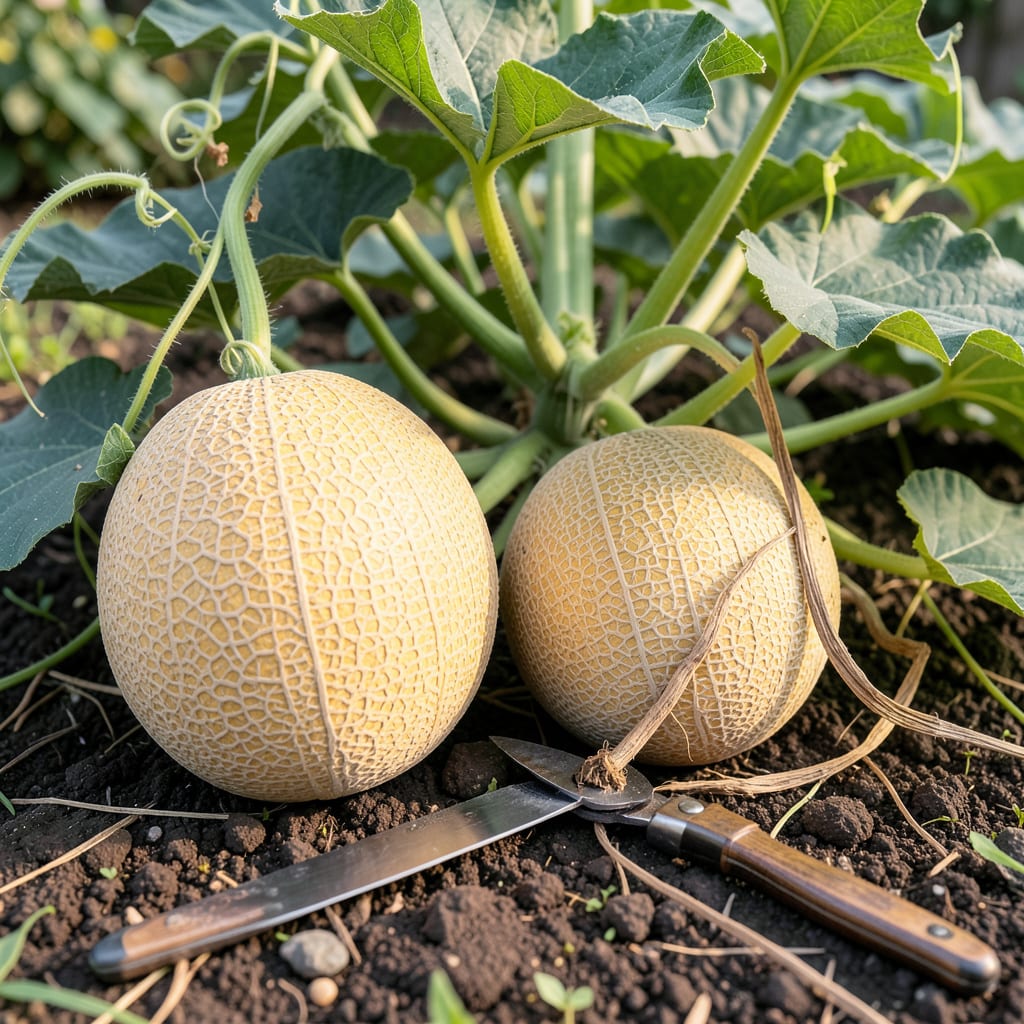
Picking a Cantaloupe 🍈 at the perfect moment means the difference between a bland, underripe melon and a bursting-with-sweetness harvest.
Discover the foolproof field signs that guarantee your Cantaloupe is ready to pick every time. No more guessing games in your garden.


Knowing when to harvest cantaloupes is all about reading the plant’s signals. I’ve learned that timing is everything—pick too soon, and you’ll miss out on that sweet, juicy flavor. The vine gives clear clues if you know where to look.
The most reliable sign is the stem slip test. When a cantaloupe is ready, the stem will detach easily from the vine with just a gentle tug. If it resists, it’s not ready yet. This is my go-to method in the garden.
| Sign | What to Look For |
| Stem Slip | Detaches easily with gentle pressure |
| Rind Color | Cream or yellow under netting |
| Netting Pattern | Pronounced and rough texture |
| Aroma | Sweet, musky scent at stem end |
Another key indicator is the rind color change. As cantaloupes ripen, the skin beneath the netting transitions from green to beige or tan. This color shift is a visual cue that the melon is maturing nicely.
The netting pattern on the rind also becomes more defined. A ripe cantaloupe will have a rough, raised netting that you can feel with your fingers. Smooth or faint netting often means it needs more time on the vine.
Don’t overlook the scent test. A mature cantaloupe emits a strong, sweet aroma at the stem end. If you don’t smell anything, it’s likely not ready. I always give my melons a quick sniff before deciding to harvest.
Size matters, but it’s not the only factor. Most cantaloupes reach 4-5 inches in diameter when ripe, but always combine this with other signs. A large melon isn’t necessarily a ripe one.
Check the blossom end (opposite the stem). It should give slightly when pressed with your thumb. If it’s rock-hard, the melon isn’t ready. This gentle pressure test works well alongside the stem slip method.
Early morning is the best time to harvest. The melons are at their peak freshness, and the vine is less stressed. I’ve found this timing helps preserve flavor and extends storage life.
Finally, observe the tendril near the stem. When it turns brown and dries out, the cantaloupe is usually ready. This is a subtle but effective sign that often gets overlooked by beginner gardeners. 🌱
Even experienced gardeners sometimes make harvesting mistakes with cantaloupes. I’ve seen my share of underripe melons because of early picking or overlooking key signs. Timing is everything with these fruits.
One major error is ignoring the stem slip test. If you twist or pull too hard, you might damage the vine or harvest an unripe melon. Always use gentle pressure to check for readiness.
Warning: Never harvest cantaloupes right after rain. The excess moisture can dilute their sweetness and shorten storage life. Wait for dry conditions.
Another common mistake is relying solely on size. Just because a cantaloupe looks big doesn’t mean it’s ripe. Always combine size with color, scent, and stem tests for accuracy.
Harvesting at the wrong time of day can also affect quality. Picking in the heat of the afternoon may lead to softer, less flavorful melons. Stick to early morning for the best results.
Some gardeners forget to check the tendril near the stem. If it’s still green and flexible, the melon likely isn’t ready. A brown, dried tendril is a strong indicator of ripeness.
Finally, avoid stacking harvested melons in the sun. This can cause uneven ripening or spoilage. Store them in a cool, shaded area to maintain freshness. 🌿
Testing for ripeness without cutting into your cantaloupe is a skill every gardener should master. I’ve found that a few simple tests can save you from harvesting too early or too late. These methods rely on your senses and a gentle touch.
First, try the tap test. Gently tap the melon with your knuckles. A ripe cantaloupe will produce a deep, hollow sound, while an unripe one will sound more solid or dull. This is my favorite quick check in the garden.
Pro Ripeness Tests for Cantaloupes
Next, use the smell check. Hold the cantaloupe close to your nose and take a deep breath. A ripe melon will have a sweet, musky fragrance at the stem end. If there’s no smell, it’s not ready yet.
The gentle pressure test is another reliable method. Press your thumb lightly against the blossom end (opposite the stem). If it gives slightly, the melon is likely ripe. A hard, unyielding surface means it needs more time.
Combine these tests for the best results. I often start with the tap test, then confirm with the smell and pressure checks. This multi-sensory approach ensures I never miss the perfect harvest window.
Remember, practice makes perfect. The more you use these tests, the more confident you’ll become in identifying ripe cantaloupes. Soon, you’ll be picking perfectly sweet melons every time. 🌱
A ripe cantaloupe will detach easily with gentle pressure. If the stem resists, the melon needs more time on the vine.
No, size isn’t the best indicator. Always combine it with color, scent, and stem tests for accuracy. A large melon may still be unripe.
Early morning is ideal. The melons are at peak freshness, and the vine is less stressed, helping preserve flavor and storage life.
If there’s no sweet, musky scent at the stem end, the cantaloupe isn’t ready. Wait a few days and retest using the other ripeness indicators.
