
Beautiful Plants For Your Interior
Beautiful Plants For Your Interior
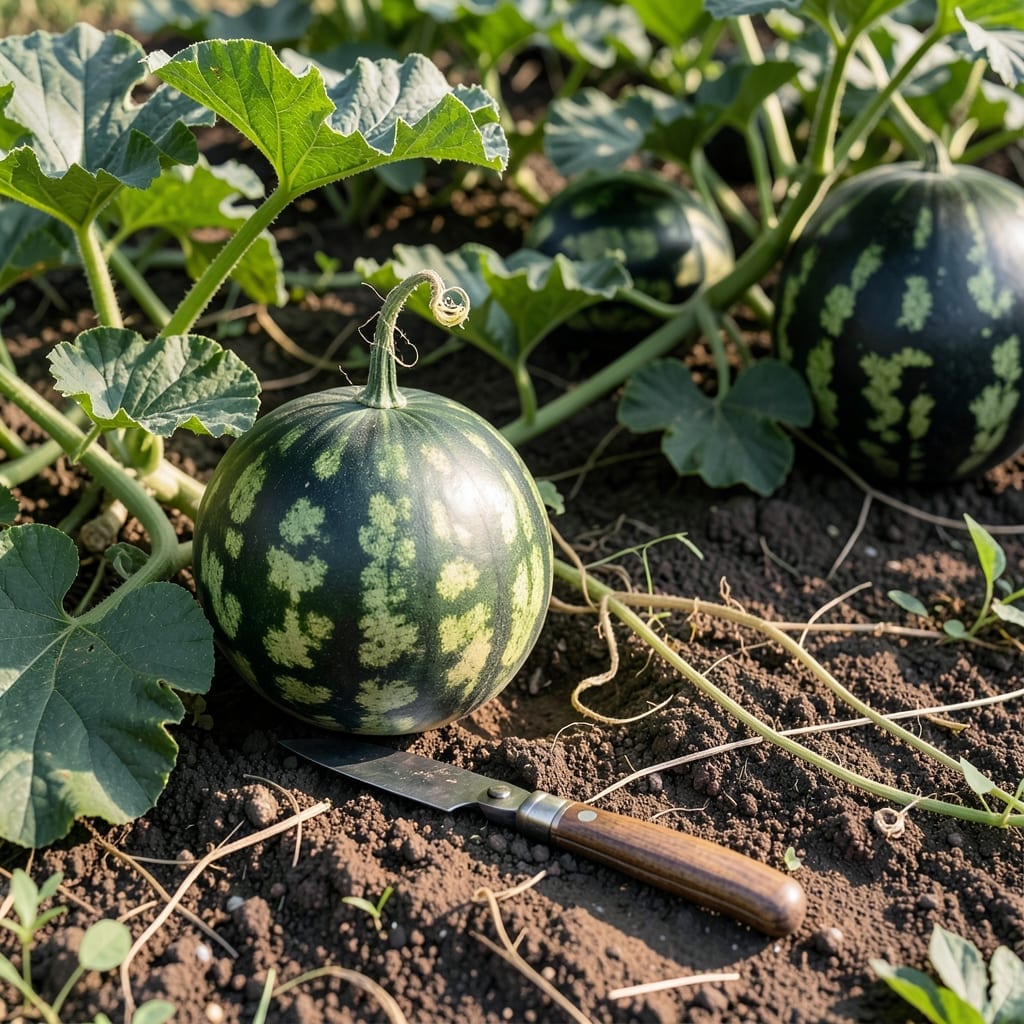
Nothing beats the sweet, juicy crunch of a perfectly ripe Black Diamond 🍉—unless it’s picking one too early or too late.
I’ve learned the hard way that guessing ripeness with these heirloom giants rarely works. The difference between a meh melon and a showstopper often comes down to just a few days.
Learn how to spot the subtle field-tested signs that guarantee your watermelon is ready to come off the vine at its peak.

I’ve spent years perfecting my Black Diamond watermelon harvest timing. These heirlooms don’t show ripeness like store-bought varieties, so you’ll need to look for subtle clues. The key is combining multiple signs for accuracy.
Start by examining the ground spot—this is where the melon touches the soil. A ripe Black Diamond will have a deep cream or yellow color here, not white or pale green.
The curl near the stem turns brown and dry when ripe.
A dull, matte finish replaces the shiny green look.
Ripe melons feel heavy for their size due to juice content.
Tap the melon—it should produce a deep, hollow thump.
The stem starts drying and may crack slightly.
The ground spot test is my go-to first check. If it’s still green or white, the melon needs more time. But if it’s golden yellow, you’re getting close to harvest day.
For the sound test, use your knuckles rather than your palm. A high-pitched ping means it’s not ready, while a deep thud often means it’s overripe. That perfect hollow thump is the sweet spot.
I always combine at least three signs before picking. For example, a dull rind, dry tendril, and heavy feel together mean it’s time. Relying on just one can lead to disappointing results.
The weight test works best when comparing similar-sized melons. Lift a few from your patch to get a sense of what heavy for size feels like. This takes practice but becomes intuitive with experience.
Remember that Black Diamonds often take 85-100 days to mature. If you planted in late April, don’t expect ripeness before mid-July in most zones. Patience pays off with these giants.
Finally, check your melons in the early morning when they’re cool. This makes the sound test more reliable and the ground spot easier to evaluate without sun glare.
With these signs, you’ll never have to guess about ripeness again 🌱
Even experienced gardeners can misjudge Black Diamond watermelon ripeness. I’ve made my share of mistakes, like harvesting too soon or waiting too long. The key is knowing what not to do as much as what to look for.
One common error is relying solely on size. These heirlooms can grow large without being ripe. Another is ignoring the tendril—this is often the most reliable indicator of all.
⚠️ Warning: Avoid These Ripeness Mistakes
Don’t rely on size alone—Black Diamonds can look ready but need more time.
Ignoring the tendril can lead to picking unripe melons.
Thumping too hard can damage the fruit and give false results.
Harvesting after rain or heavy dew can make the sound test unreliable.
Another mistake is thumping too hard. Use a gentle tap with your knuckles. If you hit too hard, you might bruise the melon or misinterpret the sound.
Timing matters too. Checking melons after rain or heavy dew can skew your results. The sound test works best when the rind is dry. Early morning is ideal, but avoid wet conditions.
Don’t overlook the ground spot. If it’s still pale or green, the melon isn’t ready, no matter how good it looks otherwise. This is one of the most reliable visual cues.
Finally, avoid harvesting based on color alone. While a dull rind is a good sign, it should be combined with other indicators like the tendril check or weight test for accuracy.
With these precautions, you’ll avoid the most common pitfalls and harvest perfect melons every time 🌱