
Beautiful Plants For Your Interior
Beautiful Plants For Your Interior
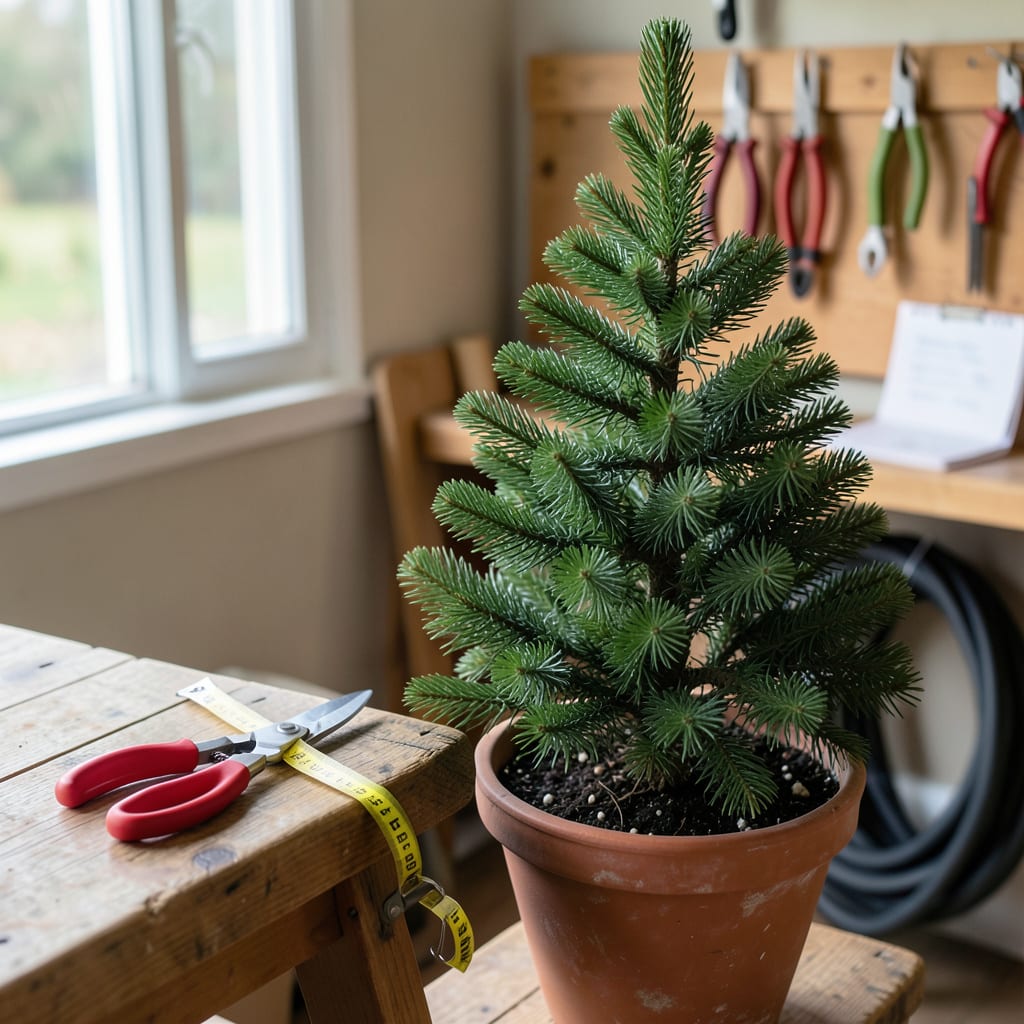
Your Christmas tree is shooting up faster than holiday decorations go on sale—but before you resign yourself to a skyscraper in your yard, there’s a gentler solution. The key isn’t hacking away at the top; it’s working with the tree’s natural growth patterns to keep it at that perfect height year after year.
I’ve tested multiple methods, and what most gardeners don’t realize is that timing and technique matter more than brute force. Whether you’re dealing with a spruce, pine, or fir, I’ll show you how to control growth without sacrificing health. Let’s tackle this before your tree outgrows its welcome.


If your Christmas tree is racing toward the sky like Jack’s beanstalk, don’t panic—pinch-pruning is your secret weapon. This gentle technique targets the tree’s new growth candles in late spring, slowing vertical growth without shocking the plant. It’s far safer than topping, which can leave your tree vulnerable to disease.
Timing is everything. For most conifers like Fraser firs or Norway spruces, the ideal window is late May to early June, when the soft new growth is easy to pinch. Miss this window, and you’ll either stress the tree or get lackluster results. I’ll walk you through the exact steps to keep your tree at that perfect 6-8 foot holiday height.
Look for the light green, soft new shoots (candles) at the tips of branches in late spring. These are the growth points you’ll target.
All you need are sharp pruning shears (or your fingers for small candles) and gardening gloves to protect your hands from sap.
Remove ½ to ⅔ of each candle by pinching with your fingers or making a clean cut with shears. Avoid cutting into the woody stem.
The central upward shoot (leader) drives height. Trim it back more aggressively—up to 75%—to stunt vertical growth.
Remove all trimmings to prevent pests. Check for new candle growth in 2-3 weeks; a second light pruning may be needed.
⏰ Best time: Early morning on a dry day to minimize stress and fungal risk.
Why does this work? By removing the terminal buds, you force the tree to redirect energy into lateral branches instead of skyward growth. This creates a fuller, bushier shape while keeping the height in check. Unlike harsh shearing, pinch-pruning maintains the tree’s natural form and health.
For dwarf varieties like the Dwarf Alberta Spruce, you can be even more aggressive—these slow growers tolerate heavier pruning. But for standard trees like Douglas firs, stick to removing just 50-60% of the candles to avoid stress. Always sterilize your tools with rubbing alcohol between cuts to prevent disease spread.
One common mistake is pruning too late in the season. If you wait until July or August, the candles will have hardened, and your cuts will leave brown, stubby tips that won’t regrow properly. Mark your calendar for late May—right after the last frost in most zones—to catch the growth at the perfect stage.
If your tree is already towering over your roof, don’t despair. While pinch-pruning won’t shrink a mature tree, it will slow future growth. For immediate results, consider removing the top 1-2 feet of the leader in early spring, but be warned: this can create a permanent flat top and may invite pests.
After pruning, give your tree a boost with a balanced fertilizer (like a 10-10-10 NPK) to support recovery. Water deeply—1-2 inches per week—to help it bounce back. Avoid high-nitrogen fertilizers, which can trigger another growth spurt and undo your hard work.
For those growing trees in containers, combine pinch-pruning with root pruning every 2-3 years to further restrict size. Simply trim the outer 2-3 inches of roots in early spring before new growth starts, then replant in fresh soil. This mimics the confined space of a pot and signals the tree to stay compact.
Remember, some varieties are naturally more cooperative than others. Slow growers like Blue Spruce or Concolor Fir respond beautifully to pinch-pruning, while fast growers like Leyland Cypress may need more frequent attention. When in doubt, choose a dwarf cultivar from the start—it’ll save you years of pruning!
While pinch-pruning is my top recommendation for height control, it’s not the only option. If you’re dealing with a particularly stubborn Fraser fir or Norway spruce, you might need to explore other techniques. Each method has trade-offs, so let’s break them down.
One approach is root pruning, which restricts growth by limiting the tree’s nutrient intake. Another option is using growth regulators—chemical treatments that slow vertical growth. Finally, container planting can physically constrain the tree’s size. But beware: not all methods are equal!
I’ve found pinch-pruning works best for most gardeners because it’s non-invasive and maintains the tree’s health. However, if you’re dealing with a mature tree (10+ years), root pruning might be necessary. Just remember: never remove more than 20% of roots at once!
Growth regulators like paclobutrazol can slow height by up to 50%, but they’re best for commercial growers. For home gardeners, the chemicals can be tricky to dose correctly. If you go this route, follow label instructions exactly to avoid damage.
Container planting is ideal for dwarf varieties like Dwarf Alberta Spruce. Use a large, sturdy pot (at least 24” wide) and repot every 2-3 years. The downside? Trees in pots need more frequent watering and fertilizer than in-ground plants.
If your tree is already towering over your house, consider replacement with a slower-growing variety. ‘Blue Star’ Juniper or ‘Fat Albert’ Colorado Spruce stay compact naturally. Sometimes, starting fresh is the simplest solution!
No matter which method you choose, consistency is key. Monitor your tree’s growth annually and adjust your approach as needed. A little effort now means a perfectly sized Christmas tree for years to come! 🌲
If your Christmas tree is shooting up like a rocket, you might be accidentally encouraging its growth. One of the biggest mistakes I see is over-fertilizing—especially with high-nitrogen mixes. While fertilizer boosts foliage, too much pushes trees into overdrive, adding 2-3 extra feet per year.
Another culprit? Full sun without breaks. While Christmas trees love sunlight, 6+ hours daily in hot climates can stress them into rapid, leggy growth. If your tree’s in an open area, consider dappled shade during peak afternoon hours to slow its ascent.
Timing errors also play a role. Pruning in late summer or fall can stimulate a last-minute growth spurt before dormancy. Always prune in late spring when new “candles” (soft growth tips) are forming—this redirects energy sideways instead of upward.
Finally, check your planting location. Trees in rich, loose soil grow faster than those in compacted or clay-heavy ground. If your tree’s in ideal conditions, consider root restriction—planting in a large container or installing a root barrier to limit nutrient uptake.
To fix past mistakes, start with a soil test to adjust fertility levels, and commit to annual pinch-pruning. For extreme cases, consult an arborist about growth regulators—but use these sparingly, as they can stress the tree if overapplied. ✂️
Late spring is ideal—specifically late May to early June. This is when the tree’s new growth (called “candles”) is soft and easy to trim. Pruning at this stage redirects energy to lateral branches instead of upward growth.
Topping a mature tree can stress it and create an unnatural shape, but it won’t necessarily kill it. For best results, avoid removing more than 20% of the height at once. Pinch-pruning is a safer alternative for long-term health.
With consistent pinch-pruning and root restriction, you can maintain a manageable size. However, most trees have a natural growth limit. For permanent small size, consider a dwarf variety like Dwarf Alberta Spruce.
Annual pruning in late spring is usually sufficient. For fast-growing varieties like Leyland Cypress, you might need a second light pruning in early summer. Always monitor new growth and adjust as needed.
Pruning too late (after July) can leave brown, stubby tips that won’t regrow properly. Late pruning may also stimulate unwanted growth before dormancy. Stick to the late spring window for best results.
