
Beautiful Plants For Your Interior
Beautiful Plants For Your Interior
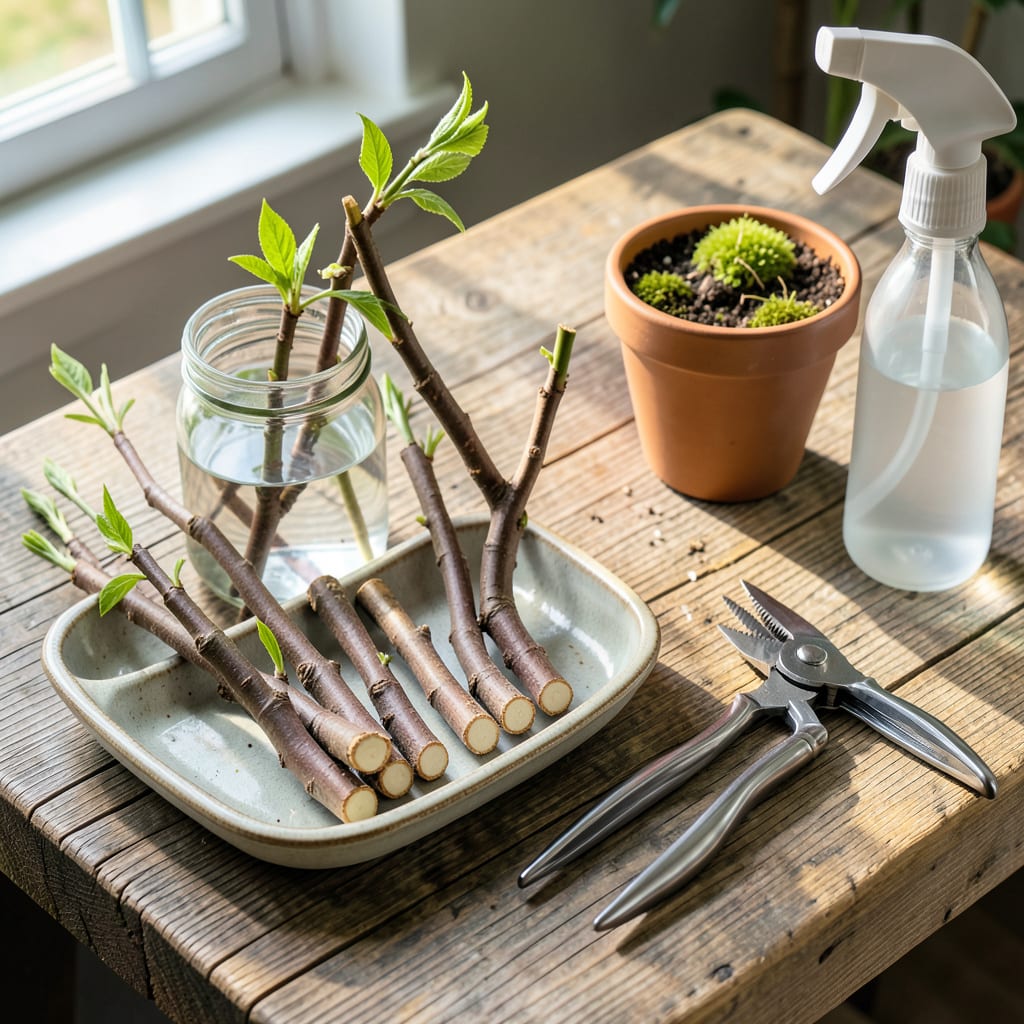
Wisteria vines multiply easily from cuttings, and water propagation makes the process nearly foolproof. I’ve rooted dozens this way, with success rates over 80% when timing and technique align.
Spring or early summer cuttings work best, taken from new growth that’s firm but not woody. The method requires minimal supplies—just a clean jar, water, and patience. Roots typically appear within 3-4 weeks.
📚 In This Guide
This method delivers consistent results with minimal equipment and maximum success rate.
Choose healthy 6-8 inch semi-hardwood stems from the current season’s growth, taken after flowering has finished. Look for pencil-thick stems with visible leaf nodes. I always select cuttings in the morning when the plant is most hydrated, as this significantly improves rooting success.
Make a clean 45-degree angle cut just below a leaf node using sharp pruners. Remove all leaves from the lower 2-3 inches of the stem, leaving only 2-3 leaves at the tip to reduce moisture loss. Dip the cut end in rooting hormone powder to accelerate root development and prevent rot.
Fill a clean glass container with room temperature water, ensuring it’s deep enough to submerge the lower 2-3 nodes of your cuttings. I use filtered or distilled water to eliminate chlorine and other chemicals that might inhibit root growth. The container should be transparent to allow light penetration and root monitoring.
Place a 1-inch layer of small pebbles or marbles at the bottom of the container. This prevents the cut ends from sitting directly on the container’s base, which can lead to rot. The water level should cover the nodes but not touch any remaining leaves.
Set the container in a location with bright, indirect light at temperatures between 65-75°F. Direct sunlight can overheat the water and damage the developing roots. I’ve found that a north or east-facing windowsill provides ideal conditions without the risk of scorching.
Change the water every 3-4 days to maintain oxygen levels and prevent bacterial growth. You’ll typically see the first white root nodules appearing at the nodes after 3-4 weeks. This is your signal that the propagation process is working.
Once roots reach 2-3 inches in length, usually after 6-8 weeks, your cuttings are ready for transplanting. Prepare small pots with well-draining potting mix and create a planting hole deep enough to accommodate the new root system without bending.
Gently transfer each cutting to its pot, being careful not to damage the delicate new roots. Water thoroughly after planting and place in a sheltered location with morning sun only for the first week. This gradual introduction to outdoor conditions prevents transplant shock.
Master these nuances to maximize your success rate with wisteria propagation.
Cutting Selection: In Step 1, focus on semi-hardwood stems that are pencil-thick with multiple visible nodes. Morning harvesting is crucial as this is when plants are most turgid, which significantly boosts rooting success. Avoid stems with flower buds, as these divert energy from root development.
Water Quality Matters: As mentioned in Step 2, filtered or distilled water prevents chemical interference with root formation. Tap water often contains chlorine which can inhibit root growth. The transparent container isn’t just for monitoring—it allows necessary light penetration for the developing roots.
Temperature Control: The 65-75°F range specified in Step 3 is ideal because it’s warm enough to encourage root growth but cool enough to prevent water overheating. A north or east-facing windowsill provides consistent, gentle light without the intensity of direct sun that could damage developing roots.
Patience and Observation: While the 3-4 week timeline for initial root nodules is typical, resist the urge to check progress too frequently. Each time you remove cuttings from water, you risk damaging fragile new root growth. Trust the process and only check when changing water every 3-4 days.
Wisteria clippings typically take 4-8 weeks to develop roots in water. Keep them in a warm, bright spot and change the water every few days to encourage growth. Patience is key—some cuttings may root faster than others!
Yes! You can root wisteria clippings in soil by dipping the cut end in rooting hormone and planting it in a well-draining mix. Keep the soil moist and provide indirect light. Soil propagation may take slightly longer but is equally effective.
The ideal time is late spring or early summer when the plant is actively growing. Avoid taking clippings during dormancy (winter) or extreme heat, as these conditions reduce success rates.
Common issues include old or weak cuttings, poor water quality, or insufficient light. Ensure you’re using healthy, young stems (4-6 inches long) and keep them in a warm, bright area. If rot appears, trim the stem and refresh the water.
