
Beautiful Plants For Your Interior
Beautiful Plants For Your Interior
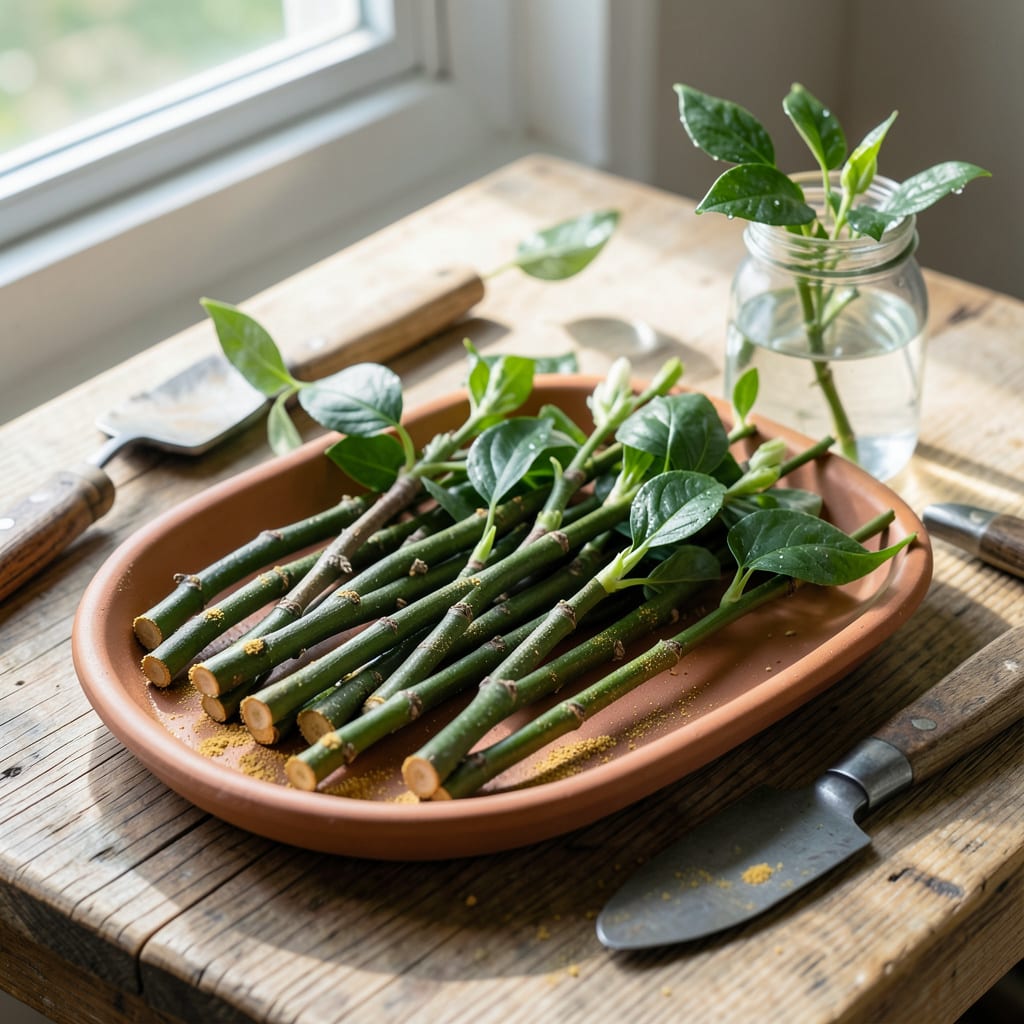
I turned one jasmine cutting into a dozen thriving plants last spring. The trick is timing and the right rooting hormone—nothing fancy, just consistent moisture and patience.
You’ll see new roots in 3-4 weeks with this method. Most people fail because they overwater or use the wrong cutting type. Here’s how to get it right the first time.
📚 In This Guide
This method delivers reliable results with minimal effort and works for most jasmine varieties.
Choose 4-6 inch stems from the current season’s growth that have just finished flowering. Look for pencil-thick wood that snaps when bent—this is the perfect stage between soft new growth and tough old wood. Each cutting should have 2-3 leaf nodes where roots will form.
Using clean, sharp pruners, make a 45-degree cut just below a leaf node. Remove all leaves from the lower half of the stem, leaving only the top few. This reduces moisture loss while preserving enough foliage to sustain the cutting during rooting.
Dip the cut end of each stem in water, then immediately into rooting hormone powder. Tap off any excess—too much can actually inhibit root formation. I’ve found this step significantly improves success rates, especially with woodier jasmine varieties.
Fill small pots with a well-draining mix like perlite and peat moss in equal parts. Insert each cutting about 1-2 inches deep so at least one leaf node is buried. Firm the mix gently around each stem to ensure good contact.
Place the pots in a warm location with bright, indirect light (around 70-75°F is ideal). Cover each pot with a clear plastic bag or place under a humidity dome to maintain consistent moisture. Real talk: without this humidity, most jasmine cuttings will dry out before roots form.
Mist the cuttings daily to keep foliage hydrated. Check the soil every 2-3 days and water lightly when the top inch feels dry. You should see new growth within 3-4 weeks, which signals successful rooting.
Once roots are 1-2 inches long (usually after 6-8 weeks), it’s time to transplant. Gently remove each cutting and plant in individual 4-inch pots filled with standard potting mix. Handle the new roots carefully—they’re fragile at this stage.
Gradually acclimate the new plants to normal conditions over 7-10 days by removing the humidity cover for increasing periods each day. This hardening-off process prevents shock. Your jasmine will be ready for its permanent home once it shows vigorous new growth.
These simple adjustments make all the difference in rooting success.
The Cutting Selection: In Step 1, choose stems that are exactly 4-6 inches long with pencil-thick wood that snaps when bent. This semi-hardwood stage is crucial—too soft and it rots, too hard and it won’t root. I always look for stems with 2-3 leaf nodes as these are your future root zones.
Rooting Hormone Precision: For Step 2, dip just the very end of the cutting in water first, then into rooting hormone powder. Tap off the excess immediately. Too much hormone can actually prevent root growth rather than encourage it. I learned this the hard way after several failed attempts.
Humidity Control: The plastic bag or humidity dome in Step 3 isn’t optional. At 70-75°F, jasmine cuttings lose moisture rapidly. Without consistent humidity, they’ll wilt before roots can form. I check daily for condensation inside the bag—if it’s dry, I mist again.
Patience with Timing: Don’t rush the 6-8 weeks mentioned in Step 4. I’ve tried transplanting too early and lost entire batches. Wait until roots are truly 1-2 inches long. The 7-10 days hardening-off period is equally important—skipping it can shock your new plants.
Jasmine cuttings typically root in 4-8 weeks, depending on conditions like humidity, temperature, and light. Softwood cuttings root faster than hardwood ones.
Yes! Place cuttings in a jar of water, ensuring nodes are submerged. Change water every few days to prevent bacteria. Roots usually appear in 3-6 weeks.
Common issues include low humidity, insufficient light, or old wood. Use a rooting hormone, keep soil moist, and provide indirect light to boost success.
Spring or early summer is ideal, when the plant is actively growing. Avoid extreme heat or cold for best results.
Not mandatory, but it speeds up rooting. A natural alternative is honey or aloe vera gel, which have mild antibacterial properties.
