
Beautiful Plants For Your Interior
Beautiful Plants For Your Interior
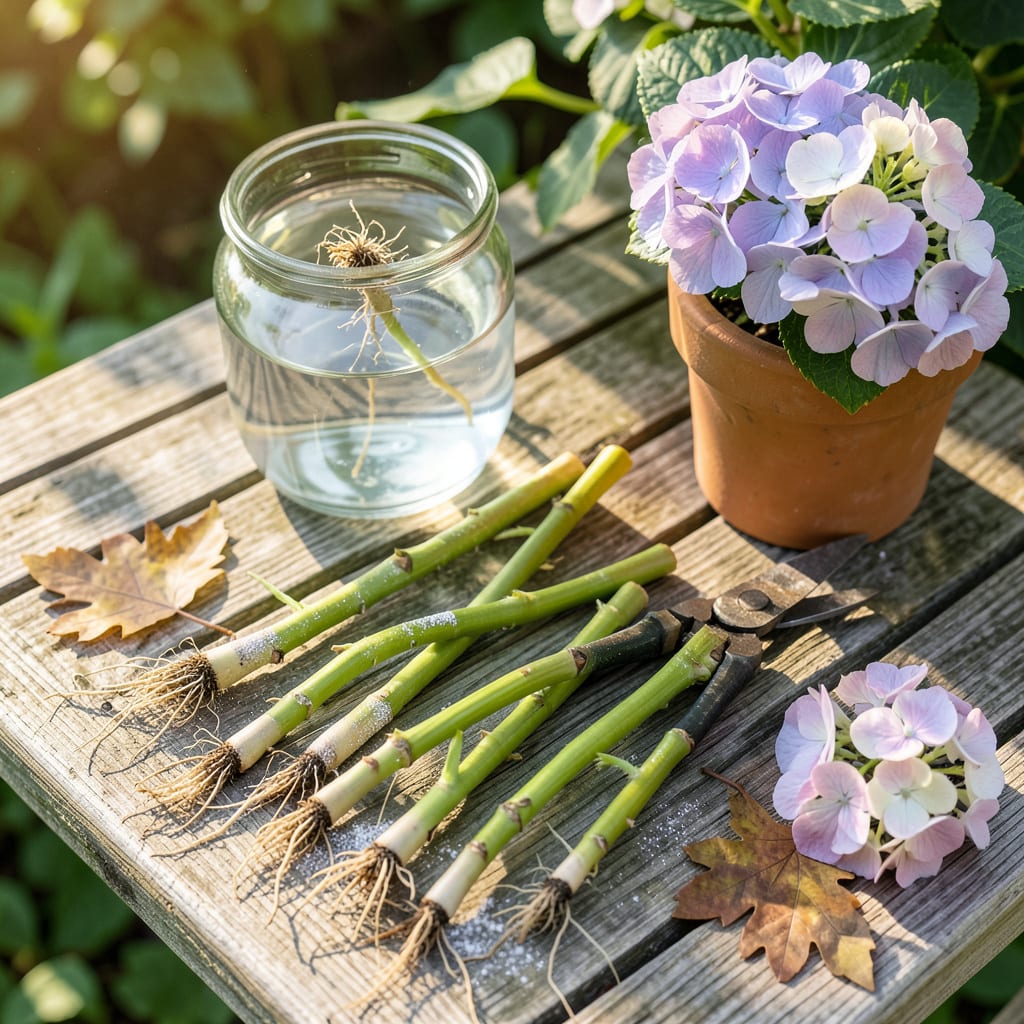
I turned one hydrangea into a dozen with this method. It starts with choosing the right stem—new growth, not flower buds, about 6 inches long.
Rooting takes 2-3 weeks in water or soil, and the success rate is shockingly high. You’ll have established plants ready for next season’s garden.
📚 In This Guide
This foolproof method delivers new plants in weeks, not years—just follow these steps closely.
Choose non-flowering stems from this season’s growth, ideally in the morning when plants are most hydrated. Look for pencil-thick wood with 3-4 leaf nodes visible. I always test by bending the stem—if it snaps with a clean break, it’s too old; if it bends without breaking, it’s perfect.
Using sharp, clean pruners, make a cut 4-6 inches long just below a leaf node at a 45-degree angle to maximize surface area for rooting. Remove the bottom set of leaves, keeping only the top 2-3 leaves to reduce moisture loss. This is the moment that matters: a clean cut prevents disease and encourages faster callusing.
Dip the cut end into rooting hormone powder, tapping off any excess. This step isn’t strictly necessary but I’ve found it speeds up root development by 2-3 weeks. Fill a clean container with a well-draining mix of 50% perlite and 50% peat moss—this prevents rot while holding enough moisture for new roots.
Insert the cuttings 1-2 inches deep into the mix, firming gently around the base. Space them 2-3 inches apart to allow air circulation. Mist the leaves and medium with water until evenly moist but not soggy. Here’s the thing—overwatering now will suffocate the cuttings before they even start.
Cover the container with a clear plastic bag or place it in a propagator to maintain high humidity. This mimics the tropical conditions hydrangeas evolved to root in. Keep the setup in bright, indirect light at 65-75°F—direct sun will cook the cuttings, while too little light weakens them.
Check daily for moisture levels. You’ll want the mix to stay consistently damp but never waterlogged. After 2-3 weeks, gently tug on a cutting—if you feel resistance, roots are forming. Real talk: if the cutting pulls out easily, give it more time.
Once roots reach 1-2 inches long (usually after 4-6 weeks), transplant each cutting to its own 4-inch pot filled with standard potting mix. Water thoroughly and place in a sheltered spot with morning sun and afternoon shade for the first week to reduce transplant shock.
Gradually acclamate them to full sun over 2 weeks. You’ll see new growth emerge within 10-14 days after transplanting—that’s your signal the rooting was successful. Don’t skip this hardening-off period, or you risk burning tender new foliage.
These small details make the difference between struggling cuttings and thriving new hydrangea plants.
The Cutting Selection: In Step 1, focus on stems that are still flexible but not floppy—this indicates active growth. The 4-6 inch length is non-negotiable; shorter cuttings lack the energy reserves to form roots, while longer ones lose too much moisture. That 45-degree angle cut below a leaf node isn’t just for aesthetics; it creates more surface area for root cells to develop.
Moisture Balance: Step 2’s warning about overwatering is critical. The 50% perlite and 50% peat moss mix should feel like a wrung-out sponge—damp but never soggy. I use a spray bottle to mist rather than pour, which gives me better control. If you see condensation inside your humidity dome in Step 3, you’re on the right track, but wipe it off daily to prevent rot.
Temperature Control: The 65-75°F range in Step 3 isn’t just a suggestion—it’s the sweet spot where root cells divide most actively. Below 65°F, rooting slows dramatically; above 75°F, you risk cooking your cuttings. A seedling heat mat can help maintain consistent warmth if your home runs cool.
Transplant Timing: Don’t rush Step 4. Those 1-2 inch roots need to be sturdy before transplanting, and the 2-week hardening-off period is essential. I’ve lost count of how many cuttings I’ve killed by skipping this acclimation. The new growth you’ll see after 10-14 days is your confirmation that the roots are established enough to handle more light.
Yes! While water rooting is possible, it’s less reliable than soil or perlite. Softwood cuttings may develop roots in water, but they often struggle when transplanted. For best results, use a well-draining medium like a mix of perlite and peat moss.
The ideal time is late spring to early summer when the plant is actively growing. Look for new, flexible stems (softwood) that snap easily when bent. Avoid fall or winter, as the plant’s energy is focused on dormancy.
Rooting typically takes 3-6 weeks, depending on conditions like humidity, temperature, and light. Keep the medium consistently moist and provide indirect light. Patience is key—check for resistance when gently tugging the cutting.
Wilting often means insufficient moisture or high heat. Blackening can signal rot from overwatering or poor drainage. Ensure your medium is damp (not soggy) and the cutting has good airflow. Trim any blackened areas immediately.
Yes! Natural alternatives like honey (diluted) or cinnamon (for its antifungal properties) can work, though commercial rooting hormones are more effective. Dip cuttings in either before planting for a gentle boost.
