
Beautiful Plants For Your Interior
Beautiful Plants For Your Interior
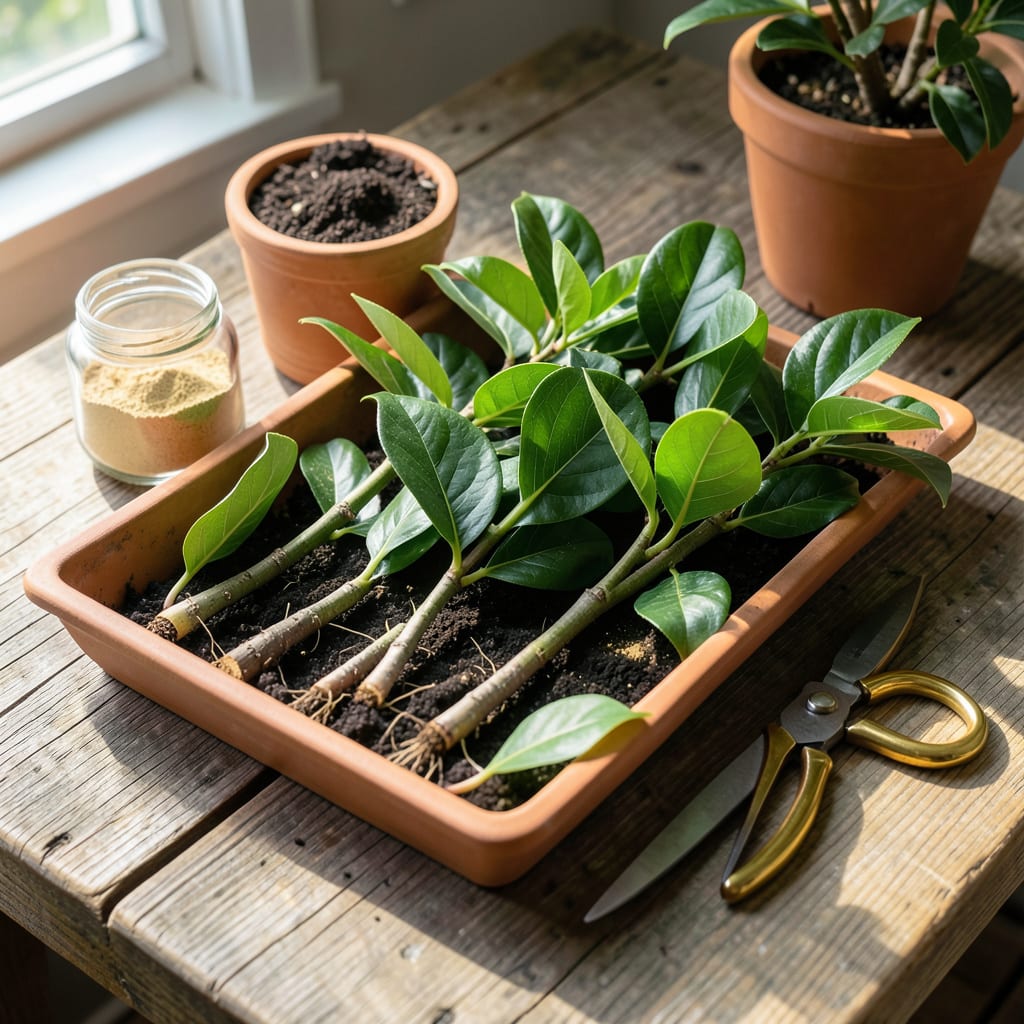
I’ve turned countless gardenia cuttings into thriving plants with just a few foolproof tricks. The secret lies in timing and the right rooting mix—too much moisture or the wrong soil dooms most attempts before they start.
Within 4-6 weeks, you’ll see new roots forming if you keep the humidity high and the light indirect. Once established, these cuttings grow into plants with the same fragrant blooms as their parent—no greenhouse required.
📚 In This Guide
Here’s the propagation method I’ve refined over years—it delivers strong, root-ready cuttings every time.
Choose 4-6 inch semi-hardwood stems from this year’s growth, taken just after the plant has finished flowering. Look for stems with 3-4 leaf nodes and a diameter roughly the size of a pencil. Soft green growth won’t root reliably, and fully hardened wood takes too long.
Using clean, sharp pruners, make a 45-degree cut just below a leaf node—the angle increases surface area for root development. Remove all but the top 2-3 leaves to reduce moisture loss. I strip the lower leaves by pulling downward sharply, leaving the nodes intact where roots will emerge.
Dip the cut end of each stem in rooting hormone powder, tapping gently to remove excess. This step significantly boosts success rates by stimulating root cell division. I’ve skipped it before and watched cuttings stagnate for weeks—don’t make that mistake.
Fill a clean 6-inch pot with a well-draining 50/50 mix of perlite and peat moss. Moisten the medium thoroughly before inserting cuttings—this prevents the hormone from washing off. The medium should feel like a wrung-out sponge, damp but not dripping.
Insert each cutting about 1-2 inches deep into the medium, ensuring at least one leaf node is buried. Space cuttings 2 inches apart if using a single container. Gently firm the medium around each stem so it stands upright without support.
Cover the pot with a clear plastic bag or place it in a propagation box to maintain 80-90% humidity. Secure the bag with a rubber band but leave a small opening for air circulation. Without this humidity, gardenia cuttings dry out faster than roots can form.
Place the container in bright, indirect light at temperatures between 70-75°F. Direct sun through the plastic will cook the cuttings, while low light leads to weak, leggy growth. A north-facing windowsill or a spot under fluorescent lights works perfectly.
Check daily for condensation—if excessive moisture collects, remove the cover for 30 minutes to prevent fungal issues. Roots typically form in 4-8 weeks. You’ll know it’s working when you see new leaf growth or feel resistance when gently tugging the stem.
Once roots are 1-2 inches long, usually visible through the drainage holes, your gardenias are ready for individual pots.
These refined techniques will help you achieve consistent success with gardenia propagation.
The Cutting Selection: In Step 1, focus on semi-hardwood stems—this is the sweet spot between too soft and too woody. I’ve found that stems taken just after flowering have the highest rooting hormone concentration naturally, which complements the rooting hormone powder you’ll apply in Step 2. Avoid stems with flower buds, as they’ll divert energy away from root development.
Medium Moisture Balance: For Step 2, the 50/50 mix of perlite and peat moss must feel like a wrung-out sponge. If it’s too wet, the cuttings will rot; if too dry, they’ll fail to root. I test the moisture by squeezing a handful—it should hold its shape briefly, then crumble. This balance ensures the rooting hormone stays in place while providing the right environment for root growth.
Humidity Control: In Step 3, maintaining 80-90% humidity is non-negotiable for gardenias, but don’t seal the plastic bag completely. Leave a small opening for air circulation to prevent fungal issues. I check the condensation daily—if it’s excessive, I remove the cover for exactly 30 minutes, as specified, to reset the environment without disrupting the rooting process.
Patience and Observation: Roots typically form in 4-8 weeks, as mentioned in Step 4. Resist the urge to tug on the stems too early. Instead, watch for new leaf growth first—that’s your sign that roots are developing below the surface. When you do test for resistance, do so gently; forceful pulls can damage fragile new roots.
While possible, gardenias root best in a well-draining soil mix. Water propagation can lead to rot, so opt for a moist potting mix with perlite for better success.
Late spring or early summer is ideal, as the plant is actively growing. Avoid extreme heat or cold for the best rooting results.
Typically 4-8 weeks, depending on conditions like humidity and temperature. Keep the soil consistently moist and provide indirect light.
Common issues include low humidity, poor soil drainage, or using old wood. Ensure fresh, semi-hardwood cuttings and maintain warmth (70-75°F).
Yes! A rooting hormone can speed up the process and improve success rates, though it’s not mandatory. Dip the cut end before planting.
