
Beautiful Plants For Your Interior
Beautiful Plants For Your Interior
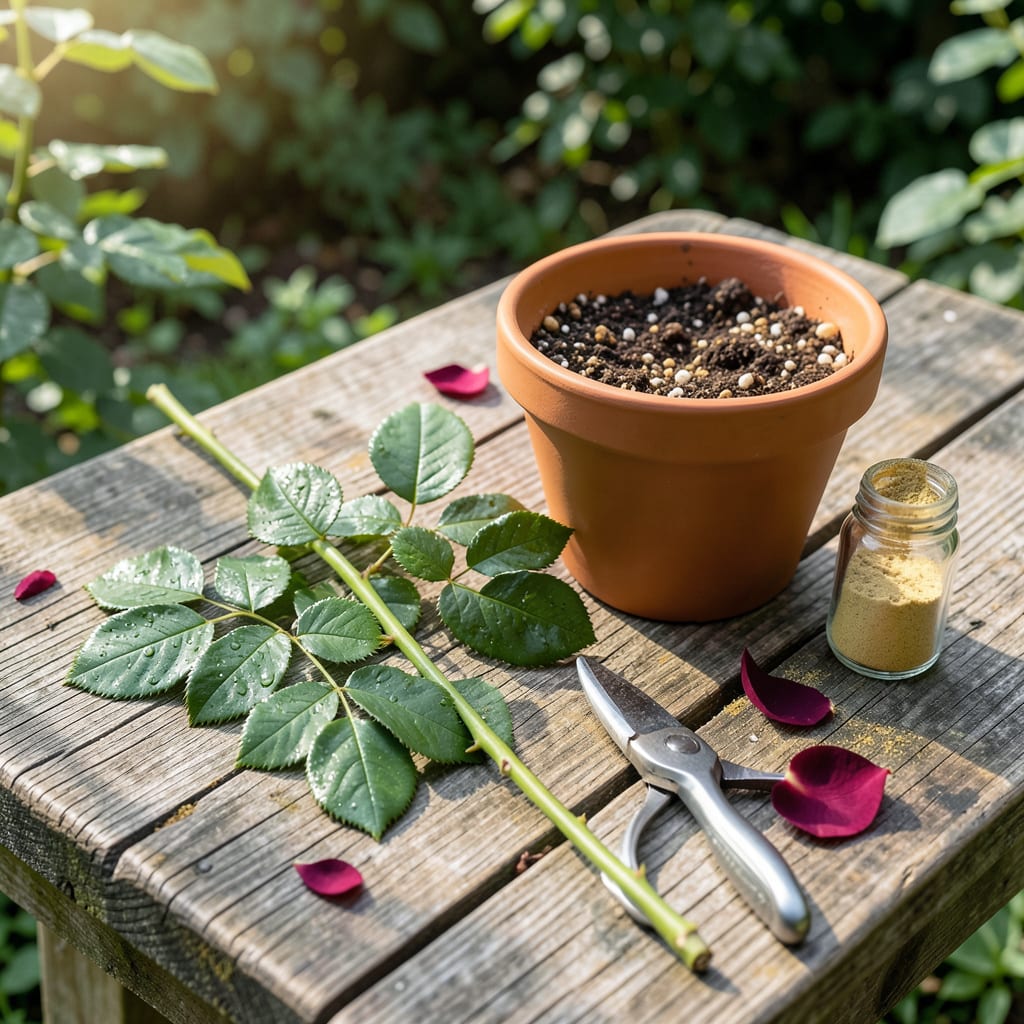
I’ve turned a single knockout rose cutting into a dozen thriving plants. The trick is timing—take cuttings in early summer when stems are semi-hard but still green, and roots form fast in warm weather.
You’ll need sharp pruners, rooting hormone, and a pot with well-draining soil. Most cuttings root within 3-4 weeks if kept moist and out of direct sun. No fancy setup required.
📚 In This Guide
Here’s the method I’ve refined over years to turn healthy stem cuttings into thriving new knockout rose bushes.
Choose a 6-8 inch stem from the current season’s growth, ideally with 3-5 leaf nodes. The wood should be semi-hard—firm but still green, not fully woody. I always pick stems in the morning when the plant is most hydrated.
Using clean, sharp pruners, cut just below a leaf node at a 45-degree angle. This increases the surface area for root development. Remove all but the top 2-3 leaves to reduce moisture loss, and strip any flowers or buds—they’ll divert energy from root formation.
Dip the cut end in rooting hormone (I prefer the gel type for better adherence) to encourage faster root development. This step significantly improves your success rate, especially with roses.
Fill a clean 6-inch deep container with a well-draining rooting mix. I use a blend of 50% perlite and 50% peat moss for optimal aeration and moisture retention. Sterilize your container first with a 10% bleach solution to prevent disease.
Water the medium thoroughly before inserting cuttings—it should be evenly moist but not soggy. Poke a hole 2-3 inches deep in the mix with a pencil or dibber to receive the cutting. This prevents the rooting hormone from rubbing off during insertion.
Insert the cutting into the pre-made hole until 2-3 nodes are buried. Firm the medium gently around the stem to ensure good contact. The remaining leaves should sit just above the soil surface to prevent rot.
Cover the container with a clear plastic bag or place it in a propagation dome to maintain high humidity. I secure the bag with a rubber band but leave a small opening for air circulation. Set the container in bright, indirect light at 70-75°F.
Check daily for moisture levels—mist the cutting and medium if it feels dry to the touch. Roots typically form in 3-6 weeks, but don’t rush the process. You’ll know it’s working when you see new leaf growth at the top.
If the cutting wilts, increase humidity by tightening the plastic cover. Yellowing leaves often indicate too much moisture or not enough light. I’ve found that bottom heat from a propagation mat can speed up rooting by 1-2 weeks.
Once roots are 1-2 inches long (visible through the drainage holes or when gently tugged), it’s time to transplant. Carefully remove the cutting and plant it in a 1-gallon container filled with well-draining potting mix.
Keep the new plant in partial shade for 1-2 weeks to harden off before moving to full sun. Water deeply after transplanting, then maintain even moisture as it establishes. Your first blooms should appear in 8-12 weeks if all goes well.
After years of refining this method, I’ve picked up a few insights that make all the difference.
Cutting Selection: In Step 1, choosing semi-hard wood is critical. Soft new growth is too tender and will rot, while fully woody stems root too slowly. The morning timing matters too—cuttings taken then have the highest moisture content for better survival rates.
Rooting Medium: For Step 2, the 50% perlite and 50% peat moss blend creates the perfect balance. Perlite prevents compaction while peat moss retains just enough moisture. Sterilizing the container with that 10% bleach solution isn’t optional—it prevents damping off, which I learned the hard way after losing several batches to fungal issues.
Environment Control: In Step 3, that 70-75°F temperature range is non-negotiable. Below 70°F and rooting slows dramatically; above 75°F risks cooking your cutting. The bright, indirect light is equally important—direct sun will scorch the leaves, while low light causes leggy, weak growth.
Patience Pays Off: During Step 4, resist the urge to check for roots constantly. The 3-6 week timeline exists for a reason. I’ve found that bottom heat from a propagation mat can shave off that 1-2 weeks, but only if you maintain consistent moisture—let the medium dry out even once and you’ll set yourself back.
The best time is late spring to early summer when the plant is actively growing. Avoid winter or extreme heat, as cuttings need warm, stable conditions to root successfully.
Typically, roots develop in 3-6 weeks. Keep the soil moist and provide indirect light. Patience is key—some cuttings may take longer depending on conditions.
While not mandatory, rooting hormone (e.g., powder or gel) boosts success rates by encouraging faster root growth. It’s especially helpful for beginners!
Wilting often means underwatering or too much direct sun. Browning could signal rot from overwatering. Check moisture levels and adjust light exposure accordingly.
Yes! Place cuttings in a jar of water, changing it every few days. However, soil or a well-draining medium often yields stronger roots for long-term growth.
