
Beautiful Plants For Your Interior
Beautiful Plants For Your Interior
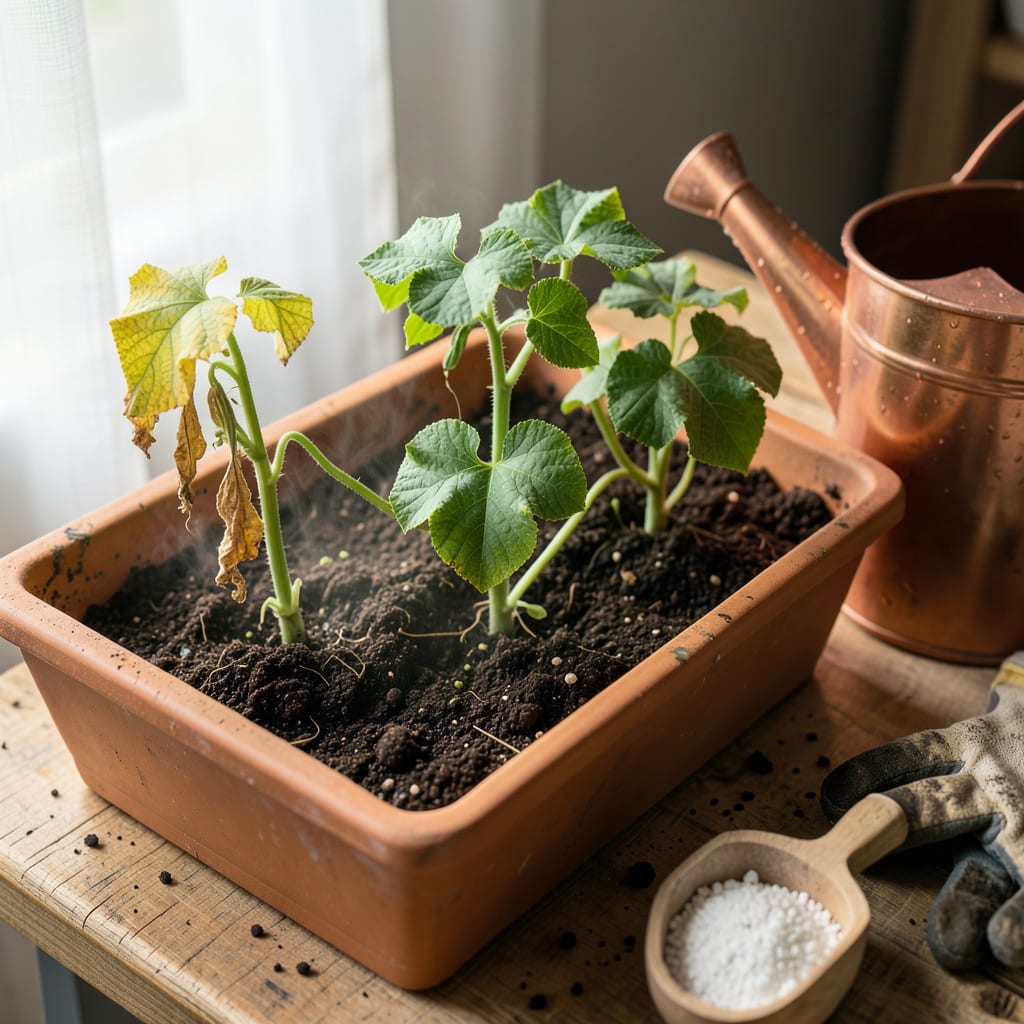
Nothing stings like watching healthy cucumber vines suddenly collapse overnight. I’ve been there—one morning they’re thriving, the next they’re limp and lifeless. The good news? Most cucumber plants can bounce back if you act fast and diagnose the real problem.
Whether it’s wilting from heat stress, yellowing from nutrient hunger, or drooping from overwatering, the fixes are simpler than you think. I’ve saved countless cucumber plants with just a few adjustments—no green thumb required. By the end of this, you’ll know exactly what your plants need to perk up in days, not weeks.
📚 In This Guide
Don’t panic when your vines wilt—these targeted fixes will bring them back stronger than before.
First, examine your plants carefully to identify why they’re struggling. Check the soil moisture by pressing your finger 2 inches deep—if it feels bone dry, underwatering is likely the culprit. Conversely, if the soil smells sour or stays soggy, you’re dealing with overwatering and potential root rot.
Look for visual clues: yellowing leaves often indicate nutrient deficiency, while crispy brown edges suggest salt buildup from fertilizer. Check the undersides of leaves for pests like spider mites or aphids. I always keep a magnifying glass handy for this—early detection makes all the difference in recovery time.
For underwatered plants, provide a deep soak until water runs from the drainage holes, then let the soil dry to 1 inch depth before watering again. Use room-temperature water to avoid shocking the roots. I recommend watering in the early morning so foliage dries quickly, reducing disease risk.
If overwatering is the issue, stop watering completely until the top 2-3 inches of soil feel dry. Improve drainage by mixing in 1 part perlite to 3 parts existing soil. For container plants, elevate the pot to ensure proper drainage and consider repotting if roots appear mushy or blackened.
Apply a balanced, water-soluble fertilizer (10-10-10) at half strength to avoid burning stressed roots. Focus on the soil around the plant’s drip line rather than the stem. I’ve found that a foliar spray of fish emulsion (diluted to quarter strength) provides quick nutrient absorption when plants are too weak to uptake through roots.
For nutrient deficiencies, address specific needs: yellow lower leaves suggest nitrogen deficiency (add compost tea), while purple stems indicate phosphorus lack (bone meal works well). Always water before and after fertilizing to prevent root burn and help nutrients penetrate the root zone.
Move potted plants to an area with 6-8 hours of sunlight daily, but provide afternoon shade if temperatures exceed 90°F. For in-ground plants, create temporary shade using 30% shade cloth during peak heat. Cucumbers thrive in 70-85°F range—anything outside this stresses them.
Increase humidity around the plants by placing trays of water nearby or misting leaves in the morning. This is particularly crucial if you’re growing in arid conditions. I’ve revived many wilting plants simply by improving their microclimate—sometimes it’s not disease, just environmental stress.
Remove any completely dead or diseased leaves with clean pruners, cutting at a 45-degree angle just above a leaf node. This directs energy to healthy growth. I always disinfect my tools with rubbing alcohol between cuts to prevent spreading pathogens.
Check plants daily for 3-5 days after treatment. New growth at the tips and firm (not limp) stems indicate recovery. If wilting persists after a week, you may be dealing with vascular disease like bacterial wilt—remove and destroy affected plants immediately to protect others. Healthy plants should show noticeable improvement within 5-7 days of proper care.
These targeted insights will help you avoid common pitfalls and maximize your plants’ recovery potential.
Diagnostic Precision: In Step 1, when checking soil moisture to that critical 2-inch depth, pay special attention to the texture—not just moisture. Healthy cucumber soil should feel like a wrung-out sponge: moist but not dripping. I’ve found that early morning checks give the most accurate readings, as evening moisture levels can be misleading after temperature fluctuations. The difference between slightly dry and bone dry at this depth often determines whether you’re dealing with simple thirst or developing root stress.
Watering Technique: For the deep soak mentioned in Step 2, use this professional trick: water in three stages. First, moistened the top inch, wait 10 minutes, then water deeply until it runs from drainage holes, wait another 10 minutes, then water once more. This gradual approach prevents water from running off compacted soil and ensures even moisture distribution to that 1-inch depth before the next watering. Room temperature water is non-negotiable—I’ve seen cold water shock roots into dormancy even in healthy plants.
Nutrient Application: When applying the half-strength 10-10-10 fertilizer in Step 3, create a small trench 3-4 inches from the stem along the drip line rather than broadcasting. This placement mimics natural nutrient distribution and prevents root burn. For the foliar spray, add a drop of mild dish soap per quart—this acts as a surfactant to help the diluted fish emulsion adhere to leaves. Always apply foliar feeds in early morning when stomata are most receptive, and avoid doing this when temperatures exceed that critical 85°F threshold mentioned in Step 4.
Environmental Control: The 6-8 hours of sunlight requirement in Step 4 is cumulative, not consecutive. If you’re dealing with intense afternoon sun, consider using that 30% shade cloth from 1-4 PM when UV levels peak. For container plants, rotating them 90 degrees daily ensures even light exposure. I’ve revived severely stressed plants by maintaining that ideal 70-85°F range—anything above 90°F triggers heat stress responses that can reverse your progress. The humidity tricks work best when combined: place water trays near the base and mist leaves lightly, creating a microclimate that reduces transpiration stress.
With proper care (watering, pruning, and pest control), you may see improvement in 3–7 days for minor issues like underwatering. Severe problems (disease, root rot) can take 2–4 weeks—patience is key! If leaves stay crispy or yellow after 2 weeks, consider replanting.
Yes! Yellow leaves often signal overwatering, nutrient deficiency, or pests. Trim affected leaves, adjust watering (let soil dry slightly between sessions), and apply a balanced fertilizer (10-10-10). Neem oil helps if pests are the culprit!
Use a water-soluble fertilizer high in nitrogen (for leaves) and potassium (for fruit), like a 5-5-5 or fish emulsion. For a quick boost, try compost tea or worm castings. Avoid over-fertilizing—follow package rates to prevent burn!
Yes! Pruning dead or diseased leaves improves airflow and redirects energy to healthy growth. Use clean shears to snip at the stem base. Avoid pruning more than ⅓ of the plant at once—it can shock the system.
Potted cucumbers revive faster with these tweaks:
