
Beautiful Plants For Your Interior
Beautiful Plants For Your Interior
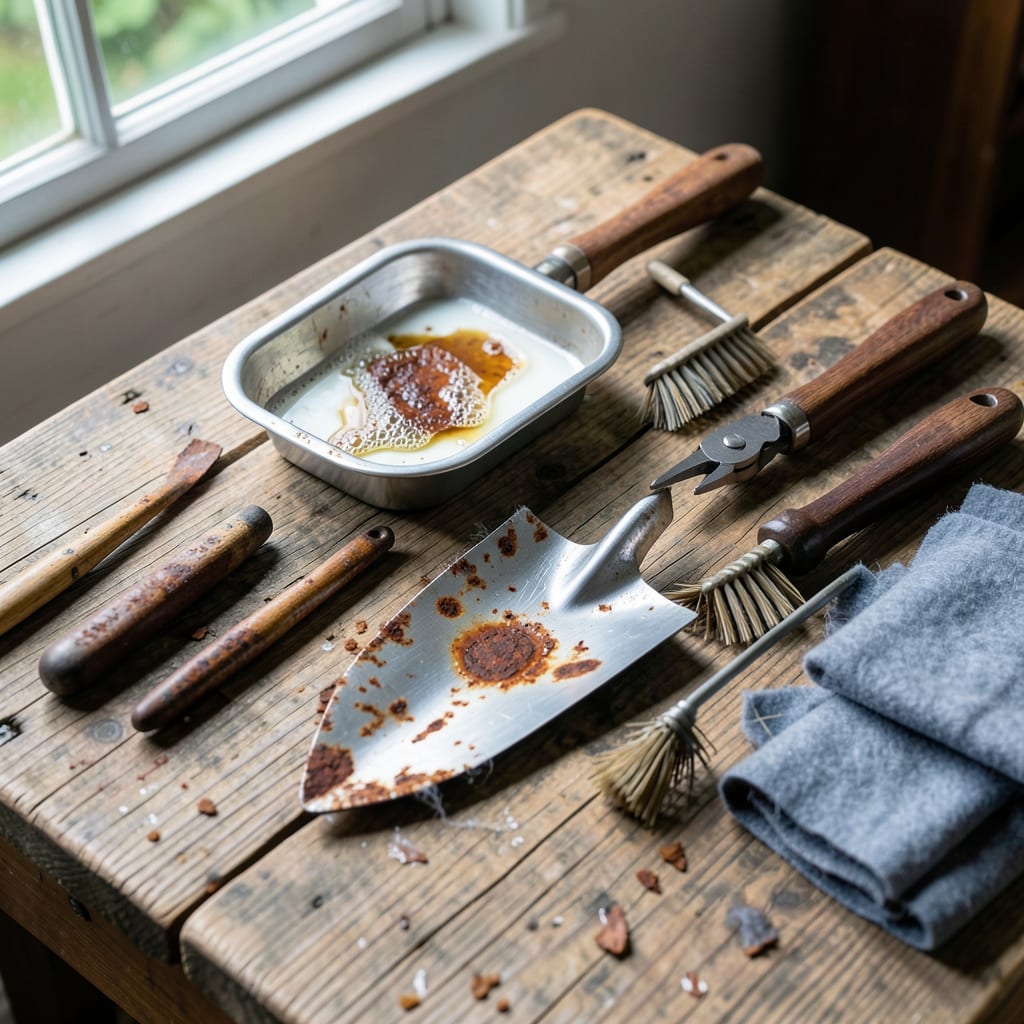
Rusty tools in my shed used to frustrate me until I discovered a foolproof method using everyday household items.
These natural solutions restore your tools to like-new condition in under an hour, and the prevention tips keep them that way. Works for shovels, pruners, even old rakes. No harsh chemicals required.
📚 In This Guide
Here’s my trusted method for restoring your tools without harsh chemicals, tested on everything from pruners to shovels.
Begin by examining each tool for the extent of rust accumulation. Light surface rust appears as a reddish-brown coating, while heavy rust may cause pitting or flaking. I always start with the worst-affected tools first to prioritize the most time-consuming cases.
Check for any loose rust that can be brushed off with a gloved hand—this indicates the oxidation hasn’t deeply penetrated the metal yet. Tools with deep pitting may require more aggressive treatment, but most garden tools respond well to natural methods.
Submerge the rusted portions of your tools in undiluted white vinegar for 12-24 hours. The acetic acid in vinegar reacts with rust (iron oxide) to dissolve it effectively. I use a plastic bucket or shallow tray large enough to accommodate the tool heads without crowding.
After soaking, scrub with a steel wool pad or wire brush to remove loosened rust. You’ll see the vinegar turn orange-brown as it works—this color change confirms the chemical reaction is breaking down the oxidation. For stubborn spots, repeat the soak for another 6-8 hours.
For tools with persistent rust after the vinegar treatment, make a paste using baking soda and water in a 3:1 ratio. Apply this paste to remaining rust spots with a stiff brush, then let it sit for 30-60 minutes.
The mild abrasiveness of baking soda combined with its alkaline properties helps lift embedded rust without damaging the underlying metal. I’ve found this works particularly well on pruning shears and trowels where vinegar alone might not reach into crevices. Scrub thoroughly with a nylon brush afterward to remove all residue.
Once all visible rust is removed, rinse tools with clean water and dry them completely with a clean cloth. Any remaining moisture will cause new rust to form within hours, so I always double-check edges and joints where water tends to linger.
Apply a thin coat of food-grade mineral oil or linseed oil to all metal surfaces using a cloth. This creates a protective barrier against future oxidation. Store tools in a dry location and consider hanging them to prevent contact with damp surfaces that could restart the rusting process.
These practical insights will help you get the best results from the natural rust removal process.
The Soaking Time Factor: The 12-24 hour vinegar soak in Step 2 is non-negotiable for deep rust penetration. I’ve tried cutting it short, and the results are noticeably weaker. If you’re dealing with particularly stubborn rust, lean toward the full 24 hours—you’ll see the vinegar turn that telltale orange-brown, which means it’s actively dissolving the oxidation. For the repeat soak mentioned for tough spots, stick to the 6-8 hour window to avoid over-softening the metal.
Paste Application Tip: In Step 3, that 3:1 ratio of baking soda to water for the paste is key. Too watery, and it slides right off; too thick, and it won’t adhere to vertical surfaces. I use a stiff brush to work it into crevices, especially on tools like pruning shears, and let it sit for the full 30-60 minutes. The alkaline reaction needs that time to break down embedded rust without scrubbing too aggressively.
Drying and Protection: After Step 4, don’t rush the drying process. Any lingering moisture—even in tiny joints—will restart the rusting cycle within hours. I always use a clean, dry cloth and then let tools air-dry for an additional 10-15 minutes before applying oil. Food-grade mineral oil and linseed oil both work, but avoid vegetable oils, as they can go rancid over time.
Tool-Specific Strategy: Confession: I used to treat all tools the same until I noticed small crevices in trowels and shears needed extra attention. For these, I extend the baking soda paste dwell time to the full 60 minutes and use a nylon brush to reach tight spots. Larger tools like shovels do fine with the standard vinegar soak and steel wool scrubbing.
Yes! Soak tools in white vinegar for 12-24 hours, then scrub with steel wool. Vinegar’s acetic acid dissolves rust naturally. Rinse and dry thoroughly to prevent re-rusting.
Clean and dry tools after each use to prevent rust buildup. For deep cleaning, aim for a rust-removal session at least once a season or if you notice corrosion forming.
For light rust, use a wire brush or sandpaper to scrub it off manually. A paste of baking soda and water also works—apply, let sit for 10 minutes, then scrub. Fast and effective!
Rust recurs due to moisture exposure. After cleaning, apply a thin layer of oil (like mineral oil) or a protective spray to create a barrier. Store tools in a dry place.
