
Beautiful Plants For Your Interior
Beautiful Plants For Your Interior
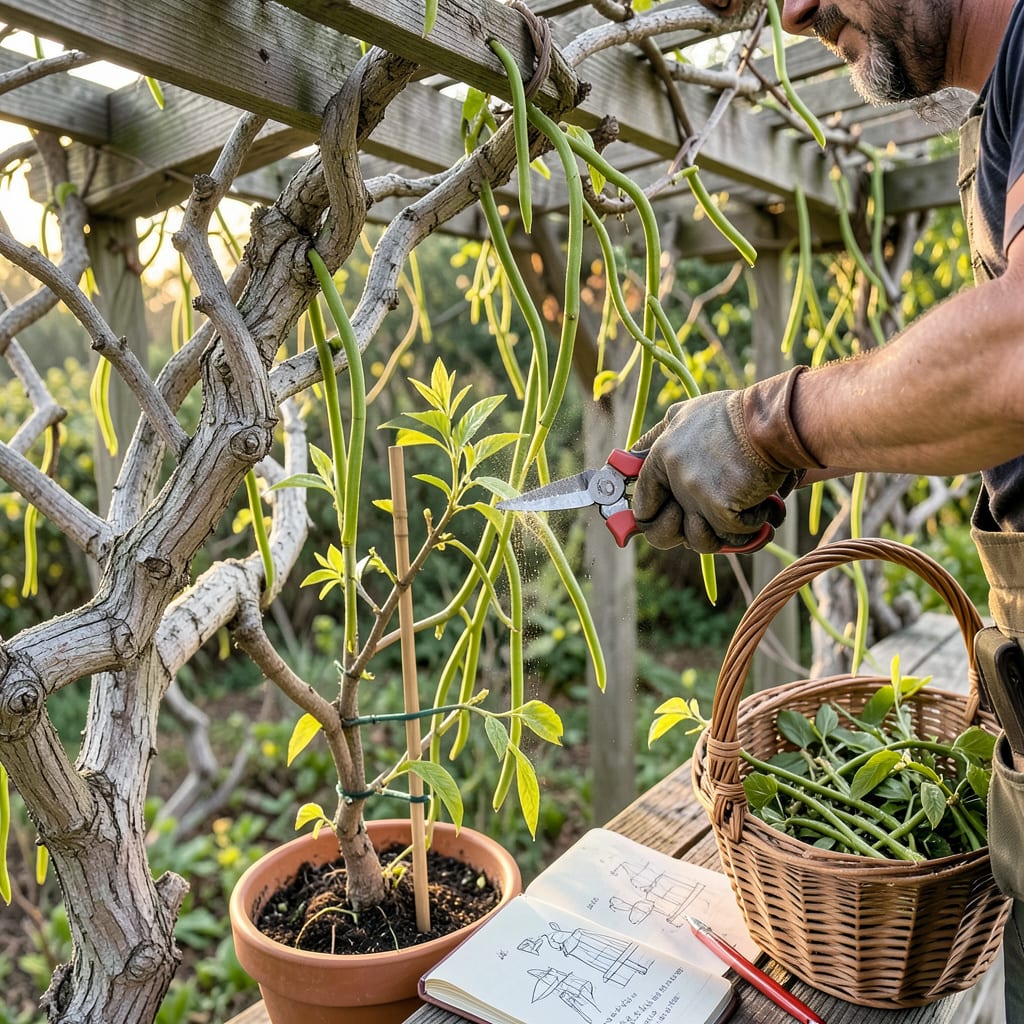
Wisteria can transform your garden into a fragrant, lavender waterfall—but only if you prune it right. I learned this the hard way after watching my first vine explode into a tangled mess with exactly zero blooms. The secret isn’t just cutting back growth; it’s when and how you make each snip.
Do this twice a year—once in summer to control wild shoots, once in winter to shape next season’s flowers—and you’ll get a plant that blooms reliably instead of just growing everywhere. No fancy tools required, just sharp pruners, gloves (that sap is no joke), and about 30 minutes of focused work per session. The payoff? Cascades of flowers so heavy they’ll make neighbors stop and stare.
📚 In This Guide
Timing and technique matter more than you’d think—here’s how I get explosive blooms every spring.
Wisteria needs two pruning sessions annually: summer pruning (July/August) and winter pruning (January/February). The summer cut controls growth and prepares flower buds, while winter pruning refines the structure. Never prune in fall—you’ll accidentally remove next year’s blooms.
Look for when new growth starts to harden off in late summer. The stems will change from bright green to brownish—this is your signal to begin. Winter pruning happens when the plant is fully dormant, with no leaves and no signs of new growth.
Start by cutting back all new green shoots to 6 inches from the main stem. These are the long, whippy growths that appeared this season. Use sharp bypass pruners and make clean cuts at a 45-degree angle just above a leaf node.
Don’t worry about being too aggressive—wisteria thrives on hard pruning. The goal is to create a framework of short spurs that will bear next year’s flowers. You’ll see small bumps forming at the base of these cuts by autumn; those are your future flower buds.
In winter, focus on the framework you created. Shorten the summer-pruned shoots further to 2-3 buds from the base. These will become your flowering spurs. Remove any dead, damaged, or crossing branches completely at their point of origin.
Step back frequently to assess the plant’s shape. Wisteria should have a clear main trunk with evenly spaced lateral branches. I like to visualize the final form before making each cut—this prevents over-thinning one area while neglecting another.
Wisteria sends up suckers from the base and long runners that can attach to structures. Cut these flush with the main stem or ground using a pruning saw if necessary. Don’t leave stubs—they’ll resprout vigorously and create more work later.
Check for any growth extending beyond your desired boundaries. Now’s the time to redirect it by cutting back to a side branch that’s growing in the right direction. This training takes patience but results in a neater, more manageable plant over time.
Remove all cut material from the area to prevent disease. Wisteria debris can harbor pests and pathogens that might reinfect the plant. I use a tarp to collect clippings as I work—it makes cleanup much easier.
Watch for new growth emerging in spring. If you see long shoots developing where you want flowers, prune them back immediately to 6 inches. This reinforces the spur system you’ve established and ensures energy goes into blooms rather than foliage.
Mastering these techniques will transform your wisteria from a wild tangle into a bloom-covered showstopper.
The Timing Factor: Those two annual pruning sessions in July/August and January/February aren’t arbitrary—they’re critical for flower production. I’ve found that summer pruning done even two weeks late can reduce next year’s blooms by 50%. The winter session is more forgiving, but don’t delay past early February or you risk cutting off emerging buds.
Precision Cutting: When making those 6-inch cuts in Step 2, always measure from the main stem—not from where the shoot branches. I use my pruners’ handle (which happens to be 6 inches long) as a quick guide. The 45-degree angle mentioned isn’t just for aesthetics; it prevents water from pooling on the cut surface, which can lead to rot.
Bud Count Matters: In Step 3, when reducing to 2-3 buds, I always aim for 3 buds on vigorous plants and 2 buds on weaker growth. This slight adjustment ensures balanced energy distribution. The buds should be plump and facing outward from the plant’s center—these will produce the strongest flowering spurs.
Sucker Strategy: For those persistent suckers in Step 4, I’ve had the best results by pruning them when the soil is dry. Wet conditions seem to encourage regrowth. Mark their locations with landscape flags after cutting—this helps you spot any regrowth quickly during your next inspection.
Prune wisteria twice a year for best results: summer (after flowering, around July) to control growth, and winter (January/February) to refine shape and encourage blooms. Avoid pruning in fall—it can stimulate tender growth vulnerable to frost.
Unpruned wisteria becomes a tangled mess! Expect fewer flowers (energy goes to foliage), weak stems, and aggressive spread—it can damage structures or choke nearby plants. Regular pruning keeps it healthy, manageable, and bursting with blooms.
Yes! For young or small wisteria, use extendable pruners or a pole saw to reach high branches safely. For mature vines, consider training it horizontally along a fence or pergola early on to keep growth at arm’s level.
Common culprits: over-pruning in winter (removes flower buds) or under-pruning in summer (too much foliage blocks buds). Check for excess nitrogen (promotes leaves, not flowers) and ensure it gets full sun. Patience helps—some take 3+ years to bloom!
If pruning feels overwhelming, try “summer pinching”: trim back new shoots by 50% every 2 weeks in summer to slow growth without drastic cuts. For ground cover, let it sprawl (but monitor invasiveness!). Dwarf varieties like ‘Amethyst Falls’ also need less pruning.
