
Beautiful Plants For Your Interior
Beautiful Plants For Your Interior
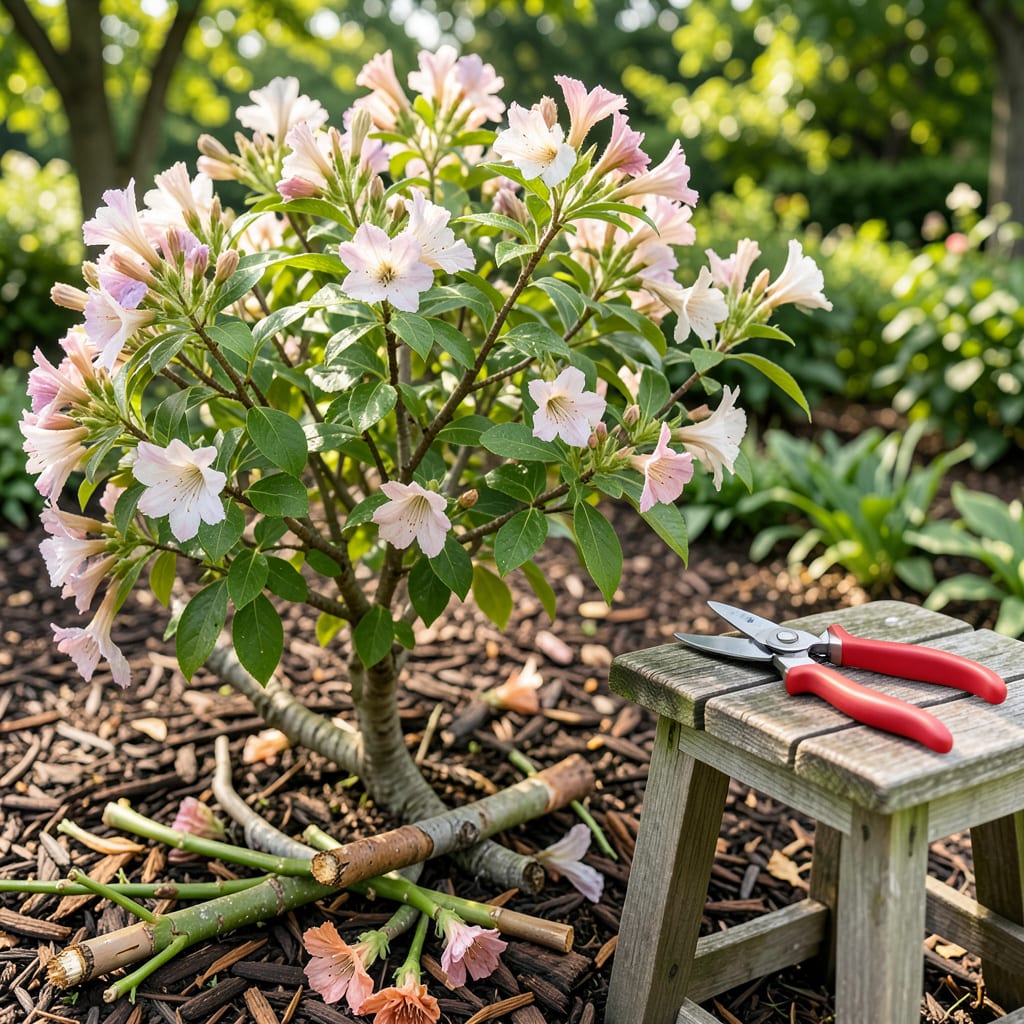
Weigela might just be the unsung hero of spring gardens. I’ve watched these shrubs transform from overgrown tangles into showstoppers with just a few strategic cuts—timing is everything. Prune right after the flowers fade in late spring, and you’ll get more blooms next year while keeping the shape tidy. Skip this step, and you end up with a leggy bush that flowers less each season.
Here’s the thing—this isn’t about hacking away blindly. Weigela responds best to thoughtful thinning and selective shaping, not aggressive chopping. I ruined my first attempt by cutting too late in summer (rookie mistake). Now I know: focus on removing old wood, opening the center for airflow, and letting sunlight reach the inner branches. The payoff? A bush that practically glows with vibrant pink or red blooms when neighbors’ shrubs are still waking up.
📚 In This Guide
Timing and technique make all the difference—here’s how to prune for maximum blooms and plant health.
Weigela blooms on old wood, so prune immediately after flowering finishes in late spring or early summer. This timing allows new growth to develop flower buds for next season. If you prune in fall or winter, you’ll remove next year’s blooms entirely.
Look for fading flowers and seed pods forming—this is your signal to begin. In warmer zones (7-9), you may get a second flush of blooms; wait until after that before pruning. The plant’s natural cycle dictates the timing, not the calendar date.
Start with your sanitized pruners and cut out any dead wood (dry, brittle stems with no green tissue when scratched). Next, remove diseased branches showing discoloration or cankers, cutting 6 inches below any visible damage to ensure clean removal.
Then address crossing branches that rub against each other, creating wounds. Choose the weaker of the two branches to remove entirely at its base. This prevents future damage and improves air circulation through the shrub’s center.
Weigela benefits from annual renewal pruning. Identify the oldest, thickest stems (typically 3-4 years old with rougher bark) and remove one-third of them at ground level. This stimulates new growth from the base while maintaining the shrub’s natural shape.
Focus on opening the plant’s center to sunlight and air. You’ll see the difference immediately—light can penetrate deeper, which reduces disease risk and encourages flowering on the remaining branches.
Now shape the shrub by selectively pruning the remaining branches. Cut back one-quarter to one-third of each stem’s length, making your cut just above an outward-facing bud. This maintains the natural arching habit while controlling size.
Avoid shearing all branches to the same height, which creates an unnatural, flat-topped appearance. Instead, make individual cuts to preserve the plant’s graceful, layered form. Step back frequently to assess your progress from different angles.
Remove all cut material from around the base to prevent pest and disease issues. Apply a 2-3 inch layer of mulch around the plant (keeping it 3 inches away from the trunk) to conserve moisture and protect roots during the growing season.
Watch for new growth emerging within 2-3 weeks. This fresh growth will develop next year’s flower buds. Water deeply during dry periods to support this critical regrowth phase, but avoid overhead watering that could promote fungal diseases.
Pruning weigela properly transforms a leggy shrub into a vibrant, bloom-covered showpiece. These insights will help you avoid common pitfalls.
Timing Precision: The window for pruning weigela is narrower than most realize. In Step 1, waiting until flowers have completely faded—when you see seed pods forming—ensures you’re not cutting off next year’s buds. I’ve found that pruning even two weeks too early can reduce next season’s blooms by half. For warmer zones (7-9) with potential second blooms, patience pays off: wait until after that second flush before making any cuts.
Sanitation Protocol: The 6-inch rule in Step 2 when removing diseased wood isn’t arbitrary. I learned this after losing a mature weigela to canker spread: pathogens can travel further than visible damage. Always disinfect pruners between cuts with rubbing alcohol, especially when moving from diseased to healthy wood. This small step prevents systemic infection that could compromise the entire shrub.
Renewal Strategy: The one-third removal of oldest stems in Step 3 isn’t just about aesthetics—it’s about plant longevity. I track which stems I remove each year by tying a small ribbon around them at the start of the season. This ensures I’m rotating removal systematically rather than taking the same stems year after year, which can create structural imbalances. The remaining two-thirds provide enough foliage to support photosynthesis while new growth establishes.
Regrowth Monitoring: The 2-3 week timeline for new growth in Step 5 is your feedback mechanism. I maintain a pruning journal noting when I pruned and when new shoots appear. If you don’t see growth within this window, it often indicates either over-pruning (removed too much old wood) or water stress. Deep watering—soaking the root zone to 12 inches—usually resolves the latter issue within a week.
Prune right after flowering (late spring/early summer) to avoid cutting off next year’s buds. Weigela blooms on old wood, so late-winter pruning removes flower buds. If shaping is urgent, do a light trim in late winter—but expect fewer blooms.
Avoid fall pruning—it stimulates new growth that won’t harden before frost. Light shaping in late winter (before buds swell) is okay, but save major cuts for post-bloom. Winter pruning risks cold damage to fresh cuts.
For renovation pruning, remove up to ⅓ of the oldest stems at ground level annually over 3 years. Never cut more than ⅓ of the plant in one season—it stresses the shrub. After rejuvenation, maintain with annual light pruning.
Likely causes: Pruning at the wrong time (late winter/fall cuts remove buds) or over-pruning (removed too many flower-bearing stems). Check for sunlight (6+ hours/day) and avoid high-nitrogen fertilizer, which promotes leaves over flowers.
Yes! Try pinching back new growth tips in early summer to encourage bushiness without heavy cuts. For size control, choose dwarf varieties like ‘Midnight Wine’ or ‘Spilled Wine’—they need minimal pruning and stay compact (2–3’ tall).
