
Beautiful Plants For Your Interior
Beautiful Plants For Your Interior
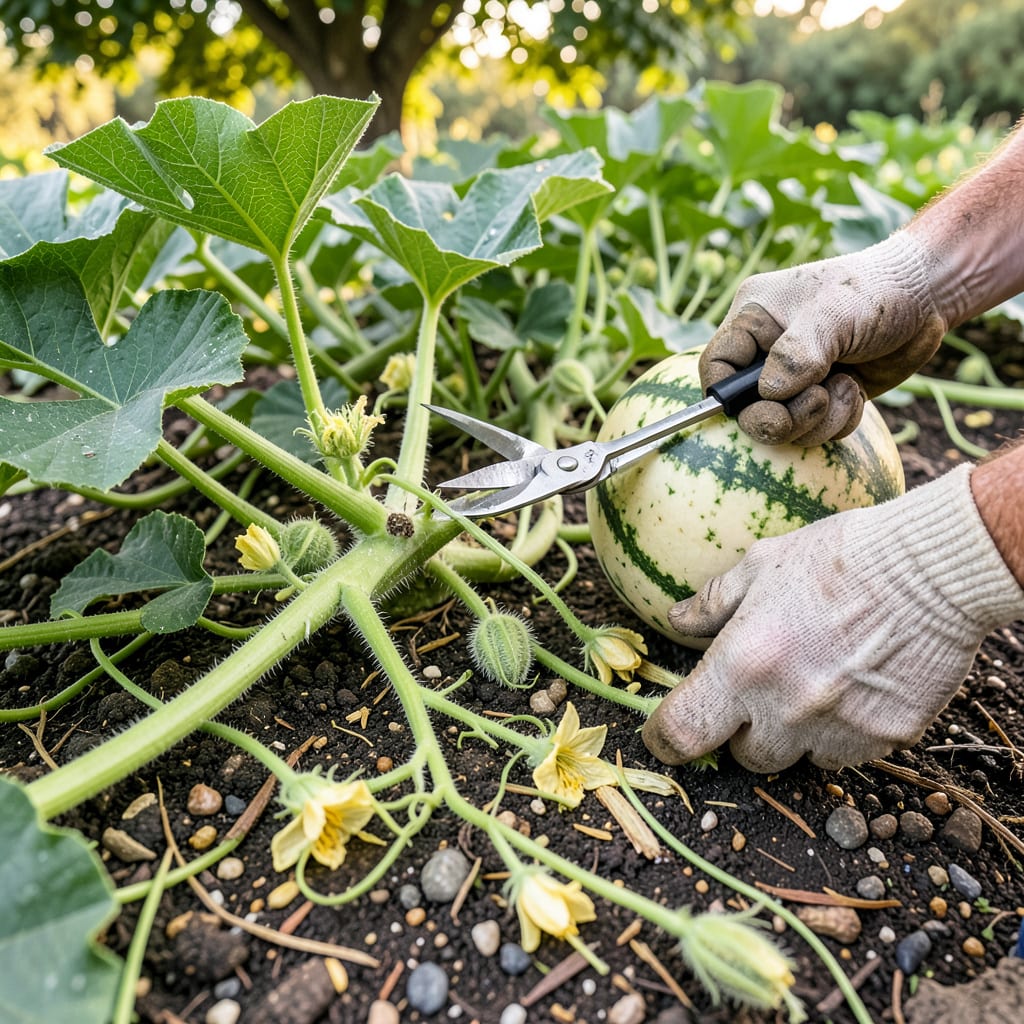
I used to think pruning watermelons was counterintuitive—why cut back a plant when you want more fruit? Then I tried it. The difference was shocking: vines focused their energy on fewer, sweeter melons instead of sprawling everywhere with tiny, underripe fruit. This isn’t about trimming for looks; it’s about redirecting the plant’s resources where they matter most.
Timing is everything. Prune too early and you stunt growth; too late and you’ve missed the window. The sweet spot? When vines have 3-5 true leaves and the first female flowers appear. You’ll need just sharp pruners and 10 minutes—no fancy tools, no green thumb required. The plants bounce back faster than you’d expect.
📚 In This Guide
This simple technique transforms sprawling vines into focused, high-yielding plants—here’s exactly how I do it.
Begin when vines reach 3-4 feet long and have developed 3-4 true leaves beyond the cotyledons. You’ll see the main stem branching into lateral runners—this is your signal to act. Pruning too early stunts growth; waiting too long wastes plant energy on excessive foliage rather than fruit production.
Check the base of each vine for small, yellow blossoms—they indicate the plant has shifted from vegetative to reproductive growth. I always prune in the early morning when plants are most turgid; this minimizes stress and reduces sap loss through cut stems.
Locate the primary vine (the main stem) and trace it to where lateral runners emerge. Using clean, sharp pruners, remove all lateral vines except the top 2-3 strongest runners. Cut just above a leaf node at a 45-degree angle to prevent water pooling on the wound.
You’ll notice some runners already have tiny melons forming—leave these intact. I focus on eliminating vines without fruit or flowers, as they only drain resources. Never remove more than one-third of the total vine length in a single session to avoid shocking the plant.
Once melons reach softball size, select the healthiest 2-3 fruits per vine and remove all others. Look for uniform shape, vibrant green color, and strong stem attachment. I use my thumbnail to test firmness—immature fruits dent easily under light pressure.
Cut unwanted fruits with 1 inch of stem attached to prevent stem-end rot in remaining melons. You’ll see the plant redirect energy immediately: leaves near kept fruits darken slightly within 24-48 hours, signaling increased sugar production.
After initial pruning, monitor for new lateral growth weekly. Remove any runners that emerge below the top 2 fruit-bearing nodes. This keeps the plant’s energy concentrated upward where sunlight penetration is strongest.
I position remaining vines to create a 12-18 inch gap between them, ensuring air circulates freely. You’ll notice reduced powdery mildew risk and faster fruit ripening—watch for the curly tendril nearest the stem to turn brown, your visual cue that sugar accumulation has peaked.
Two weeks before expected harvest, perform a final inspection. Remove any remaining leaves shading the fruits—these melons need full sun exposure to develop maximum sweetness. I check the underside of fruits where they contact the soil; a creamy yellow color indicates ripeness.
The pruned vines should now resemble an open umbrella shape, with all energy directed to your selected fruits. You’ll hear a dull thud (rather than a hollow ring) when tapping ripe melons, and the stem will separate easily with a gentle twist—this is your harvest-ready signal.
Pruning watermelon vines properly can dramatically improve your harvest—here’s what I’ve learned from years of trial and error.
The Timing Factor: That 3-4 foot vine length mentioned in Step 1 is absolutely critical. I once pruned too early when vines were only 2 feet long, and the plants struggled to recover. Wait until you see those lateral runners forming and the first yellow blossoms appear—this is nature’s signal that the plant is ready for your intervention. Early morning pruning really does make a difference in plant recovery time.
Pruning Technique: When removing lateral vines in Step 2, I can’t stress enough how important that 45-degree angle cut is. I used to cut straight across until I noticed water collecting on the wounds, which led to stem rot. Always cut just above a leaf node, and make sure your pruners are sharp—ragged cuts take longer to heal. Remember the one-third rule: never remove more than a third of the total vine length in one session, no matter how tempted you are to thin aggressively.
Fruit Selection Strategy: In Step 3, when thinning fruits at the softball size stage, here’s what I’ve learned: look for the fruits with the strongest stem attachments. I used to choose based solely on size, but stems are the lifeline—weak attachments often lead to fruit drop later. That 1 inch of stem you leave on removed fruits isn’t just for show; it prevents stem-end rot in your remaining melons. Within those 24-48 hours after thinning, you’ll actually see the plant redirecting energy—leaves near kept fruits will darken noticeably.
Airflow Management: The 12-18 inch gap between vines in Step 4 isn’t arbitrary. I’ve experimented with different spacings and found that anything less than 12 inches increases powdery mildew risk, while gaps wider than 18 inches waste valuable growing space. Watch for that curly tendril turning brown—it’s the most reliable visual indicator that sugar accumulation is peaking in your fruit. This is when the magic happens and flavors concentrate.
Prune watermelons when vines reach 6–8 feet long (typically 3–5 weeks after planting). Focus on early morning to avoid stressing plants in midday heat. Stop pruning 3–4 weeks before harvest to let fruits ripen fully.
Done correctly, pruning boosts plant health! Use clean, sharp shears to avoid tearing vines. Remove only lateral shoots (not main vines) and limit cuts to 1/3 of the plant at a time. Over-pruning can stress plants, so go slow!
Yes! For small vines, pinch off suckers (side shoots) with your fingers. Wear gloves to avoid sap irritation. For thicker vines, tools like pruning shears ensure clean cuts and reduce disease risk.
Yellowing leaves post-pruning can mean over-stress or poor timing. Ensure plants get consistent water and shade if temps exceed 90°F. If yellowing spreads, trim less aggressively next time and fertilize lightly.
Nope! Bush-type or compact varieties (like ‘Sugar Baby’) need minimal pruning. Large vining types (e.g., ‘Crimson Sweet’) benefit most. Always check seed packets for variety-specific tips!
