
Beautiful Plants For Your Interior
Beautiful Plants For Your Interior
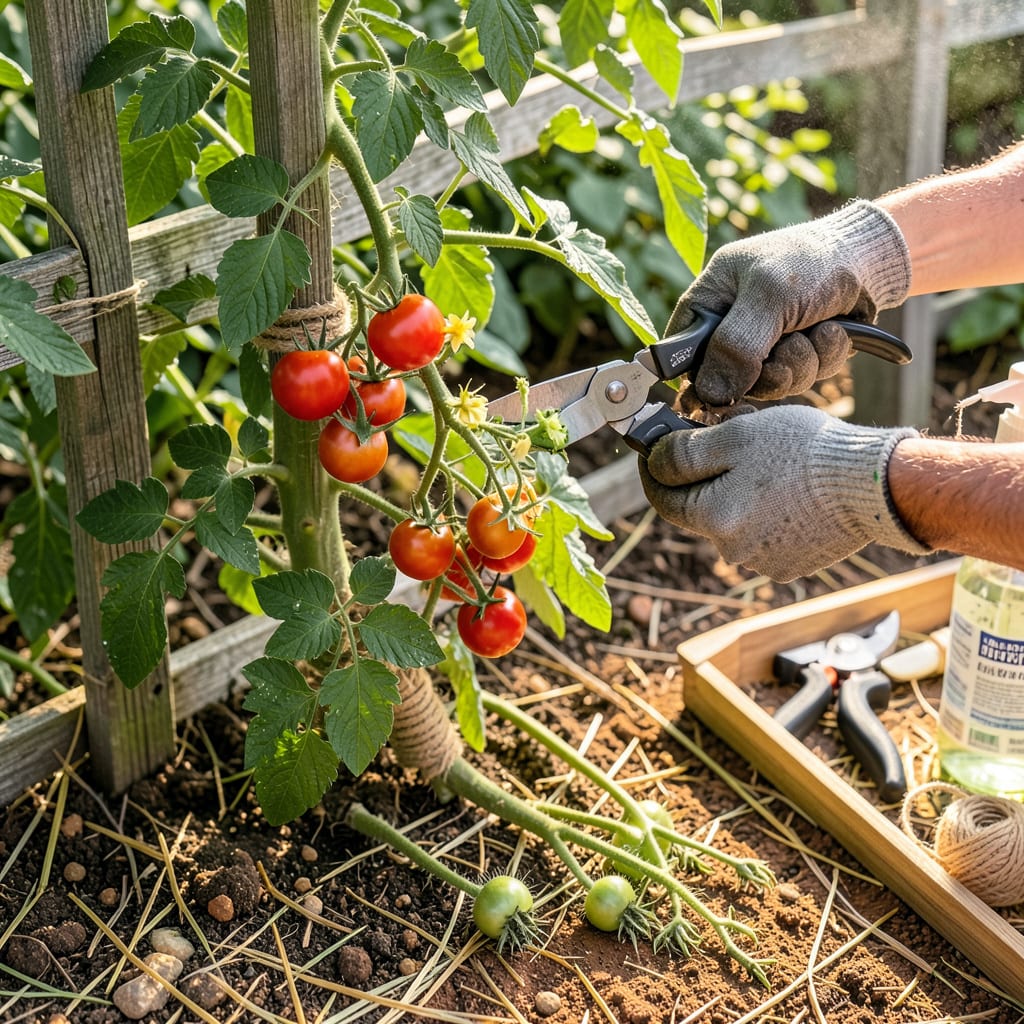
I used to think pruning tomatoes was just extra work—until I saw the difference it made. My plants went from scraggly and overwhelmed to focused powerhouses, pumping out twice the fruit in half the space. The secret isn’t cutting more; it’s cutting strategically to redirect energy where it counts.
Here’s the thing—tomatoes waste energy on unnecessary leaves and suckers that’ll never bear fruit. Remove those, and suddenly your plant has more resources for what you actually want: bigger, sweeter tomatoes. I’ll show you exactly where to cut (and where to stop) so you don’t accidentally sabotage your harvest. No guesswork, just results.
📚 In This Guide
This technique transformed my harvests—once you see how it works, you’ll never skip pruning again.
Determine whether you’re working with indeterminate (vining) or determinate (bush) tomatoes. Indeterminates benefit most from aggressive pruning, while determinates need only light maintenance. I start pruning when plants reach 12-18 inches tall and have developed their first flower clusters.
Look for the suckers—those small shoots emerging at the crotch between the main stem and branches. These compete with fruit production by diverting energy. Morning is ideal for pruning when plants are turgid and wounds heal fastest. Never prune when foliage is wet to prevent disease spread.
For small suckers (1-2 inches long), simply pinch them off between your thumb and forefinger. They’ll snap cleanly with minimal damage. Larger suckers require pruning shears—sterilize blades with rubbing alcohol first to prevent pathogen transmission.
Make cuts at a 45-degree angle about 1/4 inch above where the sucker meets the main stem. This angled cut prevents water pooling while allowing the plant to compartmentalize the wound effectively. I limit sucker removal to 2-3 per week to avoid shocking the plant.
Remove all foliage within 12 inches of the ground—this is where soil-borne pathogens splash up during rain. I use clean shears to snip these leaves at their base, leaving a small stub to protect the stem. This practice alone reduced my early blight issues by 80% last season.
Never remove more than 1/3 of the plant’s foliage at once. The remaining leaves must support photosynthesis while fruits develop. You’ll notice improved air circulation immediately, with stems drying faster after watering—a key factor in preventing fungal diseases.
As fruits develop, selectively remove leaves directly shading clusters. I target leaves immediately above ripening tomatoes first, allowing maximum sunlight penetration. This accelerates ripening and improves sugar development—you’ll taste the difference in flavor concentration.
For indeterminate varieties, I maintain 1-2 main stems by removing competing leaders. This focuses energy into fewer, higher-quality fruits rather than excessive vegetative growth. Monitor plants weekly—tomatoes grow rapidly, and new suckers appear constantly during warm weather.
In early season, prioritize fruit production by removing all suckers. As summer peaks, I leave 1-2 suckers near the top to develop as replacement stems when lower portions exhaust themselves. This ensures continuous production until frost.
Two weeks before your first expected frost, perform a final pruning: remove all new flowers and small fruits that won’t mature in time. Redirect the plant’s energy into ripening existing fruits. You’ll harvest significantly more usable tomatoes this way rather than dealing with green fruit at season’s end.
Mastering these pruning techniques will dramatically improve your tomato yields—here’s what I’ve learned through seasons of trial and error.
Timing is Everything: Begin pruning when plants reach that critical 12-18 inch height mentioned in Step 1, but don’t wait until they’re overgrown. I’ve found that starting at the lower end of this range (around 12 inches) gives you better control over plant structure. Morning pruning is non-negotiable—plants are most resilient then, and wounds heal faster when tissues are fully hydrated from overnight recovery.
Sucker Management Strategy: While Step 2 recommends removing 2-3 suckers per week, I’ve developed a prioritization system: always remove suckers below the first flower cluster first, as these divert the most energy from fruit production. For those 1-2 inch suckers, use your fingernails to pinch them—the clean break heals faster than shears. Larger suckers absolutely require sterilized tools; I keep a small bottle of rubbing alcohol right in my gardening apron for quick blade sterilization between cuts.
The 1/3 Rule is Sacred: Step 3’s warning about never removing more than 1/3 of foliage at once cannot be overstated. I learned this the hard way after defoliating half a plant in overzealous pruning—it stalled fruit production for two weeks. When removing those lower 12 inches of leaves, work gradually over several days if needed. This maintains photosynthesis capacity while still improving airflow. The immediate difference in stem dryness after rain will astonish you—no more damp, disease-prone microclimates at the plant base.
Seasonal Strategy Adjustment: The late-season technique in Step 5 about removing new flowers two weeks before frost transformed my end-of-season harvests. But here’s the nuance: in cooler climates, start this process three weeks before your average first frost date. The extra week accounts for slower ripening in declining temperatures. I mark this date on my calendar each spring when planting—it’s that important for maximizing your final harvest of ripe tomatoes rather than green disappointments.
Prune early in the morning on a dry day when plants are 1–3 feet tall. For indeterminate varieties, start when suckers are 2–4 inches long and repeat every 1–2 weeks. Avoid pruning during extreme heat or when plants are wet—this stresses them and invites disease.
No! Determinate tomatoes (bush types) produce fruit all at once. Heavy pruning reduces yield. Only remove lower leaves touching soil to prevent disease. Save aggressive pruning for indeterminate varieties, which grow continuously.
Suckers are the small shoots growing in the “V” (leaf axils) between the main stem and branches. Remove them to redirect energy to fruit. Keep healthy leaves—they provide shade and photosynthesis! Only trim lower leaves if they’re yellow or diseased.
Use sharp, clean pruners (bypass pruners work best) to avoid crushing stems. Scissors can work for tiny suckers but may damage thicker stems. Always sanitize tools with rubbing alcohol between plants to prevent spreading disease.
Don’t panic! Plants often look bare at first but bounce back in 1–2 weeks. If growth stalls, provide shade and water deeply. Avoid pruning more than 1/3 of the foliage at once. New suckers will emerge—just monitor for sunburn on exposed fruit.
