
Beautiful Plants For Your Interior
Beautiful Plants For Your Interior
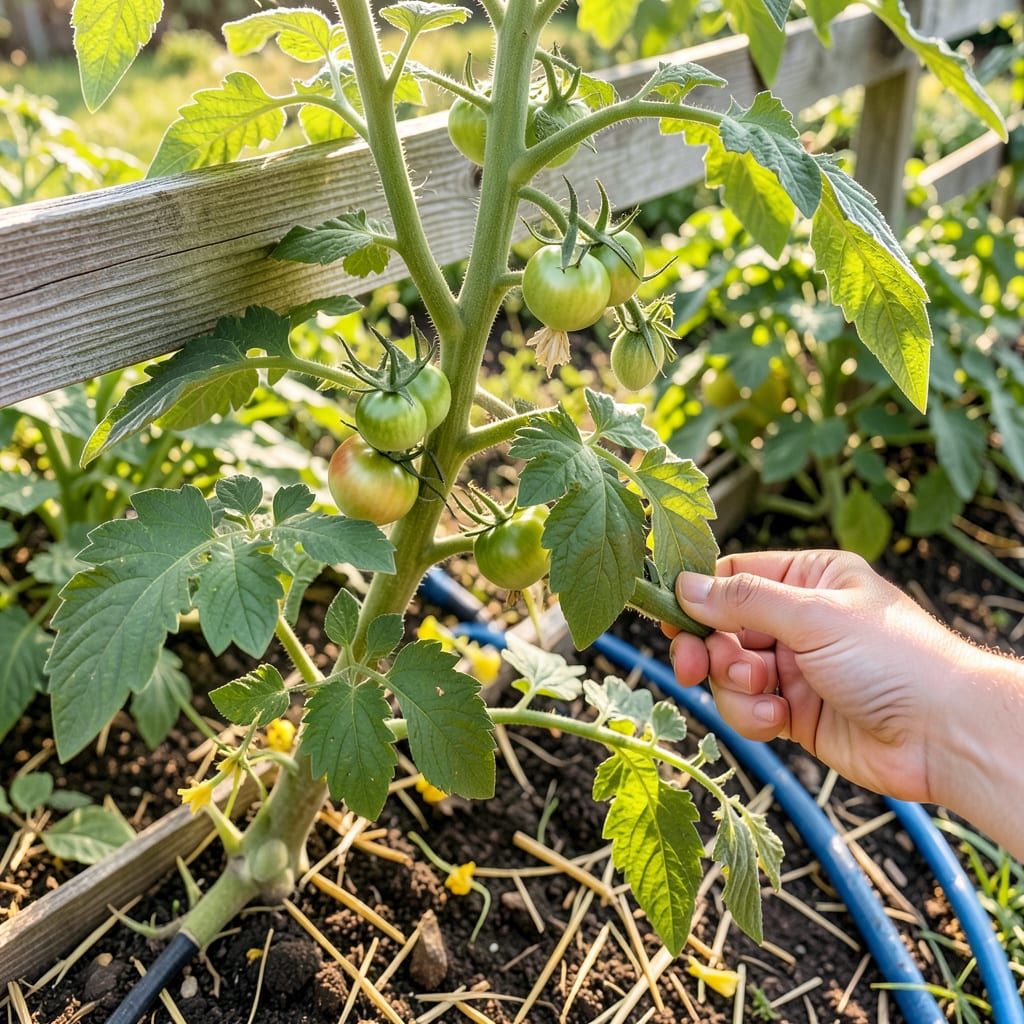
I used to think pruning tomato plants was just extra work—until I saw what happened when I actually did it. My plants went from scraggly, disease-prone messes to powerhouses producing twice the fruit in half the space. The difference comes down to three things: better airflow, stronger stems, and energy directed straight to the tomatoes instead of wasted on unnecessary leaves.
Here’s the thing—most gardeners either skip pruning entirely or go overboard and stunt their plants. After ruining a few crops myself, I landed on a foolproof method that takes about 10 minutes per plant and works for both cherry tomatoes and beefsteaks. Timing matters too: do it in the cool morning, and you’ll see new growth pushing within days. No fancy tools required, just sharp pruners and a little confidence.
📚 In This Guide
Pruning isn’t just maintenance—it’s how you transform good tomatoes into spectacular ones. Here’s my field-tested method.
Focus first on suckers—those vigorous shoots emerging at the junction where a branch meets the main stem. These compete for nutrients but produce little fruit. I use my thumb and forefinger to gently pinch off suckers when they’re 2-3 inches long; any longer and they’ll leave wounds that invite disease.
Look also for yellowing leaves on the lower third of the plant. These shaded leaves contribute nothing and can harbor fungal spores. Remove them cleanly at the base where they meet the stem. Never tear leaves—always use sharp pruners for a clean cut.
Thin the plant’s interior by removing one-third of the oldest leaves weekly once fruit sets. Prioritize leaves that touch the ground or overlap excessively. I aim for 18-24 inches of vertical space between the soil and the lowest leaves to prevent soil-borne diseases from splashing up.
For indeterminate varieties, maintain 1-2 main stems by removing competing leaders. Determinate tomatoes need only light pruning—focus on removing diseased or damaged foliage. Always prune in the morning when plants are hydrated and wounds heal fastest.
When plants reach your trellis height (typically 6-8 feet), perform topping—cutting the main stem just above the highest flower cluster. This redirects energy from vertical growth to fruit ripening. I leave 4-5 fruit clusters per stem for optimal yield without overburdening the plant.
Remove all new flower clusters that form after mid-August (in most climates). These late blooms won’t mature before frost and will drain resources from existing fruit. Use the “Missouri pruning” technique for suckers—pinch just the tip, leaving two leaves to protect developing fruit from sunscald.
Immediately after pruning, disinfect your tools with 70% isopropyl alcohol to prevent disease transmission. I keep a spray bottle handy and wipe blades between plants. Remove all pruned material from the garden—never compost diseased foliage.
Monitor pruned plants for 3-5 days for signs of stress. Wilting in afternoon heat is normal, but persistent drooping indicates over-pruning. Apply a balanced liquid fertilizer (10-10-10) after heavy pruning to support recovery. New growth should appear within 7-10 days if done correctly.
Early season (first 6 weeks): Focus on removing only suckers and diseased leaves. Mid-season: Thin aggressively for airflow as plants bush out. Late season (6 weeks before first frost): Remove all new growth to hasten ripening of existing fruit.
I keep a pruning journal noting which varieties respond best to heavy vs. light pruning. Cherry tomatoes often need minimal pruning, while beefsteaks benefit from aggressive thinning. Always wear gloves when pruning—tomato leaves can irritate skin and the sap stains clothing.
Pruning tomato plants effectively requires both precision and patience—here’s what I’ve learned through seasons of trial and error.
Precision Timing: The 2-3 inch sucker size mentioned in Step 1 isn’t arbitrary. I’ve found that removing suckers at this stage minimizes plant stress while preventing them from becoming woody stems that require pruners. Anything larger than 3 inches creates wounds that take longer to heal, making plants vulnerable to disease during the critical 3-5 day monitoring period after pruning.
Seasonal Strategy: The 6-week early season window in Step 5 is your foundation-building phase. During this time, I focus exclusively on sucker removal and diseased leaf management—never aggressive thinning. This allows the plant to establish its primary structure before fruit production demands more energy. I mark my calendar 6 weeks before first frost as the shift point to late-season pruning mode.
Tool Maintenance: The 70% isopropyl alcohol recommendation in Step 4 changed my pruning game. I now keep two spray bottles—one with alcohol and one with water—to quickly clean blades between plants. This prevents cross-contamination of diseases like early blight, which can spread rapidly when pruning multiple plants in succession. A quick spray and wipe takes seconds but saves entire crops.
Variety Awareness: Not all tomatoes respond equally to pruning. Through my journaling (as mentioned in Step 5), I’ve observed that beefsteak varieties thrive with aggressive thinning to 1-2 main stems, while cherry tomatoes often produce better when left with 3-4 main stems. The 18-24 inch clearance rule remains constant across varieties, however—this vertical space is non-negotiable for disease prevention.
Prune indeterminate tomatoes in the early morning when plants are hydrated and less stressed. Start when plants reach 1–2 feet tall, and continue every 1–2 weeks during the growing season. Avoid pruning during extreme heat or when fruit is ripening—focus on vegetative growth stages for best results!
Should I prune determinate tomato plants the same way?
No! Determinate tomatoes (like Roma or bush varieties) grow to a fixed size and produce fruit all at once. Heavy pruning can reduce your harvest. Only remove diseased or dead leaves—let the plant grow naturally for maximum yield.
What’s the difference between suckers and regular leaves—should I remove both?
Suckers are the small shoots that grow in the “V” (leaf axils) between the main stem and branches. Remove them to direct energy to fruit. Regular leaves provide shade and energy—only prune lower leaves (up to 12 inches from the ground) to improve airflow and prevent disease.
For small suckers (under 2–3 inches), pinch them off with your fingers (wear gloves to avoid spreading disease). Use clean, sharp pruners for thicker stems or woody growth to make precise cuts. Always sterilize tools with rubbing alcohol between plants!
Over-pruning (removing more than ⅓ of foliage at once) or cutting too late in the season can stress plants. Ensure you’re leaving enough leaves for photosynthesis and avoid pruning during fruit set. Provide support (stakes/cages) and water deeply to help recovery.
