
Beautiful Plants For Your Interior
Beautiful Plants For Your Interior
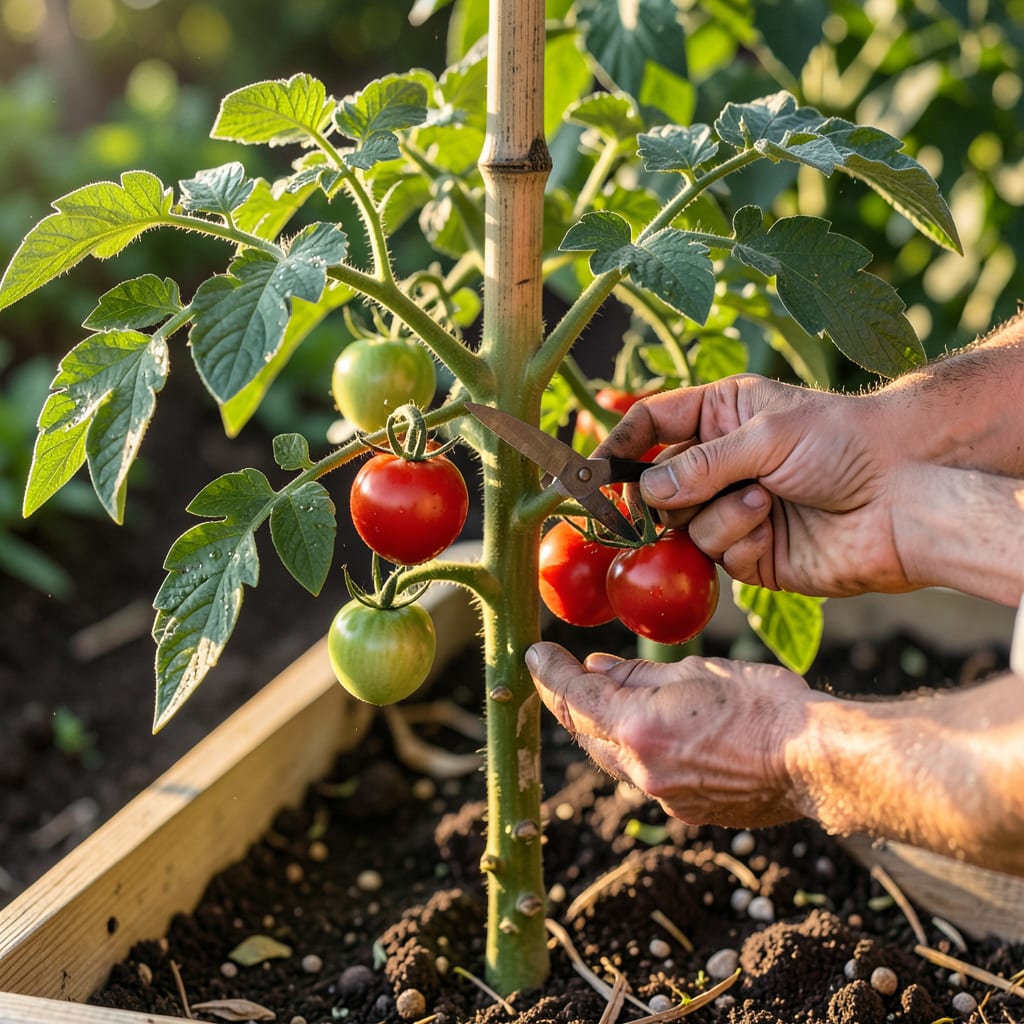
I used to think pruning tomato plants was just extra work—until I saw my neighbor’s plants producing twice the fruit on half the vines. The secret? Strategic cuts that redirect energy from leaves to tomatoes, opening up airflow that prevents disease. My first season trying this, I went from a handful of small fruits to baskets of ripe, juicy tomatoes.
Timing matters as much as technique. Prune too early and you stunt growth; too late and you miss the window for maximum yield. I’ll show you exactly when to make those critical cuts (hint: it’s not just about removing suckers) and which tools make the job foolproof. Even indeterminate varieties—those wild, sprawling plants—respond dramatically when pruned right.
📚 In This Guide
This simple technique will transform your plants into fruit-producing powerhouses—no fancy tools required.
Focus on the suckers—those small shoots that grow in the “V” between the main stem and branches. These steal energy from fruit production. I pinch them off when they’re 2-4 inches long, using my thumb and forefinger for a clean break.
Never remove more than one-third of the plant’s foliage at once. You’ll know you’re doing it right when the plant still looks full but you can see sunlight filtering through to the inner branches. Leave the main stem and fruit-bearing branches untouched.
Remove all leaves and stems within 12 inches of the ground. This prevents soil-borne diseases from splashing onto foliage during watering. I use clean pruning shears for this step to make precise cuts without tearing the plant.
You’ll see the difference immediately—better air circulation around the base and less risk of early blight. The remaining plant should have a clean “stem” at the bottom with healthy foliage above. This also makes it easier to spot pests hiding near the soil.
After removing suckers and lower leaves, step back and assess the plant’s shape. I aim for an open, vase-like structure where sunlight can reach all the fruit clusters. Thin out any crowded areas by removing entire branches if needed.
The ideal pruned tomato plant has 3-5 main stems with space between them. You’ll notice the remaining leaves look darker green within a few days—that’s the plant redirecting energy to fruit production instead of excess foliage.
Check your plants every 5-7 days during active growth. New suckers appear constantly, especially after rain or heavy watering. I make it part of my morning garden walk—just a few minutes per plant keeps them in perfect shape.
Always prune in the morning when plants are hydrated. You’ll see the cuts heal faster with less stress. By mid-season, your disciplined pruning will result in plants with thicker stems, larger fruit clusters, and earlier ripening than unpruned neighbors.
Determinate varieties (bush tomatoes) need minimal pruning—just remove lower leaves. Indeterminate types (vining tomatoes) benefit from aggressive sucker removal. I prune indeterminates weekly until 4-6 weeks before first frost, then stop to let remaining fruit ripen.
Watch how your plants respond. If fruit production slows after heavy pruning, you’ve removed too much foliage. The perfect balance shows in faster ripening, larger individual fruits, and healthier plants with fewer disease issues.
Pruning tomato plants is more art than science, and these practical insights will help you avoid common pitfalls while maximizing your harvest.
The Right Timing: When removing suckers in Step 1, focus on the 2-4 inch length mentioned. I’ve found that pinching them at this size prevents the plant from wasting energy while avoiding large wounds that could stress the plant. If you wait until suckers are longer, you risk creating entry points for disease. Always use your thumb and forefinger for a clean break rather than tearing the stem.
Airflow Matters: In Step 2, that 12-inch clearance from the ground isn’t arbitrary. This creates a critical barrier against soil-borne diseases like early blight. I use this opportunity to inspect the lower stem for any signs of discoloration or pests. Clean pruning shears between plants to prevent spreading any potential pathogens—this small habit makes a noticeable difference in plant health.
Sunlight Strategy: The vase-like structure described in Step 3 is your secret weapon. I aim for sunlight to penetrate at least 6-8 inches into the plant’s center. This isn’t just about current fruit—it ensures new flowers get the light they need to develop into tomatoes. When thinning crowded areas, remove entire branches rather than just trimming leaves, which creates a more permanent solution to shading issues.
Consistency is Key: That 5-7 day check-in routine from Step 4 becomes especially important during wet weather. After heavy rains, I’ve noticed suckers can grow an inch overnight. Morning pruning when plants are turgid (full of water) helps cuts heal faster with less stress. The difference between plants pruned weekly versus sporadically is dramatic—consistent pruning results in plants that are visibly healthier and more productive.
Prune indeterminate tomatoes early in the morning on dry days, starting when plants are 1–2 feet tall. Focus on suckers (side shoots) weekly once fruit sets. Avoid pruning determinate varieties (bush tomatoes)—they produce fruit on fixed stems. Stop pruning 3–4 weeks before your first frost to let remaining fruit ripen.
Yes! Pruning redirects energy from excess foliage to fruit production, improving size and quality. Studies show pruned indeterminate tomatoes can yield 20–30% more fruit—but only if done correctly. Over-pruning stresses plants, so remove only suckers below the first flower cluster and crowded branches.
Indeterminate (vining) tomatoes need pruning to control growth and boost fruit. Determinate (bush) varieties? Don’t prune them! They produce fruit on pre-set stems, and pruning reduces yield. Check your seed packet—common indeterminates include ‘Beefsteak’ and ‘Cherry’; determinates like ‘Roma’ or ‘Celebrity’ are hands-off.
Don’t panic! If you over-prune, prioritize shade protection (use shade cloth if leaves are sparse) and consistent watering to reduce stress. Apply a balanced fertilizer (10-10-10) to encourage regrowth. Avoid further pruning until the plant recovers—new suckers will emerge in 1–2 weeks.
Try these instead (or alongside) pruning:
