
Beautiful Plants For Your Interior
Beautiful Plants For Your Interior
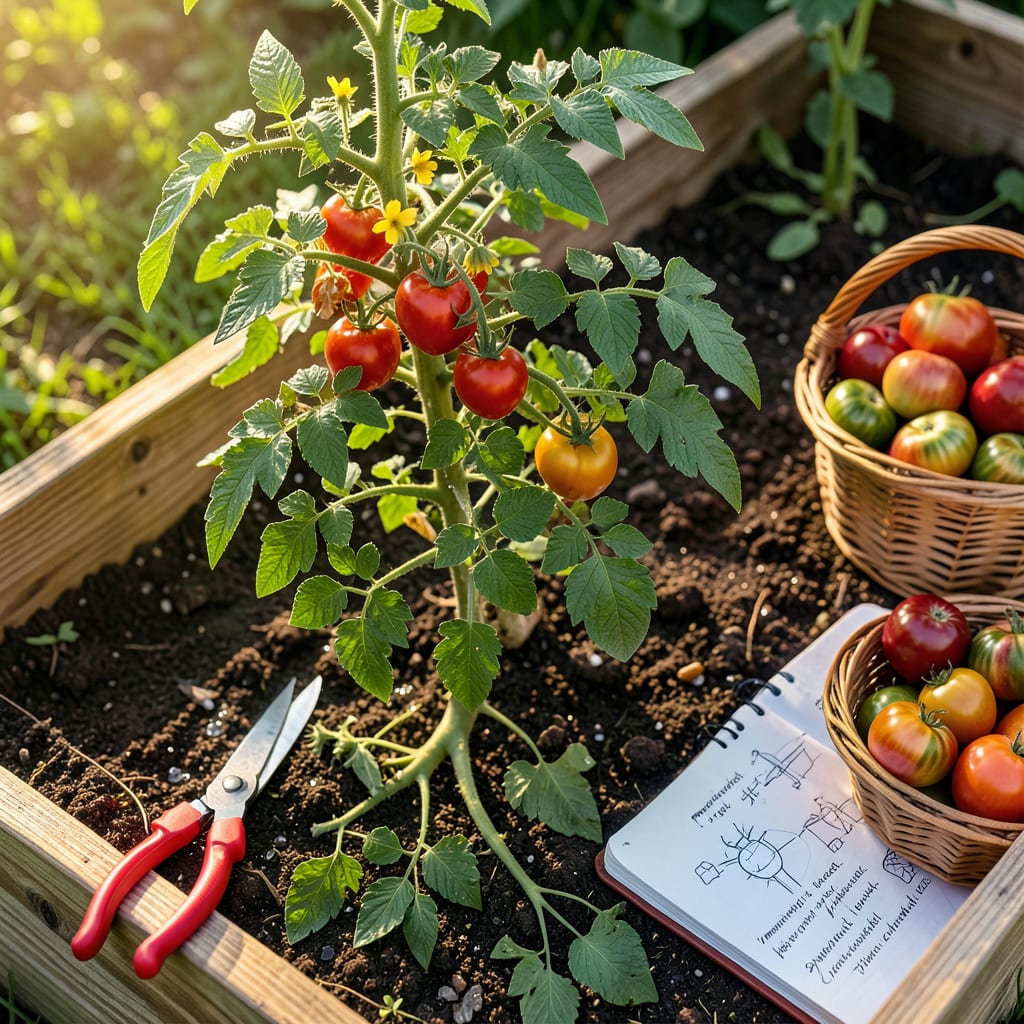
I used to think more leaves meant more tomatoes—until I pruned my plants for the first time and doubled my harvest. The difference was shocking: bigger fruit, fewer diseases, and plants that actually thrived instead of just surviving. Tomato pruning isn’t about cutting back; it’s about directing energy exactly where you want it.
Timing and technique matter most. Do it wrong, and you’ll stress the plant. Do it right, and you’ll get heavier fruit clusters and a cleaner garden. I’ll show you the simple cuts that separate a jungle of vines from a productive, manageable plant—no guesswork required.
📚 In This Guide
Here’s the method I use to turn unruly tomato plants into productive powerhouses—no guesswork required.
Begin pruning when your tomato plants reach about 12-18 inches tall and have developed 3-5 sets of true leaves. This is when the plant is strong enough to handle pruning but still young enough to redirect energy effectively. I always check for the first flower clusters—once those appear, it’s definitely time to start.
Never prune when leaves are wet from rain or watering, as this spreads disease. Early morning on a dry day is ideal. You’ll notice the plant looks bushier than you expected—that’s normal. The goal isn’t to remove everything, just to shape what’s there for better production.
Focus on the suckers—those small shoots that grow in the “V” where branches meet the main stem. For indeterminate varieties, I remove all suckers below the first flower cluster by pinching them between my thumb and forefinger when they’re 2-4 inches long. They snap off cleanly at this size.
For determinate varieties (bush tomatoes), limit sucker removal to just the lowest 1-2 suckers—these plants produce fruit on side shoots, so aggressive pruning reduces yield. You’ll see new suckers appear weekly, so make this a regular part of your garden routine. Always sterilize your hands or tools between plants to prevent disease spread.
Remove all leaves within 12 inches of the ground to prevent soil-borne diseases from splashing onto foliage. I work from the bottom up, using clean pruners to snip leaves where they meet the stem. This might feel drastic, but you’re creating space for air circulation which keeps plants healthier.
You’ll notice the stem becomes bare at the bottom—that’s perfect. Never remove more than 1/3 of the plant’s foliage at once, as this can shock the system. The remaining leaves should look vibrant green and healthy. If any show yellow spots or curling edges, remove those immediately regardless of position.
Stand back and assess how sunlight reaches the center of the plant. Thin out inner branches that block light from reaching developing fruit. I aim for an “open vase” shape where sunlight can reach ripening tomatoes. This might mean removing some healthy-looking branches—trust the process.
Focus on removing branches that grow inward toward the main stem rather than outward. You’ll see the difference immediately as light floods the center. After pruning, the plant should cast a dappled shadow rather than a solid one. This step dramatically reduces rot and speeds up ripening.
Repeat this process every 7-10 days throughout the growing season. I set a reminder on my phone so I don’t forget. As plants grow taller, you may need to remove additional lower leaves to maintain that critical 12-inch clearance from the ground.
About 4 weeks before your first frost date, stop all pruning to allow remaining fruit to ripen. You’ll notice the plant’s energy shifts from growth to production. This is when you’ll really see the payoff—larger, healthier tomatoes that ripen more evenly than on unpruned plants.
Pruning tomato plants the right way can feel intimidating at first, but these insights will help you avoid the most common pitfalls while maximizing your harvest.
The Timing Factor: In Step 1, waiting until plants reach that 12-18 inch height with 3-5 sets of true leaves isn’t arbitrary—this is when the plant has enough energy reserves to recover from pruning. I’ve found that starting too early (before 12 inches) can stunt growth, while waiting too long (past 18 inches) makes the plant harder to shape effectively. That first flower cluster appearance is your perfect visual cue to begin.
Sucker Removal Technique: When you’re working through Step 2, here’s what nobody tells you—suckers that are 2-4 inches long snap off cleanly with your fingers, but if you wait until they’re larger, they’ll tear the stem and create entry points for disease. For indeterminate varieties, I always mark the first flower cluster with a twist tie as a visual reminder of where to stop removing suckers. This prevents accidentally over-pruning productive branches.
Airflow is Everything: The 12-inch clearance from the ground in Step 3 isn’t just about disease prevention—it’s about creating a microclimate around your plant. I’ve noticed that plants with proper airflow have leaves that dry faster after rain, which dramatically reduces fungal issues. When removing lower leaves, work gradually over a few days if you’re nervous about shocking the plant. The “bare stem” look feels wrong at first, but you’ll see the difference in plant health within a week.
Season-Long Strategy: That 7-10 day maintenance schedule in Step 5 becomes easier if you do what I do—keep a small spray bottle of rubbing alcohol near your garden tools. A quick spritz on your pruners between plants prevents disease transmission. And about that 4-week window before frost? I start watching the weather forecast closely at that point. If an early frost threatens, I’ll stop pruning 5 weeks out instead to give those final tomatoes every possible day to ripen.
Prune in the early morning when plants are hydrated and temperatures are cool. This reduces stress and helps wounds heal faster. Avoid pruning in direct midday sun or when foliage is wet (like after rain or watering) to prevent disease spread.
No! Indeterminate tomatoes (vining types) benefit from aggressive pruning to focus energy on fruit. Determinate (bush) varieties? Minimal pruning only—just remove diseased leaves. Over-pruning determinates can slash your yield! Check your seed packet to confirm the type.
Pruning removes leaves or stems for airflow/health, while suckering targets the small shoots in leaf axils (between the main stem and branches). For max yield, do both: sucker weekly to redirect energy to fruit, and prune lower leaves to prevent soil-borne diseases.
Use sharp, clean pruners (bypass pruners are ideal) to avoid crushing stems. Scissors can work for thin suckers but may damage thicker stems. Always sanitize tools with rubbing alcohol between plants to prevent spreading pests/diseases!
Over-pruning (removing >⅓ of foliage at once) or pruning during heat stress can shock plants. If leaves wilt, provide shade and water deeply. Next time, prune gradually and avoid cutting during fruit set. Use a balanced fertilizer (like 5-5-5) to aid recovery.
