
Beautiful Plants For Your Interior
Beautiful Plants For Your Interior
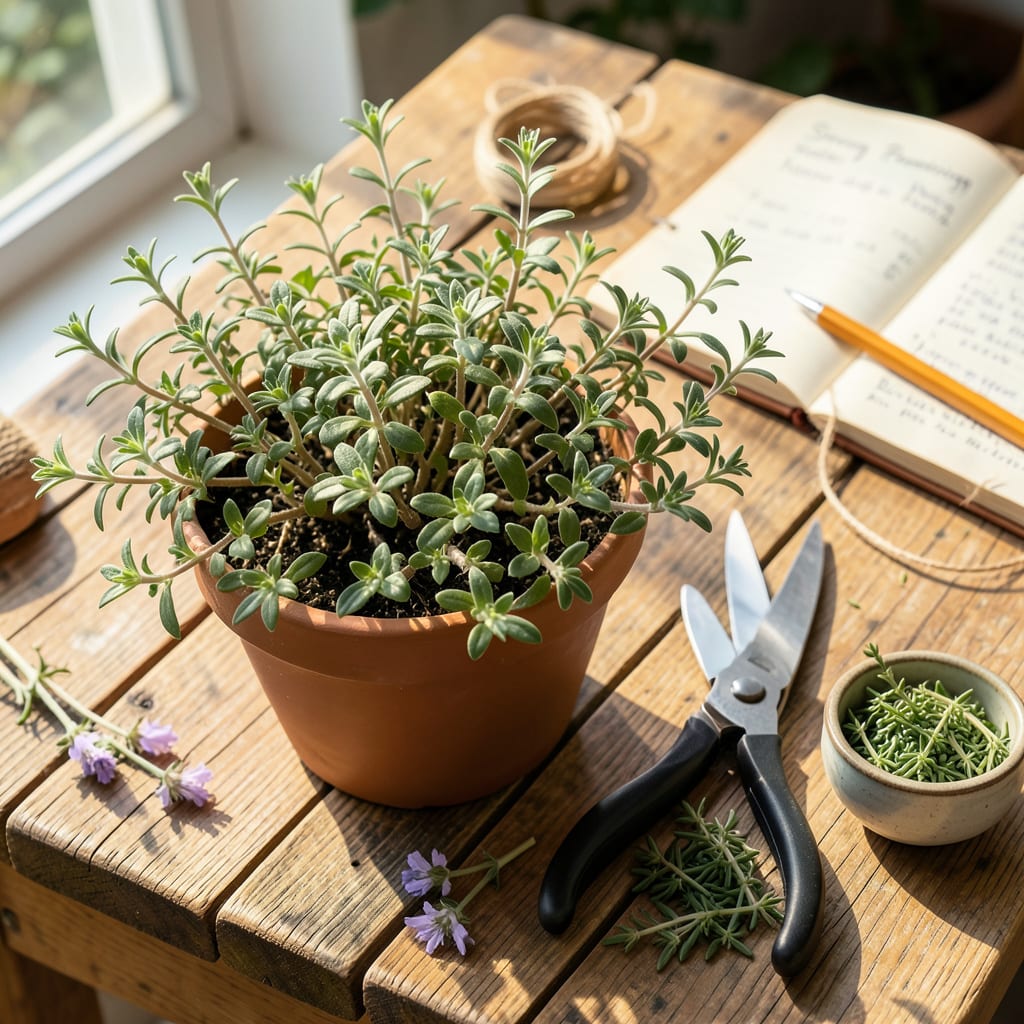
That woody, leggy thyme plant in your garden or windowsill? It doesn’t have to stay that way. Pruning transforms scraggly stems into a dense, flavorful bush that produces all season long. I used to let mine grow wild until I realized three simple cuts could double my harvest.
The right timing and technique make all the difference. Cut back in early spring before new growth starts, and you’ll trigger fresh green shoots packed with more aroma than the old growth. No fancy tools required—just sharp scissors and 10 minutes. Your thyme will reward you with bushier growth and leaves so fragrant they’ll make store-bought herbs embarrassing.
📚 In This Guide
Pruning thyme the right way keeps it healthy, flavorful, and looking its best—here’s how I do it every season.
Prune thyme in early spring as new growth begins, or after flowering in late summer. Avoid pruning in winter when the plant is dormant—it won’t recover well. I like to prune right after the last frost when the stems start showing fresh green tips.
Never prune more than one-third of the plant at once. Over-pruning stresses thyme and can kill it. If your plant looks overgrown, spread the pruning over two sessions, spaced 4-6 weeks apart.
Use sharp, clean bypass pruners or scissors—dull blades crush stems instead of cutting cleanly. Wipe the blades with rubbing alcohol to prevent spreading disease. I keep a small spray bottle handy to mist the plant lightly if it’s dry; this makes the stems easier to cut.
Inspect the plant first. Remove any dead, brown, or woody stems at the base. These won’t regrow and only drain energy from the healthy parts. Focus on areas where growth looks sparse or leggy—those need the most attention.
Cut just above a set of healthy leaves or a leaf node, angling the pruners at 45 degrees. This encourages new growth to sprout from that point. For woody stems, trim back to where you see green growth—never cut into bare wood, as it won’t regenerate.
Shape the plant by trimming the outermost stems first, working your way inward. I aim for a rounded, mounded shape, which allows sunlight to reach all parts of the plant. Avoid shearing the top flat—this leads to a dense outer layer with a bare center.
After pruning, remove all cuttings from around the base to prevent pests and rot. I like to lightly scratch the soil surface with my fingers and add a sprinkle of compost to give the plant a nutrient boost. Water thoroughly but gently to help it recover.
Place the pruned thyme in full sun for the next few days. You’ll see new growth within 2-3 weeks if conditions are right. Avoid fertilizing heavily—thyme thrives in lean soil, and too much nitrogen reduces its flavor.
Throughout the growing season, pinch back the tips of stems every 4-6 weeks to encourage bushiness. Use your fingers for small cuts—this prevents the plant from becoming too woody. I harvest these trimmings for cooking, so nothing goes to waste.
Watch for flowers in summer. While pretty, they signal the plant is shifting energy from leaf production. If you want more foliage, trim off the flower buds before they open. This keeps the thyme focused on growing dense, flavorful leaves.
Pruning thyme properly makes all the difference between a thriving, flavorful plant and one that struggles to recover. Here’s what I’ve learned from years of growing and pruning this aromatic herb.
The Timing Factor: That window of early spring and late summer mentioned in Step 1 isn’t arbitrary. I’ve found that pruning right after the last frost—when you see those first green tips emerging—gives the plant the best chance to recover quickly. The 4-6 week spacing between sessions if you’re doing heavy pruning is crucial; it gives the thyme time to regenerate without becoming stressed. If you prune too late in fall, new growth won’t have time to harden off before winter.
Tool Preparation: I can’t stress enough how important clean, sharp tools are for Step 2. Dull pruners don’t just make the job harder—they create jagged cuts that take longer to heal. I keep a small container of rubbing alcohol near my gardening tools and give them a quick wipe between plants. This simple habit has saved me from spreading diseases that could have wiped out my entire herb garden.
Pruning Technique: The 45-degree angle cut in Step 3 isn’t just for aesthetics—it’s functional. This angle allows water to run off the cut surface rather than pooling, which prevents rot. When shaping your thyme, remember that sunlight needs to reach the center of the plant. I’ve seen many gardeners create a dense outer shell that eventually kills the inner stems from lack of light and air circulation.
Post-Pruning Care: What you do after pruning in Step 4 is just as important as the pruning itself. That sprinkle of compost I mentioned isn’t just for nutrients—it also helps retain moisture around the roots during the recovery period. I’ve noticed that thyme plants given this post-pruning care show new growth in closer to 2 weeks rather than the full 3, especially when placed in full sun as recommended.
Light pruning is okay in early fall, but avoid heavy cuts after late summer. Thyme goes dormant in winter, so pruning then can stress the plant. Stick to spring or early summer for major trims—this gives it time to recover before cold weather.
Never remove more than one-third of the plant at once. Over-pruning weakens thyme and slows regrowth. Focus on trimming leggy stems just above a leaf node (where new growth starts). If your plant looks sparse, prune gradually over a few weeks.
Woody stems are natural as thyme ages, but improper pruning speeds it up. If over half the plant is woody, consider replacing it. For younger plants, regular light pruning (every 4-6 weeks) encourages tender new growth and delays woodiness.
Yes! Clean, sharp scissors work for small thyme plants—just sanitize them with rubbing alcohol first to prevent disease. For thicker stems or larger plants, pruning shears give cleaner cuts. Avoid dull blades; they crush stems and slow healing.
Leggy thyme usually means not enough sunlight (it needs 6+ hours daily) or infrequent pruning. After trimming, move it to a sunnier spot and prune every 4-6 weeks to promote bushiness. If indoors, supplement with a grow light 10-12 hours/day.
