
Beautiful Plants For Your Interior
Beautiful Plants For Your Interior
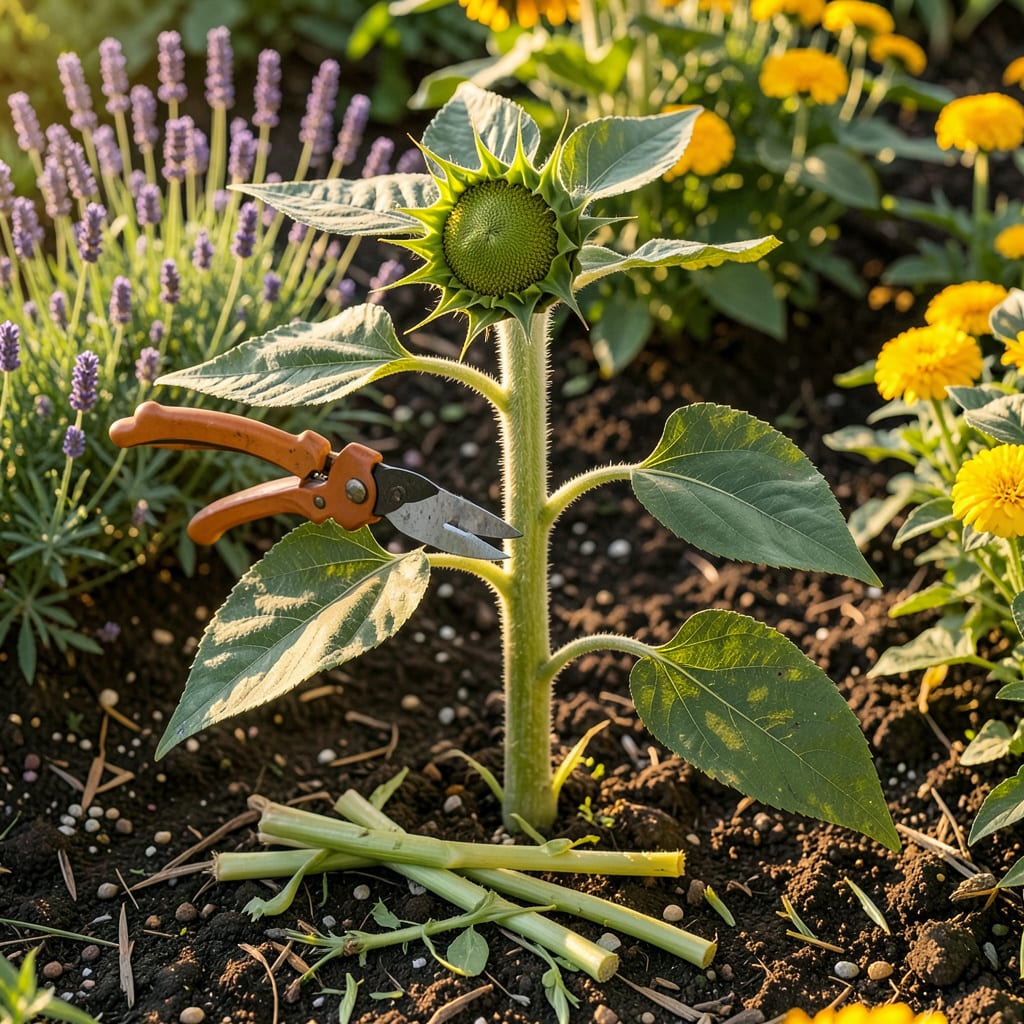
I used to think sunflowers were just “plant and forget” giants—until I saw what strategic pruning could do. The difference is shocking: bigger blooms, stronger stems, and plants that don’t topple over in summer storms. My first pruned sunflowers produced flowers twice the size of my unpruned ones, with stalks thick enough to handle heavy rain.
Timing and technique matter more than fancy tools. A simple pair of clean pruners and 10 minutes per plant at the right stage can double your bloom size and extend the season. Most gardeners skip this step, but the results speak for themselves—healthier plants that stand tall and produce week after week instead of fizzling out early.
📚 In This Guide
Here’s my simple method for shaping sunflowers to produce those show-stopping blooms you’ve always wanted.
Wait until your sunflowers reach 12-18 inches tall before making any cuts. This usually happens 4-6 weeks after germination, when the plant has developed several sets of true leaves. You’ll notice the main stem thickening—this is your signal that the plant is strong enough to handle pruning.
Never prune when the plant is wet from rain or watering. Wet stems invite disease, and the cuts won’t heal as cleanly. Early morning is ideal, as the plant has all day to recover before cooler evening temperatures set in.
Start by snipping off the bottom 2-3 sets of leaves using clean, sharp pruners. Cut where the leaf meets the stem, leaving no stubs behind. This improves airflow around the base, which prevents fungal issues like powdery mildew that sunflowers are prone to.
I like to work my way up gradually, stepping back after each cut to check the plant’s balance. You’ll see the stem become more visible—this is good. Just don’t remove more than one-third of the foliage at once, or you’ll stress the plant.
Look for smaller, weaker side shoots growing from the main stem. These compete for nutrients but won’t produce strong blooms. Pinch them off at the base with your fingers or make a clean cut with pruners. Focus on stems thinner than a pencil—they’re not worth keeping.
If you’re growing multiple sunflowers close together, thin the weakest plants entirely when they’re 6-8 inches tall. You’ll end up with fewer plants, but each will grow twice as large with bigger flower heads.
For varieties that tend to grow tall and spindly, you can pinch out the very top of the main stem when it reaches 2-3 feet tall. This forces the plant to branch out, creating a bushier shape with multiple smaller blooms instead of one giant flower.
Use your thumb and forefinger to snap off the top 1-2 inches of growth. Within a week, you’ll see new side shoots forming below the cut. This technique works best with smaller sunflower varieties under 6 feet tall.
Once a sunflower bloom starts to fade and the petals turn brown, cut the entire flower head off about 6 inches below the base. This prevents the plant from putting energy into seed production and encourages new blooms to form on side shoots.
You’ll often get a second wave of smaller flowers 3-4 weeks later if you deadhead consistently. Leave a few blooms at the end of the season if you want to save seeds—just mark those stems so you don’t accidentally cut them.
Pruning sunflowers is simpler than you might think, but a few key details make all the difference between healthy plants and disappointing results.
Timing is Everything: The 4-6 week window mentioned in Step 1 isn’t arbitrary—it’s when sunflowers are strong enough to recover from cuts but still young enough to redirect energy effectively. I’ve found that pruning too early (before 12 inches) can stunt growth, while waiting beyond 18 inches means you’ll miss the opportunity to shape the plant’s structure. Early morning really is ideal, as the plant’s natural healing processes work most efficiently during daylight hours.
The One-Third Rule: When removing leaves in Step 2, that one-third foliage limit isn’t just a suggestion—it’s critical. I learned this the hard way after over-pruning a row of sunflowers that then struggled to photosynthesize properly. The plant needs enough leaves to feed itself while healing. Work gradually from the bottom up, and you’ll never accidentally remove too much at once.
Tool Selection Matters: While you can pinch off small shoots with your fingers, clean pruners make all the difference for larger cuts. I keep a small bottle of rubbing alcohol near my gardening tools to wipe the blades between plants—this prevents disease transmission, especially important when you’re making multiple cuts like in Steps 3 and 5. Dull blades crush stems rather than cutting cleanly, which slows healing.
Bushier Growth Strategy: The optional topping technique in Step 4 works wonders for smaller varieties, but here’s what nobody tells you: the 2-3 foot height recommendation is crucial. Topping too early means the plant hasn’t built enough energy reserves to support multiple new shoots, while waiting too long means you’ll get a lopsided plant. For varieties over 6 feet tall, I actually recommend skipping this step entirely—they’re bred to grow single large blooms, and topping can weaken the main stem.
Pruning isn’t always required, but it helps! Removing dead leaves or spent blooms improves airflow, reduces disease risk, and redirects energy to stronger growth. For giant varieties, pruning side shoots can encourage larger main blooms. Skip it for dwarf types—they thrive with minimal fuss.
Prune in the early morning on a dry day to minimize stress. For deadheading, wait until petals wilt but before seeds form (usually mid-to-late summer). Avoid pruning during extreme heat or when plants are wet—this invites fungi. Young plants? Pinch back tips at 1–2 feet tall to promote bushiness.
Nope—pruning won’t add height! In fact, removing the top bud (apical meristem) may stunt growth. For taller stems, focus on proper spacing (12–18 inches apart), consistent watering, and staking. Prune only to remove damaged parts or encourage side blooms on branching varieties.
Yellowing leaves or drooping? Over-pruning or dirty tools might be to blame. Trim no more than ⅓ of the plant at once, and sterilize shears with rubbing alcohol. If stems turn black/mushy, fungal infection (like Sclerotinia) may have entered cuts—remove affected parts immediately and avoid overhead watering.
Try these instead:
