
Beautiful Plants For Your Interior
Beautiful Plants For Your Interior
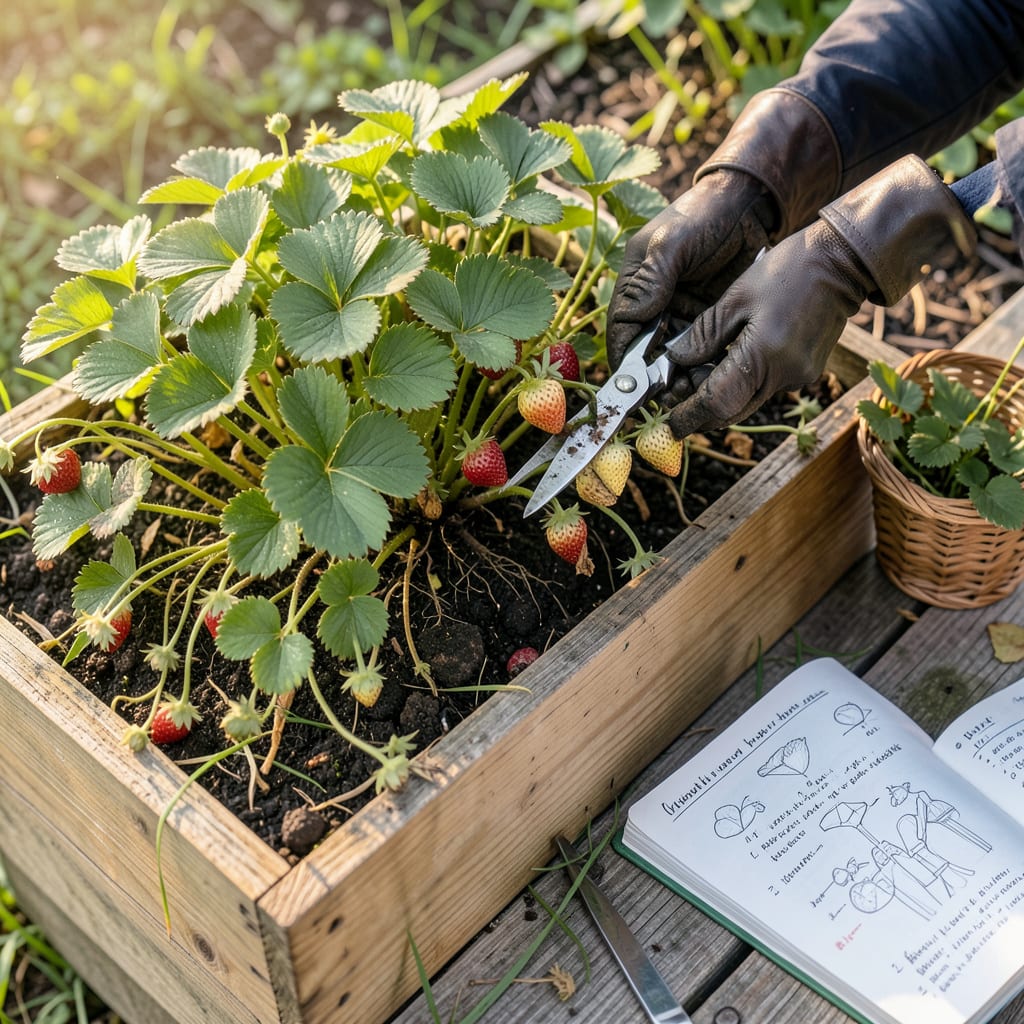
Pruning strawberries changed my harvest from disappointing to overflowing. This simple technique removes old foliage to redirect energy into fruit production, not wasted leaves. Done correctly, it prevents disease, encourages new growth, and can double your yield next season.
The timing matters: June-bearing varieties need renovation right after harvest, while everbearing and day-neutral types respond best to light pruning every 4-6 weeks. You’ll need just sharp scissors and 10 minutes per plant. The difference in plant vigor and fruit quality makes this the most rewarding maintenance task in the berry patch.
📚 In This Guide
This simple technique takes just minutes but dramatically improves plant health and fruit production season after season.
Prune strawberries in late summer or early fall, after the final harvest but at least 4-6 weeks before your first frost. This timing allows plants to recover and establish new growth before winter dormancy. I check my plants when nighttime temperatures consistently drop below 60°F—that’s your signal to start.
Never prune during active fruiting or in spring, as this removes potential berries and stresses plants. The ideal window is when foliage looks tired but before it turns completely brown. You’ll see a mix of green, yellowing, and some crispy leaves—this is exactly when to act.
Using clean, sharp pruning shears, cut back all foliage to about 1 inch above the crown—that’s the thick, central stem where leaves emerge. Remove every leaf, even healthy-looking ones. This eliminates disease spores and pests hiding in old growth. I make cuts at a 45-degree angle to prevent water pooling on the stems.
Next, sever all runners (those long stems with baby plants at the ends) at their base. Runners drain energy from the mother plant, reducing next year’s yield. If you want to propagate new plants, leave only the two strongest runners per plant and remove the rest. Otherwise, cut them all.
Examine the crown and remove any small, weak, or crowded secondary crowns that have formed around the main plant. These compete for nutrients but produce inferior fruit. I use my fingers to gently wiggle them free or snip them at ground level. Aim to leave 3-5 strong crowns per plant—this spacing ensures good air circulation and larger berries.
Check for any blackened or mushy crown tissue, which indicates rot. Remove affected areas immediately with sterilized shears, cutting into healthy tissue. This prevents the rot from spreading to the entire plant during winter.
Rake up and dispose of all pruned material—never compost it, as this can spread diseases like verticillium wilt. I bag it and send it out with the trash. After pruning, water plants deeply to help them recover, then apply a 1-inch layer of straw mulch around (but not on top of) the crowns to protect them from winter temperature swings.
Within 2-3 weeks, you’ll see fresh green leaves emerging from the crowns. This new growth will harden off before winter and be ready to produce abundant fruit next spring. The plants may look drastic immediately after pruning, but this temporary “haircut” leads to 30-50% higher yields the following season.
This straightforward technique becomes even more effective with a few key insights from years of trial and error.
Timing Precision: That 4-6 week window before your first frost isn’t arbitrary—it’s the sweet spot where plants have enough time to regenerate but won’t push tender new growth that winter would kill. I’ve found that pruning exactly when nighttime temperatures first dip below 60°F consistently gives plants the optimal recovery period. Use a soil thermometer if you’re unsure about air temperature accuracy.
The Crown Cut Technique: When trimming to that critical 1 inch above the crown in Step 2, resist the urge to leave more foliage “just in case.” Every leaf removed eliminates potential disease vectors, and that precise height prevents water from funneling directly into the crown while still protecting the bud. The 45-degree angle isn’t just for aesthetics—it creates a slope that sheds water away from the vulnerable center.
Runner Management Strategy: If you’re propagating new plants from runners, select the two strongest ones that are already developing their own root systems—these will establish fastest. For the ones you’re removing, cut them at the base where they emerge from the mother plant rather than mid-stem. This prevents the dying runner from becoming a conduit for pathogens back to the main plant.
Post-Pruning Care: The 1-inch straw mulch in Step 4 serves dual purposes: it insulates crowns from temperature fluctuations while allowing just enough air circulation to prevent rot. Don’t mound it against the crowns—leave a small moat around each plant. I’ve had best results with clean straw rather than wood chips, as it breaks down more evenly and doesn’t compact over winter.
The ideal time is right after harvest (late summer/early fall) for June-bearing varieties. For everbearing/day-neutral types, prune after the final harvest in fall. Avoid pruning in spring—it removes potential fruit! Always prune on a dry, sunny day to reduce disease risk.
Yes! Clean, sharp bypass scissors work fine for small patches. Disinfect blades with rubbing alcohol between plants to prevent spreading pathogens. For thick stems or large plantings, dedicated pruning shears save time and reduce hand strain.
Over-pruning (removing too many leaves) or pruning too late in the season can stress plants. Leave at least 1/3 of the foliage intact to fuel regrowth. Tiny fruit may also signal poor soil fertility—test your soil and amend with compost or a balanced fertilizer (10-10-10).
It depends! For bigger fruit, trim all runners. To expand your patch, keep 2-3 healthy runners per plant and peg them into soil. Remove weak or diseased runners—they drain energy. Never let runners overwhelm the mother plant!
Container strawberries need gentler pruning. Snip off dead/diseased leaves and trim runners to fit the pot’s size. Leave more foliage than you would in-ground plants—containers dry out faster, and extra leaves help shade roots. Repot crowded plants in fall.
