
Beautiful Plants For Your Interior
Beautiful Plants For Your Interior
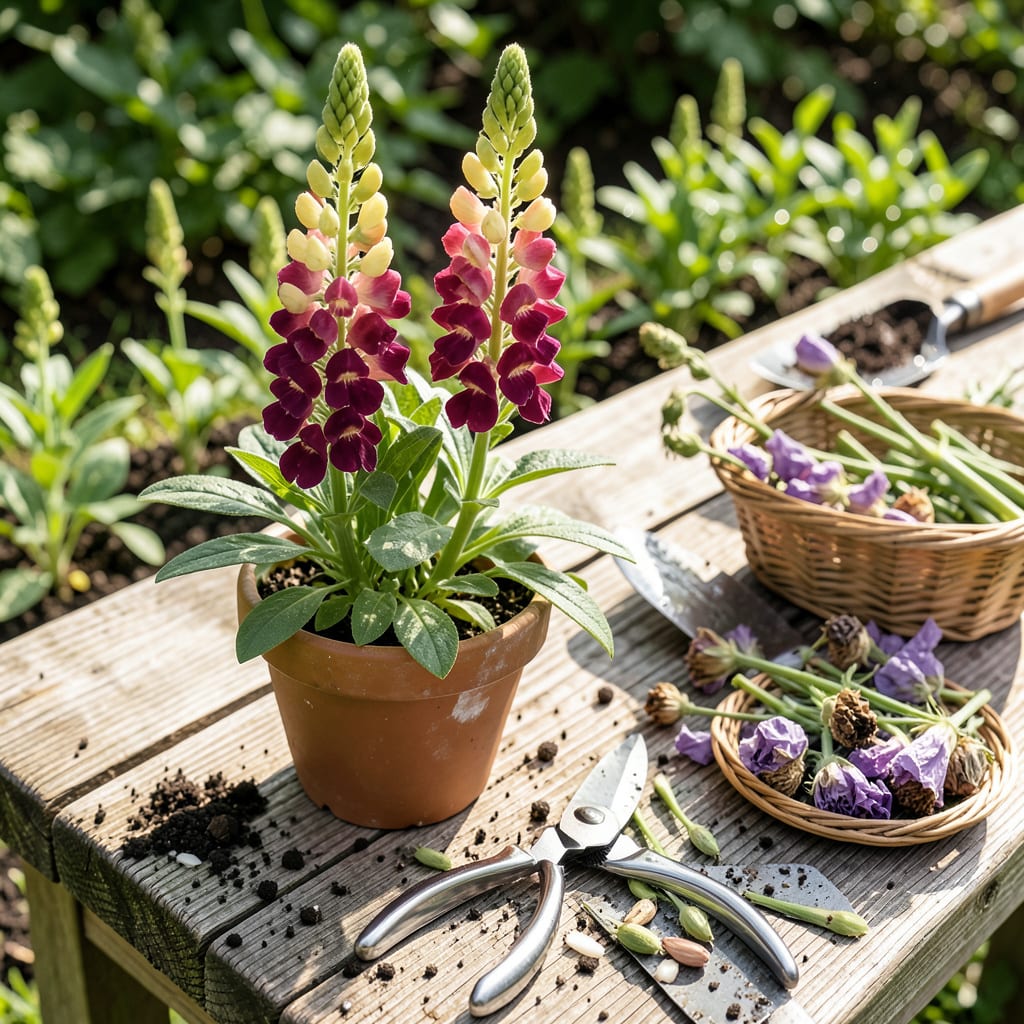
Snapdragons give back what you put into them. That first time I pinched back leggy stems mid-June, I watched my plants transform from sparse to shockingly bushy in three weeks. Pruning isn’t just maintenance—it’s how you unlock wave after wave of those dragon-mouth blooms all season long.
Timing and technique matter more than fancy tools. Cut too late and you lose flowers; cut wrong and you get weak regrowth. But do it right—just above leaf nodes, with clean shears—and your snapdragons will reward you with twice the blooms on sturdier plants. No green thumb required, just a little strategic snipping.
📚 In This Guide
This simple technique keeps your plants blooming vigorously from spring until frost—no guesswork required.
Begin pruning when you notice the first flush of blooms starting to fade, typically 6-8 weeks after planting. Snapdragons bloom in cycles, and the key is to cut them back just as the initial flowers begin to wilt but before they set seed. Look for stems where 70% of flowers have opened—this is your signal to act.
Never prune during the hottest part of the day. I always work in early morning when stems are turgid and less likely to split. If you’re growing multiple varieties, start with the earliest bloomers first—they’ll need attention sooner than late-season types.
Trace each flowering stem down to where it meets a leaf axil—the point where a leaf attaches to the main stem. You’ll see a small bump or swelling at this junction. Make your cut 1/4 inch above this node at a 45-degree angle. This precise location encourages lateral branching while preventing water from pooling on the cut surface.
For tall varieties, you may need to remove up to 1/3 of the stem’s height. Don’t hesitate—aggressive pruning now means bushier growth later. I use my thumb to feel for the node if foliage obscures my view; it’s always more prominent than it appears.
Use sharp bypass pruners (not anvil-style) to make clean cuts that won’t crush stems. Position the blade on the side that will remain on the plant—the cutting action should pull away from the node. For thick stems, make two cuts: the first to remove weight, the second for precision.
After each cut, step back and assess the plant’s shape. You’re aiming for an open, vase-like form that allows air circulation. I rotate the pot as I work to ensure even pruning from all angles. Collect all cuttings immediately to prevent disease transmission.
Water deeply immediately after pruning, applying 1 inch of water at the base to help the plant recover from stress. Avoid overhead irrigation for 48 hours to prevent fungal issues on fresh cuts. The remaining foliage will wilt slightly—this is normal and indicates the plant is redirecting energy.
Apply a balanced, water-soluble fertilizer (10-10-10 ratio) at half strength within 3 days of pruning. I’ve found this timing gives roots enough recovery period while providing nutrients for the new growth flush. You’ll see visible regrowth within 7-10 days under optimal conditions.
Repeat this process every 4-6 weeks throughout the growing season. The interval shortens in peak summer when growth accelerates. Mark your calendar after each session—consistent timing prevents the plant from becoming overgrown between prunings.
As autumn approaches, reduce pruning frequency. The final cut should occur no later than 6 weeks before your first expected frost. This allows new growth to harden off before winter. I stop all pruning by early September in my zone 6 garden to ensure winter survival.
Mastering these techniques will transform your snapdragons from leggy to lush, with continuous blooms all season.
Timing Precision: The 6-8 week window after planting mentioned in Step 1 isn’t arbitrary—it aligns with the plant’s natural growth cycle. I’ve found that pruning too early (before 6 weeks) can stunt development, while waiting past 8 weeks risks seed formation. For varieties planted in succession, maintain a pruning calendar to track each group’s timeline separately. This disciplined approach prevents the “feast or famine” bloom cycles that frustrate many gardeners.
Node Location Technique: When implementing Step 2’s 1/4 inch cut above the leaf axil, use this trick: follow the stem downward with your index finger until you feel the slight resistance of the node—it’s more pronounced than it appears visually. For dense foliage, gently part the leaves with your non-dominant hand to expose the node before cutting. Remember that the 45-degree angle isn’t just aesthetic; it creates a larger surface area for callusing while directing water away from the vulnerable cut site.
Post-Pruning Protocol: The 48-hour restriction on overhead watering in Step 4 is critical for preventing botrytis blight, a common fungal issue with snapdragons. During this period, I recommend using a watering wand with a gentle shower setting directed at the soil line only. If unexpected rain occurs within this window, immediately remove any waterlogged foliage to prevent disease spread. The slight wilting mentioned isn’t cause for concern—it’s the plant’s natural response to redirect energy from foliage to root recovery.
Seasonal Adjustment Strategy: As you maintain the 4-6 week cycle in Step 5, adjust your approach seasonally. During summer’s peak growth (weeks 8-12 of the season), you may need to prune every 4 weeks, while early spring and late fall can extend to 6 weeks. I mark my calendar with both the pruning date and the expected regrowth period (7-10 days) to track plant response patterns. This data helps me refine timing for subsequent seasons.
The ideal time is early spring (just as new growth appears) or after the first flush of blooms fades in late spring/early summer. For repeat blooming, prune again in midsummer (June/July). Avoid heavy pruning in fall—light trimming is fine to tidy up before winter.
Yes, but avoid cutting into woody stems—focus on soft, green growth. If you accidentally prune too aggressively, they’ll regrow slower. Stick to removing 1/3 of the plant at a time. Over-pruned snapdragons may skip a bloom cycle but usually recover in 4–6 weeks.
For deadheading (removing spent flowers), yes! Pinch off faded blooms with your fingers to encourage more flowers. For major pruning, use clean bypass pruners to avoid tearing stems. Finger-pruning works great for light maintenance.
Common causes:
Deadheading = removing spent flowers to redirect energy to new blooms (do this weekly!). Pruning = cutting back stems or foliage to shape the plant or promote bushier growth (do this 2–3x/season). Both boost flowering but serve different purposes!
