
Beautiful Plants For Your Interior
Beautiful Plants For Your Interior
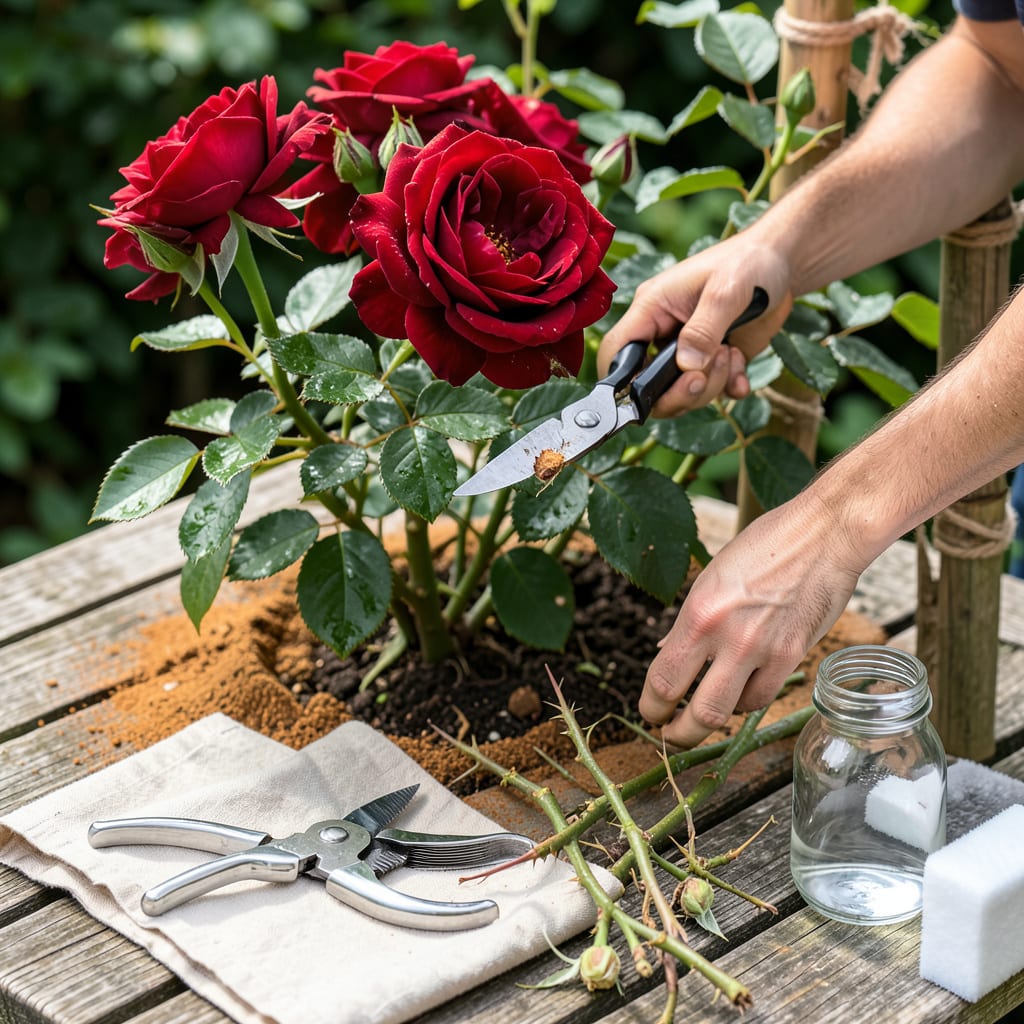
Mid-summer roses need a little tough love. I used to let mine grow wild until I realized that strategic pruning—even in July—keeps them blooming harder and looking sharper. This isn’t about heavy cutting; it’s about shaping, deadheading spent blooms, and opening up the center for better air flow. Done right, you’ll see fresh buds forming within 10-14 days.
The trick is timing and technique: early morning cuts heal fastest, and every snip should angle away from the center. My roses now stay disease-free through humid spells, and the second flush of blooms outshines the first. No fancy tools required—just sharp pruners, thick gloves, and 20 minutes of focused work. Here’s exactly how to do it without stressing your plants.
📚 In This Guide
Here’s my time-tested approach to summer rose pruning that keeps your plants thriving and blooming their best.
Begin pruning in early morning when temperatures are cooler and plants are well-hydrated. I always use sharp bypass pruners (never anvil-style) because they make clean cuts that heal faster. Wipe your pruners with rubbing alcohol between plants to prevent disease spread—this simple step saves me from fungal issues every season.
Look for roses that have finished their first flush of blooms. You’ll see spent flowers with petals dropping and new buds forming lower on the stem. This is your perfect window: the plant has energy to recover but hasn’t started setting hips yet.
Cut back each faded flower to the first five-leaflet leaf facing outward. This encourages new growth that will produce more blooms while maintaining good air circulation. Make your cut at a 45-degree angle, about 1/4 inch above the leaf node—this prevents water from pooling on the cut surface.
Next, remove any thin, weak stems (thinner than a pencil) and crossing branches that rub against each other. I check for blackened or brown stems too—these indicate dieback and should be cut back to healthy, green wood. You’ll feel the difference: healthy stems are firm, while dead ones feel hollow or mushy.
Step back and assess the plant’s overall shape. Open up the center by removing one-third of the oldest canes at their base. This might seem aggressive, but it allows sunlight and air to reach the center, preventing mildew and encouraging strong new growth from the base.
Keep the remaining canes spaced evenly like spokes on a wheel. I aim for a vase shape that’s wider at the top than the base—this prevents shading of lower leaves. After shaping, your rose should have 5-7 healthy main canes with plenty of space between them.
Every cut should be smooth and precise—no jagged edges that invite disease. After pruning, I immediately apply a thin layer of white glue or pruning sealant to cuts larger than a dime. This isn’t always necessary, but it helps prevent borers from entering through fresh wounds during summer’s peak pest activity.
Collect all pruned material and dispose of it (don’t compost diseased wood). Give the plant a deep watering at the base—this helps it recover from the stress of pruning. You’ll see new growth emerging within 7-10 days, which confirms you’ve pruned at the right time and intensity.
Check your roses every 3-4 days after pruning. Look for new growth emerging from the leaf nodes where you made cuts—this confirms successful pruning. If any stems show blackened tips, prune them back another inch into healthy wood immediately.
Continue deadheading spent blooms every 1-2 weeks throughout summer using the same technique. I’ve found this simple routine extends the blooming season by 4-6 weeks and keeps plants looking tidy. Your roses will reward you with stronger stems and more abundant flowers for the rest of the season.
After years of trial and error with summer rose pruning, I’ve learned these key insights that make all the difference in your plants’ health and bloom production.
The Timing Factor: That early morning window mentioned in Step 1 is absolutely critical. I’ve found that pruning after 10 AM when temperatures rise leads to faster moisture loss from the cuts, stressing the plant. The cooler morning hours (before 9 AM is ideal) give your roses time to heal before the midday heat hits. This simple timing adjustment reduces transplant shock and helps prevent wilting.
Cutting Technique: When making those 45-degree cuts in Step 2, here’s what nobody tells you—the angle should slope away from the bud. This directs water away from the new growth point, preventing rot. I also recommend making the cut just above a leaf node that faces outward from the center of the plant. This encourages growth that opens up the bush rather than creating a tangled center.
Canes Selection: In Step 3 where you remove one-third of the oldest canes, look for stems that are darker in color and have rougher bark—these are your oldest canes. I use a simple trick: the thickest, woodiest stems at the base are usually the oldest. Removing these specifically (rather than random canes) stimulates the most vigorous new growth from the base, which produces the strongest blooms.
Post-Pruning Care: The deep watering mentioned in Step 4 is more important than most realize. I’ve found that watering immediately after pruning helps flush out any potential pathogens that might have entered through fresh cuts. Use a slow drip at the base for about 10 minutes—this ensures water reaches the root zone without wetting the foliage, which could invite fungal issues during the vulnerable post-pruning period.
Yes! Summer pruning is safe if done correctly. Focus on light pruning—remove dead or diseased canes, spent blooms (deadheading), and overgrown stems. Avoid heavy cuts (more than ⅓ of the plant) in extreme heat. Early morning or late evening is ideal to reduce stress.
When is the best time to prune roses in summer?
Aim for early summer (after the first big bloom cycle) or late summer (4-6 weeks before your first frost). Avoid pruning during heatwaves or droughts. For repeat-blooming roses, deadhead every 2-3 weeks to encourage new flowers.
Spring pruning is heavy—shaping the plant and cutting back ⅓ to ½ of growth. Summer pruning is light and strategic: deadheading, trimming leggy stems, and removing diseased wood. Think of it as a “tidy-up” to boost blooms, not a major overhaul.
Not necessarily! Leggy growth often means your rose needs more sunlight or nutrients. After pruning, fertilize with a balanced rose food (10-10-10) and ensure 6+ hours of sun daily. If stems are sparse, cut just above a 5-leaflet leaf to encourage bushier regrowth.
Are there roses I shouldn’t prune in summer?
Avoid heavy pruning on once-blooming roses (e.g., old garden roses like ‘Lady Banks’). They set next year’s buds in summer—prune them after they flower. Hybrid teas, floribundas, and knockouts handle summer pruning well. When in doubt, stick to deadheading!
