
Beautiful Plants For Your Interior
Beautiful Plants For Your Interior
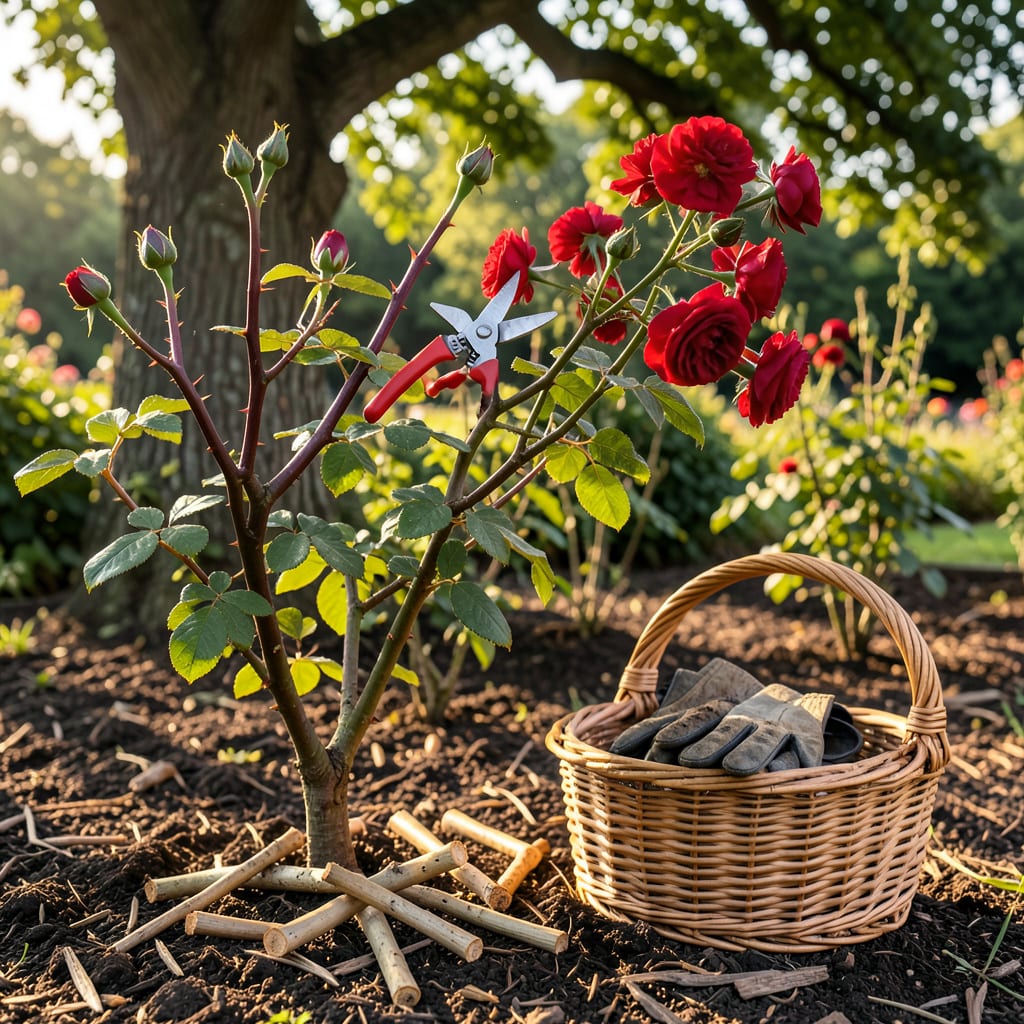
That first time I pruned my roses, I nearly chickened out. ✨ The thought of cutting back healthy-looking canes felt wrong—until I saw the explosion of blooms that followed. Pruning isn’t just maintenance; it’s how you turn a scraggly bush into a powerhouse of color and fragrance.
Timing and technique make all the difference. Do it right in late winter, and you’ll get bigger flowers, fewer diseases, and a shape that looks intentional. No guesswork, no regrets—just a rose bush that rewards you with its best performance yet. Let’s get those pruners sharp and ready.
📚 In This Guide
This is the method I use every spring to transform overgrown roses into healthy, bloom-packed shrubs.
Prune in late winter or early spring, just as new growth begins—you’ll see tiny red buds swelling on the canes. This timing avoids frost damage while giving cuts time to heal before vigorous growth starts. For repeat-blooming varieties, I also do a light summer pruning after the first flush fades.
Use bypass pruners (not anvil-style) for clean cuts that won’t crush stems. Keep a pruning saw handy for thick canes over ½ inch diameter. Always disinfect blades with rubbing alcohol between cuts to prevent disease spread—this is non-negotiable with roses.
Start by cutting out all blackened, shriveled, or hollow canes—these are dead and won’t recover. Make cuts at a 45-degree angle, ¼ inch above an outward-facing bud. This angle prevents water pooling while directing new growth away from the center for better air circulation.
Next, remove any canes with dark spots, powdery mildew, or cankers. If a cane has dieback (brown centers when you scratch the bark), keep cutting downward until you reach clean white pith. I’ve found that being ruthless here prevents problems later in the season.
Open up the center by removing 1-2 oldest canes completely at the base. These are typically the thickest, most woody stems. This drastic cut might feel wrong, but it forces the plant to produce vigorous new growth from the base.
For remaining canes, cut back to 3-5 healthy buds per stem—about 18-24 inches from the ground for hybrid teas. Leave floribundas and shrub roses slightly taller at 24-30 inches. The goal is an open vase shape where sunlight and air reach every leaf.
On each remaining cane, locate the highest healthy outward-facing bud and make your cut ¼ inch above it. Always cut to an outward bud—this prevents crossing branches that rub and create wounds. For climbing roses, I leave laterals at 6-8 inches to encourage more flowering stems.
Step back frequently to check your work. You want a balanced shape with no stubs (cuts made between buds). I aim for a bush that’s slightly wider at the top than the base—this ensures sunlight reaches all leaves and prevents bottom bareness.
Rake up and dispose of all debris—never compost rose clippings as they may harbor diseases. I spray the pruned bush and surrounding soil with a 3% hydrogen peroxide solution to disinfect any lingering spores. This simple step reduces black spot and powdery mildew dramatically.
Finish by applying a balanced rose fertilizer (10-10-10) and 2 inches of mulch, keeping it 3 inches away from the base. Water deeply to help the plant recover. You’ll see the first new growth within 2-3 weeks—that’s when you’ll know your timing was perfect.
Let me share the hard-won lessons that transformed my pruning from hesitant snips to confident cuts that yield explosion of blooms.
The Timing Secret: That window of late winter/early spring when you see tiny red buds swelling (mentioned in Step 1) is absolutely critical. I learned this the hard way after pruning too early one year—frost damaged my cuts and set growth back by weeks. The 2-3 weeks of new growth you’ll see after pruning (as mentioned in Step 5) only happens when you nail this timing. If you’re in a warmer climate, watch for bud swell as early as January; cooler zones may not see it until March.
Tool Technique That Changed Everything: The 45-degree angle cuts in Step 2 aren’t just for aesthetics—they’re disease prevention. Here’s what nobody tells you: that precise ¼ inch above an outward-facing bud measurement creates a microscopic barrier against water pooling. I use a permanent marker to draw a tiny dot on my pruners at the ¼ inch mark as a visual guide. And about those bypass pruners? Worth every penny. Anvil pruners crush stems, creating entry points for fungus that took me two seasons to eradicate.
What to Look For When Thinning: Step 3 mentions removing 1-2 oldest canes, but how do you identify them? Look for the thickest, most gnarled stems with rough, peeling bark—these are your targets. I make the mistake of hesitating here until I realized these old canes produce 80% fewer blooms than new growth. The 18-24 inch height guideline for hybrid teas isn’t arbitrary—it creates that perfect vase shape where air circulates and sunlight penetrates to the center, dramatically reducing powdery mildew.
Cleanup That Prevents Disaster: The 3% hydrogen peroxide spray in Step 5 might seem like overkill until you’ve dealt with black spot. I use a cheap spray bottle from the dollar store—just make sure it’s never had other chemicals in it. The 3 inches away rule for mulch isn’t just about airflow—it prevents stem rot that can kill an entire bush. Trust me on this: that little gap saves you from heartbreak later.
The ideal time depends on your climate! In most regions, prune in late winter or early spring (just as new growth starts). For repeat-blooming roses, a light trim after each flush of blooms encourages more flowers. Avoid heavy pruning in fall—it can stimulate tender growth vulnerable to frost.
For hybrid teas and floribundas, remove 1/3 to 1/2 of the plant’s height, cutting to an outward-facing bud. Climbing roses need lighter pruning—just trim dead or weak canes. Overpruning stresses the plant, while underpruning reduces blooms. Aim for an open, vase-like shape to improve airflow.
Technically yes, but we don’t recommend it! Rose thorns are sharp and can cause painful punctures or infections. Wear sturdy pruning gloves (leather or thick fabric) and long sleeves. If you must go gloveless, use bypass pruners with long handles to keep hands safe.
Check these common fixes:
Yes! For neglected bushes, try “renewal pruning” over 2-3 years:
