
Beautiful Plants For Your Interior
Beautiful Plants For Your Interior
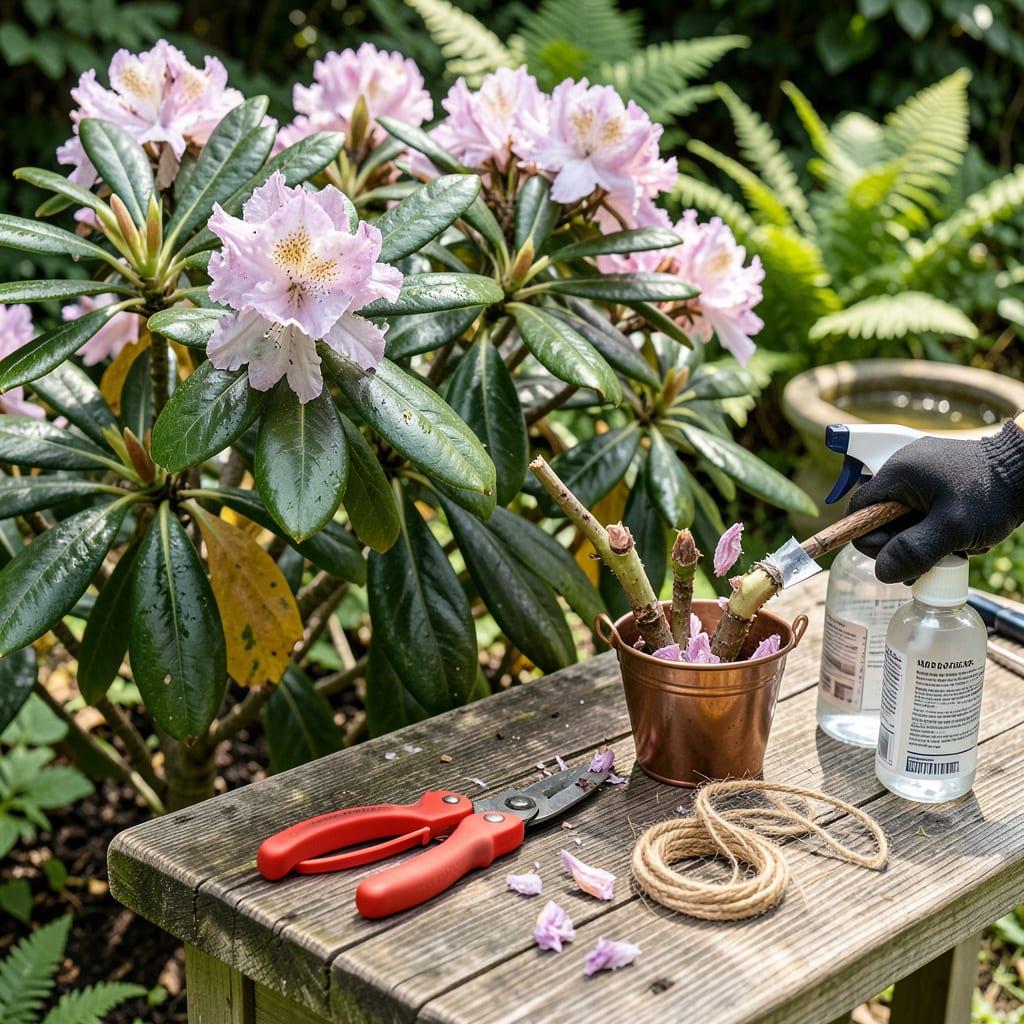
I used to dread pruning my rhododendrons—until I realized those strategic cuts were the secret to next year’s explosion of blooms. The difference between a scraggly bush and a showstopper comes down to timing and technique, not luck. Prune too late, and you risk cutting off next season’s flower buds. Do it right, and you’ll get bigger, brighter blooms on a healthier plant.
This isn’t about hacking away at branches. It’s about making three specific types of cuts at exactly the right time—right after flowering, when the plant is primed for new growth. I’ll show you where to cut, what to remove, and how to avoid the mistakes that leave plants struggling. Your rhododendrons will thank you with years of vibrant color.
📚 In This Guide
Timing and technique make all the difference—here’s how I get more flowers every year with just a few careful cuts.
Prune immediately after flowering in late spring or early summer, before next year’s flower buds form. You’ll see faded blooms still clinging to the branches—that’s your signal. If you wait until fall or winter, you’ll accidentally remove next season’s flower buds and get no blooms.
Check the plant carefully for any dead or diseased wood first. These branches appear gray, brittle, or show blackened areas. I always remove these first regardless of season—they’re not contributing to growth anyway and can spread problems to healthy wood.
Start by cutting back the tallest branches to just above a whorl of leaves, where new growth will emerge. Never leave stubs—always cut at a slight angle about 1/4 inch above a leaf node. This prevents water from pooling on the cut surface and inviting disease.
For overgrown plants, I follow the “one-third rule”: never remove more than one-third of the total foliage in a single year. This prevents shocking the plant. If your rhododendron is severely overgrown, plan to prune over 2-3 seasons instead of all at once.
Reach into the center of the plant and remove any crossing or rubbing branches. These create wounds that invite pests and diseases. I also thin out about 20% of the oldest stems each year by cutting them right at ground level. This opens up the center for better air circulation.
Look for branches that are significantly thicker than others—these are the oldest stems. Removing them stimulates new growth from the base. You’ll see fresh shoots emerging within 4-6 weeks after pruning, which will develop into next year’s flowering wood.
Rake up all pruned material immediately and dispose of it—don’t compost diseased wood. I like to wipe my pruners with rubbing alcohol between cuts when dealing with diseased branches to prevent spreading spores. This might seem excessive, but it’s saved many of my plants over the years.
Water deeply after pruning to help the plant recover. You’ll notice new growth starting to form within 2-3 weeks. Keep an eye out for any dieback on the cuts—if you see blackening, you may need to prune back further into healthy wood.
The buds for next year’s flowers will form on this season’s new growth. As summer progresses, you’ll see small bumps forming at the tips of branches—these are your future flower buds. Avoid any pruning from late summer onward to protect these developing buds.
I mark my calendar each year with the date I finished pruning. This helps me track when to expect blooms next season and reminds me not to prune again until after those flowers fade. The reward comes next spring when you’ll see significantly more flowers on a healthier, better-shaped plant.
Getting the timing and technique right makes all the difference between a thriving plant and one that struggles to bloom. Here’s what I’ve learned from years of pruning these beautiful shrubs.
Timing is Everything: The window for pruning is narrow—immediately after flowering in late spring or early summer, as mentioned in Step 1. I’ve found that waiting even a few weeks too long can mean accidentally removing next year’s flower buds. Look for those faded blooms still clinging to branches as your signal. If you miss this window, it’s better to wait until after next year’s blooms than to risk cutting off potential flowers.
The One-Third Rule Matters: When dealing with overgrown plants in Step 2, that “one-third of total foliage” guideline isn’t arbitrary. I learned this the hard way after removing half the foliage in one year and shocking the plant. The result? Stunted growth and fewer blooms the following season. If your rhododendron is severely overgrown, spread the pruning over 2-3 seasons as suggested—your plant will thank you with more vigorous growth.
Clean Cuts Prevent Problems: That 1/4 inch above the leaf node measurement in Step 2 might seem precise, but it’s crucial. I used to cut closer to the node, thinking it would help the plant heal faster, but water would pool on the cut surface and invite disease. The slight angle mentioned is equally important—it allows water to run off rather than collect. A good pair of sharp bypass pruners makes this much easier to achieve cleanly.
Monitoring Makes the Difference: After pruning in Step 4, don’t just walk away. Those first 2-3 weeks are critical for monitoring new growth. I’ve saved several plants by catching early signs of dieback on cuts and pruning back further into healthy wood before the problem spread. The deep watering mentioned isn’t just helpful—it’s essential for helping the plant recover from the stress of pruning.
Prune right after blooming (spring/early summer) to avoid cutting off next year’s flower buds. Late pruning can remove developing buds, reducing blooms. If you miss the window, light trimming can be done in late summer—just avoid fall pruning, as it stimulates tender new growth before winter.
Avoid fall pruning—it encourages new growth that won’t harden before frost. Winter pruning is risky unless you’re removing damaged branches. Stick to post-bloom pruning for safety. If you must trim in winter, do it on a mild day and avoid heavy cuts.
Pruning shapes the plant or removes overgrowth, while deadheading (snapping off spent flower clusters) encourages energy toward new growth and next year’s blooms. Deadhead immediately after flowers fade—no tools needed! Prune only when reshaping or rejuvenating the shrub.
Yes! For severely overgrown plants, use “renewal pruning”: Cut ⅓ of the oldest stems to the ground each year for 3 years. This rejuvenates without shocking the plant. Avoid hacking back all stems at once—it may not recover. Water well after pruning to reduce stress.
Common culprits: Pruning at the wrong time (removing flower buds), over-fertilizing (promotes leaves, not blooms), or poor sunlight (they need dappled shade). If you pruned late, skip cuts next year to let buds form. Test soil pH—rhododendrons thrive in acidic (4.5–6.0) soil.
