
Beautiful Plants For Your Interior
Beautiful Plants For Your Interior
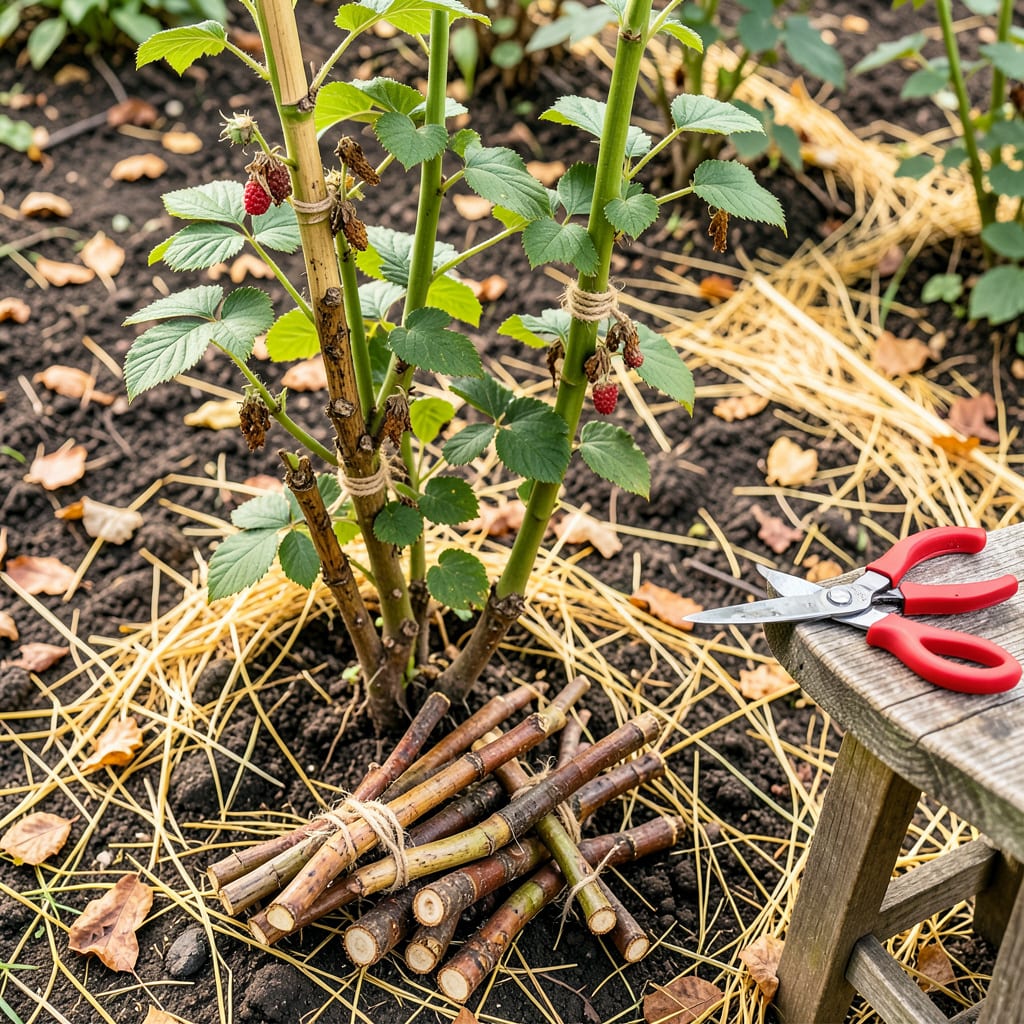
I used to think pruning raspberries was just cutting back whatever looked messy—until I saw how proper pruning doubled my harvest. The right cuts at the right time turn a tangled thicket into a productive powerhouse, with sweeter berries and healthier canes. It’s not about hacking away; it’s about directing energy where it counts.
Timing is everything. Do it too late, and you lose next year’s fruit. Do it wrong, and you invite disease. But get it right—just once a year for summer-bearing, twice for ever-bearing—and your bushes will reward you with plump, juicy raspberries that outperform any neglected patch. No fancy tools required, just sharp pruners and 20 minutes.
📚 In This Guide
Pruning raspberries is simpler than it seems—follow these steps and you’ll see healthier canes and heavier yields next year.
Start by distinguishing between floricanes (second-year canes that fruited this season) and primocanes (first-year green canes). Floricanes will be brown, woody, and may still have dried fruit remnants. Primocanes are flexible, green, and smooth. Cut all floricanes down to ground level—they won’t produce again.
For everbearing varieties, you’ll also see some primocanes with dried tips where they fruited in fall. These can be pruned back to 3-4 feet tall to encourage a second crop next year. Don’t remove healthy primocanes entirely; these will be next year’s producers.
After removing spent canes, thin the remaining primocanes to 4-6 canes per linear foot of row. Crowded canes compete for sunlight and nutrients, producing smaller berries. Select the thickest, healthiest canes and remove the weak, spindly ones at ground level.
Space the remaining canes evenly along your trellis or support system. You’ll want about 6 inches between canes to allow for air circulation, which prevents fungal diseases. I use twine to gently tie canes to the trellis wires at 12-inch intervals as I go.
Cut back the tips of primocanes by about one-quarter of their height. This encourages branching and more fruit-bearing lateral shoots. Make cuts at a 45-degree angle just above a healthy bud, which helps prevent water from pooling on the cut surface.
For summer-bearing varieties, you’ll want canes that are 4-5 feet tall after pruning. Everbearing varieties can be left slightly taller at 5-6 feet. Remove any lateral branches that extend beyond the row width—they’ll just create management headaches later.
Rake up and remove all pruned canes and leaf debris from the planting area. Raspberry canes can harbor diseases like anthracnose and cane blight that overwinter in plant debris. I burn or bag the removed material rather than composting it to prevent disease spread.
Apply a 2-3 inch layer of mulch around the base of plants after pruning. This protects roots from winter temperature fluctuations and suppresses weeds that compete with new spring growth. Straw or wood chips work well—just keep mulch 3 inches away from cane bases to prevent rot.
Mark your calendar for a late winter check (February in most zones). Look for any canes that died over winter—they’ll be brittle and gray—and remove them. Also watch for winter-damaged tips that need trimming back to healthy wood.
Begin fertilizing when you see new growth emerging in spring. A balanced 10-10-10 fertilizer applied at ½ cup per plant works well. Water deeply after fertilizing to help nutrients reach the root zone where new canes will develop.
Pruning raspberries properly makes all the difference between a struggling patch and a bumper crop next year. Here’s what I’ve learned through seasons of trial and error.
Canes Identification Secret: In Step 1, don’t rush when distinguishing floricanes from primocanes. I’ve found that running my hand along each cane helps—floricanes feel rough and brittle, while primocanes are smooth and flexible. The dried fruit remnants on floricanes are often subtle, so look closely at the base where last year’s fruit would have been. A good trick is to mark floricanes with a piece of twine as you identify them, so you don’t accidentally leave any behind when cutting them to ground level.
Thinning Technique That Changed Everything: When thinning to 4-6 canes per linear foot in Step 2, I use a simple but effective method: I first remove all weak canes, then select the remaining canes by imagining where I’ll place my hands when harvesting next year. The canes should be spaced so you can comfortably reach between them without snagging your arms. That 6-inch spacing isn’t just about air circulation—it’s about making your future harvesting easier and more productive.
Pruning Precision: For the height reduction in Step 3, I’ve developed a foolproof way to judge that one-quarter reduction: hold your hand horizontally at shoulder height while standing next to the cane. Where your fingertips land is approximately where you should make your 45-degree cut. This visual trick works consistently across different cane heights. Remember that the angle of your cut matters more than you might think—water pooling on flat cuts is how many diseases get their start.
Disease Prevention Strategy: The cleanup in Step 4 is where most gardeners cut corners, but I’ve seen firsthand how this leads to problems. After raking, I use a stiff-bristled brush to sweep debris from between plants where rakes can’t reach. For the mulch application, I create a small moat around each plant base before spreading—this ensures that critical 3-inch clearance from the cane bases that prevents rot. Straw breaks down faster than wood chips, so if you’re using straw, plan to replenish it mid-winter after it compresses.
Prune summer-bearing raspberries right after harvest (late summer) and fall-bearing varieties in late winter (February–March). Avoid pruning in late fall—new growth could be damaged by frost. A good rule: Remove dead canes anytime to keep plants healthy!
For summer-bearing bushes, cut back all 2-year-old canes (they won’t fruit again). Thin new canes to 4–6 per plant, spacing them 6 inches apart. For fall-bearing, either mow all canes to the ground (simplest) or prune just the top third of canes for a double crop. Less is more—over-pruning reduces yield!
Summer-bearing raspberries fruit on 2-year-old canes—prune those after harvest. Fall-bearing varieties fruit on 1-year-old canes—you can either prune all canes in late winter for one big fall harvest or leave some for a smaller summer + fall crop. Check your plant tag to confirm the type!
Technically yes, but we don’t recommend it! Raspberry canes have sharp thorns that can scratch or irritate skin. Wear thick gardening gloves and long sleeves to protect your arms. Pro tip: Use bypass pruners (not anvil) for cleaner cuts and less hand strain.
Common culprits:
