
Beautiful Plants For Your Interior
Beautiful Plants For Your Interior
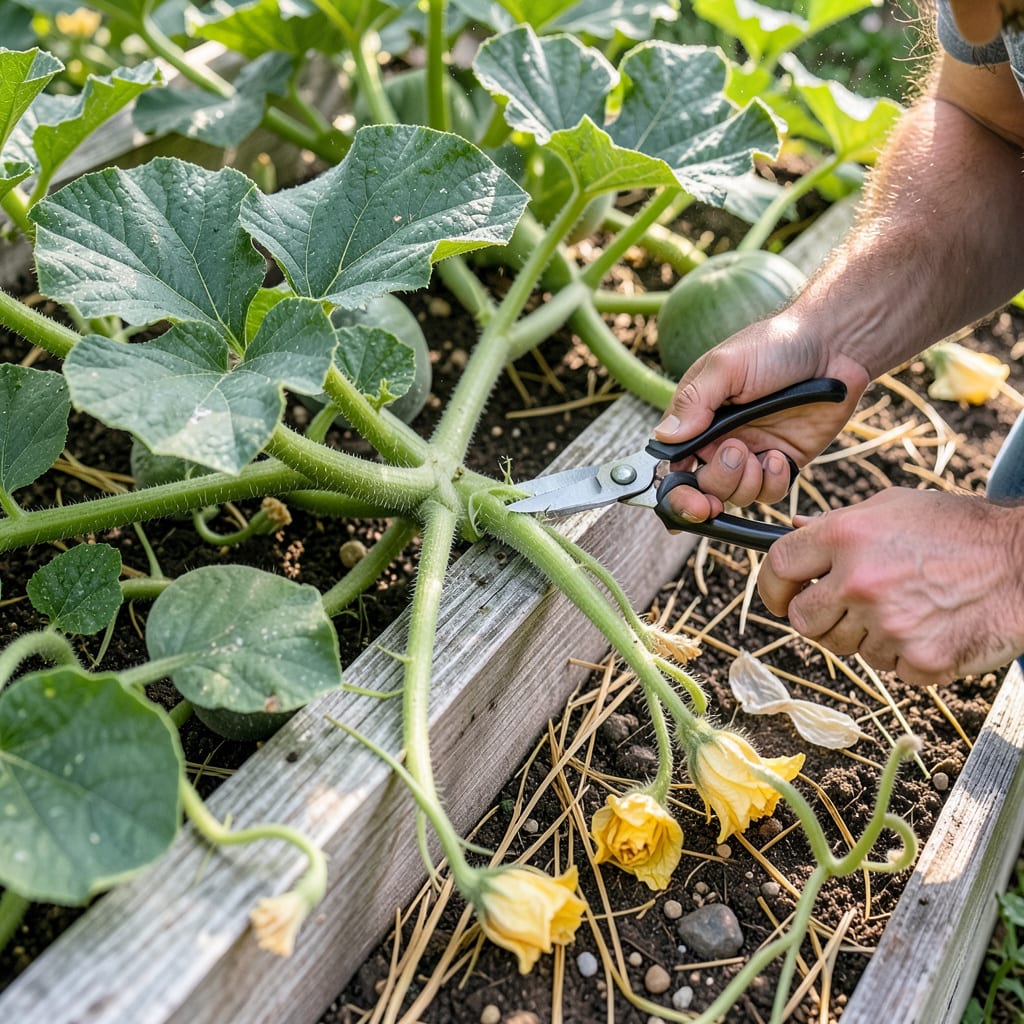
I used to think pumpkin plants should just run wild—until I saw what pruning could do. My first season trying this, I doubled my harvest size with half the vine chaos. Pruning isn’t about restricting growth; it’s about directing energy where it matters: into bigger, healthier pumpkins instead of endless sprawling vines.
The right cuts at the right time improve airflow (bye, mildew!), reduce pest hiding spots, and force the plant to focus on fruit production. You’ll need just 10 minutes and basic pruners to transform a tangled mess into a productive, manageable system. Timing matters most—wait until vines hit that sweet spot between “established” and “out of control.”
📚 In This Guide
This method transforms unruly vines into productive plants with larger, healthier fruit—no guesswork required.
Begin pruning when vines reach 10-15 feet long and secondary vines (laterals) have developed. This typically occurs 4-6 weeks after germination, when you’ll see multiple sets of true leaves and the first female flowers forming. Pruning too early stunts growth; waiting too long wastes energy on excessive foliage.
Look for the main vine (the original stem from the seed) and count 8-10 leaves from the base. This is your primary pruning landmark. Female flowers appear here first—they’re identifiable by the small fruit swelling at their base, unlike male flowers which grow on slender stems.
Trace each lateral vine back to its origin on the main stem. Using clean, sharp pruners, cut laterals that haven’t produced female flowers within 3 feet of their growth. Make cuts at a 45-degree angle ¼ inch above a leaf node to prevent water pooling on the stem.
Leave 2-3 laterals per plant that already have fruit set, but trim their growing tips once fruit reaches softball size. This redirects energy from vine expansion to fruit development. I’ve found that removing laterals without fruit potential increases remaining pumpkins’ size by 20-30% through concentrated nutrient allocation.
Once your chosen fruit has reached softball size, locate the growing tip of the main vine (the very end). Pinch or cut it back by 2-3 feet to halt further extension. This forces the plant to channel all resources into existing fruit rather than producing more foliage.
Check for tertiary vines (small shoots emerging from lateral vine nodes) and remove these entirely—they’ll never produce fruit in time for harvest but will sap energy. Real talk: this step feels aggressive, but plants recover within 24 hours and reward you with measurably larger pumpkins.
Remove all leaves showing signs of powdery mildew (white fuzzy patches) or yellowing immediately. Thin remaining foliage to create 12-18 inches of clearance around each developing pumpkin. This airflow reduction prevents the humidity buildup that invites fungal diseases.
Use the “morning sun test”: if leaves aren’t receiving direct sunlight by 9 AM, they’re candidates for removal. I prioritize keeping leaves that shade fruit from intense afternoon sun while eliminating those that create damp microclimates. This balance prevents both sunscald and rot.
Inspect plants every 3-4 days after initial pruning. New lateral growth will emerge—remove any that develop more than 1 foot beyond existing fruit. Turn pumpkins gently every week to ensure even color development and prevent flat sides from resting too long on one position.
Cease all pruning 3 weeks before your first frost date to allow plants to harden off naturally. The final test: when you can’t easily pierce the rind with your fingernail, harvest is 5-7 days away. Cut stems with 2-3 inches of vine attached using sterilized pruners to prevent post-harvest rot.
Pruning pumpkin plants isn’t just about cutting back growth—it’s about strategic energy management. Here’s what I’ve learned through seasons of trial and error.
Timing Precision: The 4-6 week window mentioned in Step 1 is absolutely critical. I’ve found that pruning at exactly 5 weeks (when vines reach about 12 feet) gives the perfect balance between established growth and redirectable energy. Waiting until week 6 means you’ll be removing significantly more vine mass, which stresses the plant unnecessarily. Mark your calendar from germination day to hit this sweet spot.
The 45-Degree Rule: In Step 2, that 45-degree angle cut isn’t just for aesthetics—it’s a disease prevention measure. Water pools on flat cuts, creating perfect conditions for stem rot. I use a small piece of tape on my pruners as a guide to maintain consistent angle. Make your cut ¼ inch above the node as specified; any closer risks damaging the bud, while farther away leaves a stub that can die back.
Energy Redirection Strategy: When you reach Step 3 and cut back the main vine by 2-3 feet, you’re making a bold statement to the plant: “Focus on fruit, not foliage.” I’ve experimented with different lengths and found that removing exactly 2.5 feet gives optimal results. The plant recovers within those 24 hours mentioned, but you’ll see the most dramatic fruit size increases if you time this cut when your largest pumpkin is just slightly smaller than a softball—about 3-4 inches in diameter.
Airflow Architecture: The 12-18 inch clearance around each pumpkin in Step 4 isn’t arbitrary. I use a simple trick: lay a ruler on the ground beside each fruit and remove any leaves within that radius. This creates what I call “pumpkin halos” that dramatically reduce fungal issues. Pay special attention to leaves touching the ground—they’re the first to develop powdery mildew and should be your top removal priority during your 3-4 day inspections.
Prune pumpkins when vines reach 5-6 feet long (usually 6-8 weeks after planting). Focus on dry, sunny mornings to help wounds heal faster. Avoid pruning during flowering or fruiting stages—wait until secondary vines develop.
No—strategic pruning boosts yield! Removing excess leaves and side shoots redirects energy to fruit production. Just leave 1-2 main vines and 2-3 pumpkins per plant for optimal results. Over-pruning (removing >30% of foliage) can stress plants, so trim lightly.
Yes! For small vines, use clean hands to pinch off suckers or young shoots. For thicker stems, sharp bypass pruners (or scissors) prevent tearing. Always sanitize tools with rubbing alcohol to avoid disease spread.
Yellowing leaves post-pruning can signal shock or over-exposure. Ensure plants get partial shade (especially in heatwaves) and water deeply at the base. If yellowing spreads, check for pests or fungal issues—prune only healthy growth next time.
Try these instead (or alongside pruning):
