
Beautiful Plants For Your Interior
Beautiful Plants For Your Interior
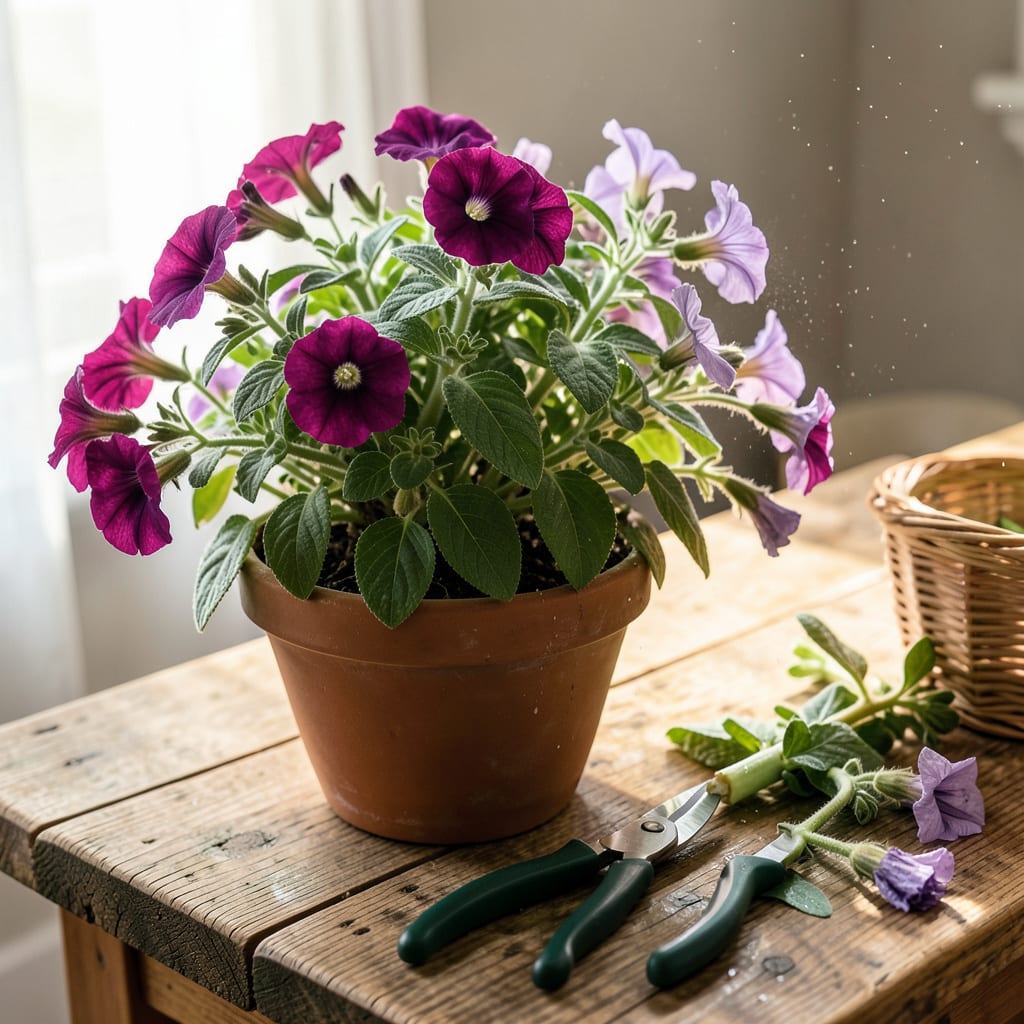
Mid-summer petunias often look leggy and tired—but mine stay thick with blooms until frost. The secret? Regular pruning that tricks the plant into branching out instead of stretching thin. I used to let mine grow wild until they flopped over, then discovered that a few strategic cuts every 2-3 weeks keeps them compact and covered in flowers.
You don’t need fancy tools—just sharp scissors and 5 minutes. The technique works on all petunia types, from trailing Wave varieties to upright grandifloras. What you’ll get is a plant that produces twice the blooms on half the stems, with no deadheading marathons later. Here’s exactly how to do it without overthinking.
📚 In This Guide
This simple technique will transform your petunias from leggy to lush—here’s exactly how to do it right.
Begin pruning when you notice stems growing longer than 6-8 inches with sparse blooms at the tips. This typically occurs 6-8 weeks after planting or when the plant starts looking unkempt. I like to prune in the early morning when plants are most hydrated and less stressed by heat.
Look for the point where the stem transitions from woody at the base to soft green growth. This is where new branches will form. Never prune when petunias are water-stressed (leaves wilting) or during peak afternoon heat, as this increases shock risk.
Examine each stem carefully to find the leaf nodes—small bumps where leaves emerge. These nodes contain dormant buds that will produce new branches. On trailing varieties like Wave petunias, nodes appear every 2-3 inches along the stem.
I always prune just above a node at a 45-degree angle, leaving about 1/4 inch of stem above it. This prevents water from pooling on the cut surface while ensuring the node remains viable. Use clean, sharp bypass pruners (not anvil-style) for precise cuts that won’t crush stems.
Make your cut in one smooth motion, removing no more than one-third of the plant’s total length in a single session. For overgrown plants, I prune the longest stems first, working my way inward. Always cut back to a node that has at least 2-3 healthy leaves remaining below it.
Collect the cuttings in a bucket as you work—they root easily in water if you want to propagate. After pruning, you’ll see the plant’s structure clearly. This is the perfect time to check for pests or diseased foliage and remove any affected stems completely.
Water deeply immediately after pruning, applying 1 inch of water at the base to help the plant recover. I add a diluted liquid fertilizer (half-strength) within 24 hours to support new growth. Keep the soil consistently moist but not soggy for the next 5-7 days.
You’ll see new growth emerging from the pruned nodes within 7-10 days. The plant may look sparse initially, but this is normal. Resist the urge to prune again until you see at least 3-4 inches of new growth—this ensures the plant has enough energy reserves.
After the initial pruning, switch to weekly pinching of stem tips to encourage continuous branching. Simply use your fingernails to remove the top 1/2 inch of each stem, just above a leaf node. This lighter maintenance prevents the need for drastic pruning later.
Focus on the most vigorous stems first, as these will dominate if left unchecked. I find that regular pinching produces plants with twice as many blooms compared to unpruned specimens. Always disinfect your pruners with rubbing alcohol between plants to prevent disease transmission.
Pruning petunias doesn’t have to be complicated—these practical insights will help you avoid common pitfalls while maximizing your plant’s potential.
The Timing Factor: That 6-8 week window mentioned in Step 1 is crucial because it coincides with the plant’s natural growth cycle. Pruning too early can stunt development, while waiting too long (beyond 8 weeks) means you’ll be dealing with woody stems that don’t respond as well. I’ve found that marking your calendar 6 weeks after planting creates the perfect reminder to check your plants’ progress.
Node Identification: In Step 2, you’ll notice that nodes on trailing varieties like Wave petunias appear more frequently than on upright types. For these varieties, I recommend pruning every 3-4 nodes rather than the standard every 2-3 inches, as this creates a more balanced shape. The 45-degree angle cut is non-negotiable—it prevents water accumulation that could lead to stem rot, which I learned the hard way after losing several plants to improper cuts.
Post-Pruning Recovery: The 1 inch of water specified in Step 4 might seem excessive, but petunias need this deep watering to recover from the stress of pruning. I use a watering wand to deliver water directly to the base, avoiding wetting the foliage which can invite fungal diseases. The 5-7 day period of consistent moisture is when the plant is most vulnerable—this is when I see most gardeners accidentally let their petunias dry out, thinking they’re being helpful by reducing water.
Equipment Matters: Clean, sharp bypass pruners make all the difference in Step 3. I learned this after using dull pruners that crushed stems rather than cutting them cleanly, which significantly delayed new growth. Between plants, I keep a small spray bottle of rubbing alcohol to quickly disinfect my tools—this prevents spreading diseases like botrytis that can devastate petunias. The 1/4 inch of stem you leave above the node might seem insignificant, but it’s the perfect balance between protecting the node and allowing for proper healing.
Prune petunias every 4-6 weeks during the growing season (spring to fall). For trailing or spreading varieties, light trimming every 2-3 weeks encourages continuous blooms. Stop pruning 6-8 weeks before the first frost to avoid tender new growth before winter.
Yes! Clean, sharp household scissors work for small petunia stems. Disinfect blades with rubbing alcohol to prevent disease. For thicker stems or large plants, bypass pruners give cleaner cuts. Avoid dull tools—they crush stems and slow healing.
Leggy petunias often need more sunlight (6+ hours/day) or fertilizer (balanced 10-10-10 every 2 weeks). Over-pruning or cutting too close to the base can also stress the plant. Pinch back just above a leaf node to stimulate branching.
Deadheading removes only spent flowers to encourage more blooms. Pruning cuts back stems and foliage to shape the plant and promote bushiness. Do both regularly! Deadhead weekly; prune every 4-6 weeks for best results.
Avoid pruning during heatwaves (90°F+)—stress can stunt recovery. Instead, prune in early morning or on cloudy days, and water deeply afterward. If plants wilt, provide temporary shade until they perk up. Hydration is key!
