
Beautiful Plants For Your Interior
Beautiful Plants For Your Interior
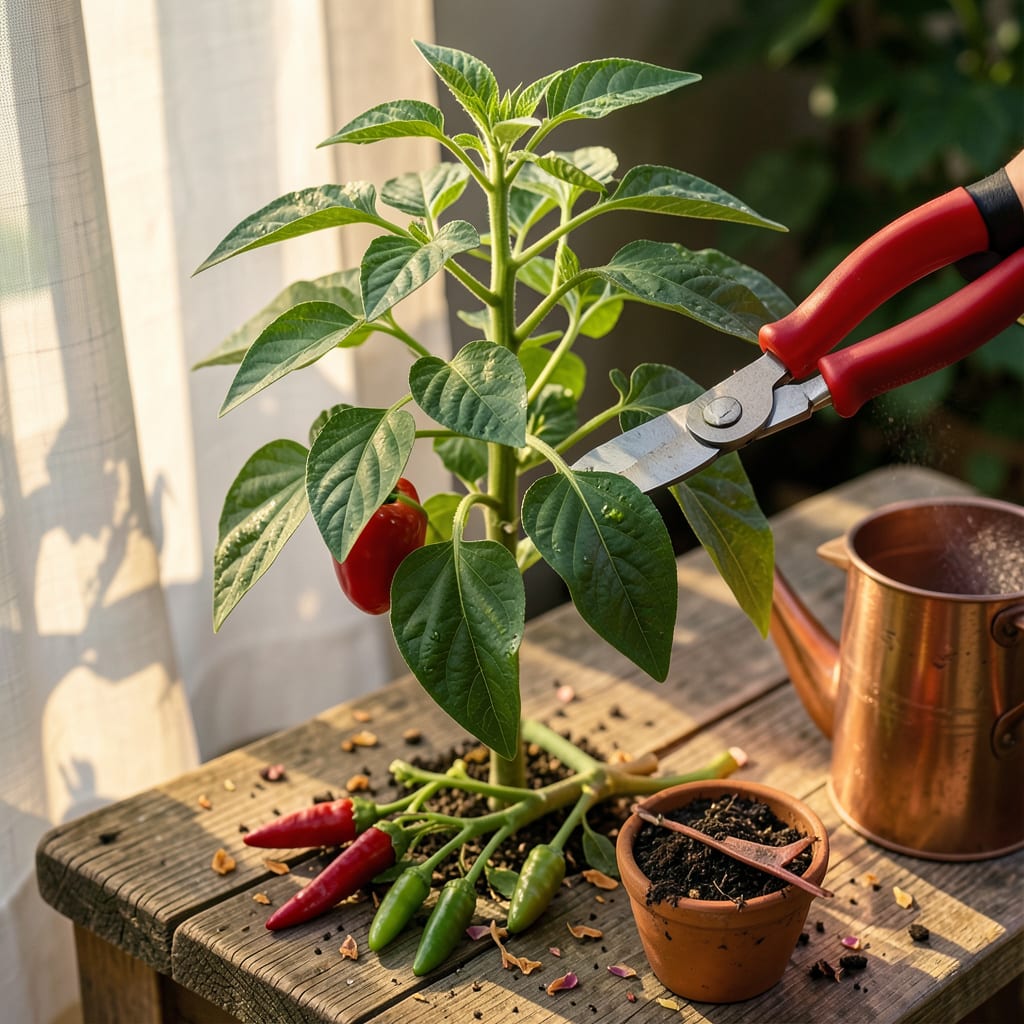
Three strategic cuts can double your pepper harvest. I learned this the hard way after watching my first jalapeño plants turn into leggy, low-producing monsters. Pruning isn’t about hacking away—it’s about directing energy to where it matters: stronger stems, better airflow, and more peppers.
Timing matters most. Do this early, when plants hit 12-18 inches tall, before flowering starts. You’ll remove suckers, lower leaves touching soil, and any crossing branches. The result? Bushier plants that pump out peppers instead of wasting energy on unnecessary growth. No fancy tools needed—just clean pruners and 10 minutes per plant.
📚 In This Guide
Pruning peppers the right way takes minutes but pays off all season with bigger, healthier plants.
Start pruning when your pepper plants reach 12-18 inches tall and have 8-10 true leaves. This usually happens about 4-6 weeks after transplanting. Look for the spot where the main stem branches into two—this is called the “Y” junction and is your first pruning target.
Don’t prune too early. Young plants need all their leaves to grow strong roots and stems. If you see flowers forming before the plant hits that 12-inch mark, resist the urge to prune—just pinch off those early blooms to redirect energy into growth instead.
Using clean, sharp pruners, snip the main stem just above the “Y” junction where the plant naturally branches. This forces the plant to grow two main stems instead of one, creating a stronger, bushier structure that can support more peppers.
Make your cut at a 45-degree angle, about 1/4 inch above the junction. A slanted cut prevents water from pooling on the wound, which could lead to rot. You’ll notice new side shoots emerging from the junction within 7-10 days—that’s how you know it worked.
Strip off all leaves and small shoots (called “suckers”) from the bottom 4-6 inches of the plant. These lower leaves get little light, drain energy, and can trap moisture against the stem, inviting disease. I use my fingers for this—just pinch them off cleanly at the base.
Focus on removing suckers that grow in the “V” where branches meet the main stem. These won’t produce fruit and just create congestion. Leave the upper leaves—they’re powering photosynthesis. You’ll see improved air circulation immediately, which helps prevent fungal issues later.
Every 2-3 weeks after your initial pruning, remove any inward-growing branches that cross or rub against each other. Also snip off any leaves that block light from reaching the center of the plant. The goal is an open, vase-like shape where sunlight can penetrate all the way through.
When fruits start forming, remove any that develop facing inward—they’ll stay small and block airflow. Prioritize keeping the outward-facing peppers that get full sun. I check plants weekly during fruiting season; peppers that get good air circulation ripen faster and taste sweeter.
Continue light pruning as needed, but stop all cutting 4-6 weeks before your first expected frost. Late-season pruning can stimulate new growth that won’t have time to mature before cold weather hits. Instead, let the plant focus its energy on ripening existing peppers.
Always prune in the morning when plants are hydrated and temperatures are cool. You’ll notice the cuts heal faster with less stress. After each pruning session, I like to give plants a foliar spray of water—it helps them recover and washes away any debris from the cuts.
Pruning pepper plants doesn’t have to be complicated—these simple insights will help you get it right every time.
Timing is Everything: That 12-18 inch height range mentioned in Step 1 is critical. I’ve found that pruning too early (under 12 inches) stunts growth, while waiting past 18 inches means you’ve missed the optimal window for shaping. The 4-6 week mark after transplanting is your sweet spot—mark it on your calendar so you don’t forget.
Cutting Technique Matters: In Step 2, that 45-degree angle and 1/4 inch clearance above the Y junction aren’t arbitrary. A straight cut collects water and invites rot, while cutting too close damages the growth point. I use small pruners I can control precisely—this isn’t the job for heavy-duty loppers.
Don’t Overlook the Lower Cleanup: The 4-6 inch bare stem you create in Step 3 does more than just improve airflow. I’ve noticed it also reduces soil splash during watering, which means fewer disease spores reaching your plant. Use your fingernails to scrape off any stubborn leaf stubs—they can harbor pests.
Seasonal Awareness: That 4-6 week pre-frost window in Step 5 is based on your local climate. I start watching weather forecasts in late summer and adjust my final pruning date accordingly. When in doubt, err on the earlier side—it’s better to have slightly smaller peppers than frost-damaged plants.
The ideal time is in early spring before flowering or when plants reach 12–18 inches tall. Avoid pruning during extreme heat or when fruits are actively setting. Light maintenance pruning can be done mid-season, but stop 4–6 weeks before your first frost to avoid stressing the plant.
Most peppers (bell, jalapeño, etc.) follow similar rules, but determinate varieties (like some ornamentals) need minimal pruning—just remove dead growth. Indeterminate types (e.g., cayenne, serrano) benefit from regular pruning to encourage bushier growth. Always check your seed packet for variety-specific tips!
Skipping pruning won’t kill your plant, but expect fewer fruits, poorer air circulation (hello, pests! ), and leggy growth. Overcrowded branches can also block sunlight from ripening peppers. That said, if your plant is healthy and productive, light pruning is often enough.
Yes! Healthy green cuttings (4–6 inches long) can root in water or moist soil. Dip the cut end in rooting hormone for better success, and keep it humid (try a plastic bag “greenhouse”). Note: This works best with non-hybrid varieties—hybrids may not grow true to the parent plant.
Don’t panic—some slowdown is normal! Over-pruning (removing >30% of foliage) or cutting too close to the main stem can shock the plant. Give it partial shade, consistent water, and a balanced fertilizer (like 5-5-5). New growth should appear in 1–2 weeks. If not, check for pests or disease.
